Double Play, Curacao-Style - it started with Bam-Bam
A double play takes two players and one moment. Curaçao has built an entire baseball culture on that principle. From Hensley Meulens to Andruw Jones, from Little League to the Major Leagues, from the Caribbean to Europe.
Willemstad, August 30, 2026
A team of twelve-year-olds lands at Curaçao's airport and is welcomed like a national team coming home with a World Cup. Which, in a way, is exactly what they are. Pariba Little League, from a neighborhood of Willemstad, has just won the Little League World Series in South Williamsport, Pennsylvania, beating Nevada 11-2 in the final. It is the second title in the island's history. The first came 22 years ago.
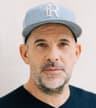
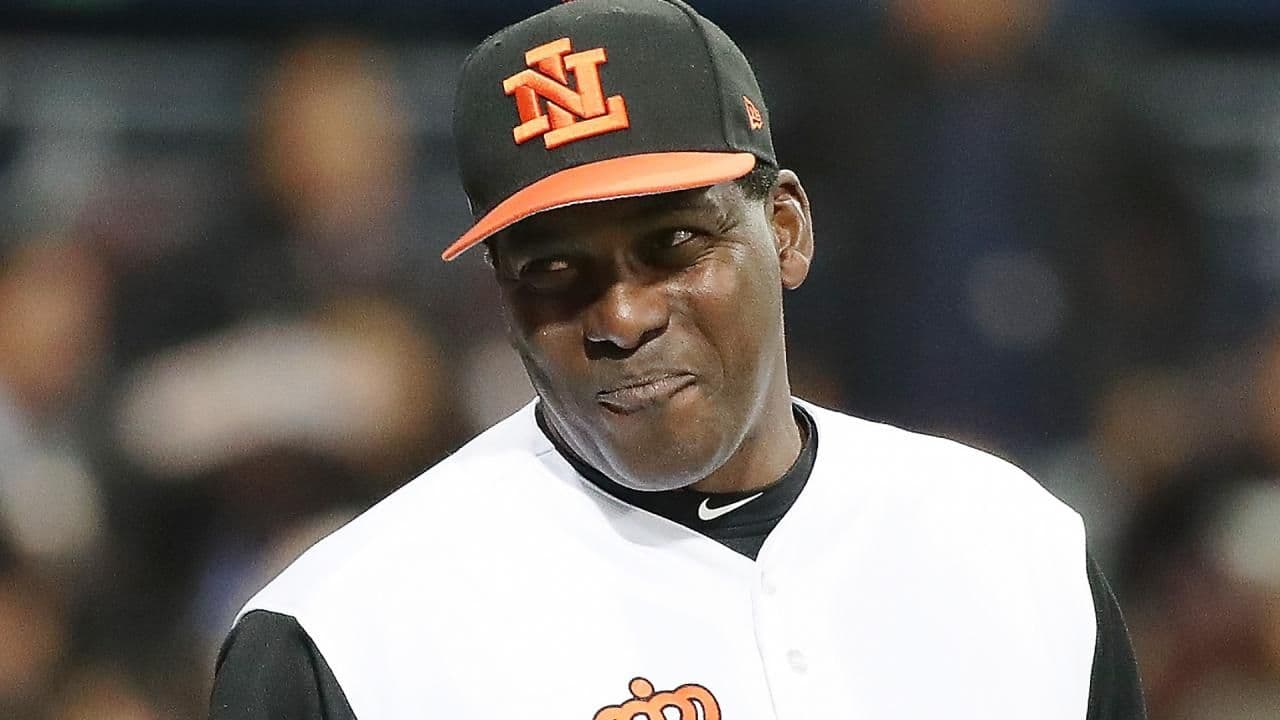
Hensley Meulens did not watch the final in person. He was in Mexico, where he has been managing the Leones de Yucatán since the start of this season, and followed the game on a stream. "Of course I watched every game," he says. "Very exciting." The success belongs above all to the players, he says, but also to the coaches, the families and the Pariba league. "We didn't contribute much. We help out once a year through our foundation, and we're proud of them."
Door Opener and Role Model
That modesty is part of the role Meulens has played for forty years: the man who kicked the door open. The first baseball player from Curaçao in Major League Baseball, with the New York Yankees in 1989. The man who now stands at the head of a long line of successors, from Andruw Jones to Ozzie Albies.
The Bam-Bam story does not begin with a game but with a school friendship in Massachusetts. Meulens' godfather had once shared a classroom there with a certain Dick Groch, a New York Yankees scout who decades later would be the man who discovered Derek Jeter. Through that connection Groch met the 15-year-old Meulens, and from then on he came back every year, watching, offering advice, waiting. For three years. Only in 1985 did international scouting director Fred Ferreira finally sign him, as an undrafted free agent, straight off a winter league team called Caimanes del Sur. Meulens was 18. Groch, who died last fall, had seen something in him that the power of his swing alone could not explain. Meulens himself remembers the fields where he was discovered not as makeshift lots but as solid facilities with artificial turf, hardly a given in the Caribbean of the 1980s.
Before him there was no one. No role model, no path he could follow. Three and a half years of hard work, sacrifice and determination, he says of his time in the minor league system. His parents stood behind him, and his father gave him a line Meulens still quotes today: "Be like a racehorse. Put on your blinders. Don't look left or right until you've made it."
Those blinders are probably his greatest strength. Not the swing, not the home runs. The discipline to look straight ahead when nobody has gone before you.
Hall of Fame
What came next is familiar to baseball fans: Andruw Jones, who debuted seven years after Meulens and is probably the best player the island has ever produced. Kenley Jansen. Jurickson Profar. Jonathan Schoop. Ozzie Albies. Andrelton Simmons. Names that are now a natural part of the Major Leagues.
Asked whether it bothers him that a whole generation names Jones rather than him as its role model, Meulens waves it off. "I played in the eighties and nineties, there was no cable TV back then," he says, laughing. "Ozzie wasn't even born yet."
He calls Andruw Jones the best player the island has produced without hesitation, and adds a personal footnote: he was in the ballpark when Jones homered twice in his first World Series game in 1996. The night before, when Game 1 was rained out, the two had dinner together.
Still, the myth of the lone pioneer who changed an entire island single-handedly does not quite hold up. "It's still hard for our boys to make it," says Meulens. Ralph Milliard followed in May 1996, Andruw Jones three months later, both seven years after Meulens' own debut. Today, 37 years after that debut, 17 players from Curaçao have reached the Major Leagues by his count. With roughly 150,000 inhabitants, the island has the highest per-capita MLB output in the world. For comparison: Germany has so far produced exactly two homegrown Major Leaguers, Donald Lutz and Max Kepler.
In July 2026 the island's baseball received its biggest public seal of approval yet. In Cooperstown, Andruw Jones became the first player from Curaçao inducted into the Hall of Fame. In his speech he addressed his home island in Papiamentu and paid explicit tribute to the man with whom it all began: Bam-Bam had opened the door so that many others could chase their dream and become professionals, Jones said in essence. Four decades after Meulens signed his own contract, it was official what nobody on the island had doubted for a long time: there is a blueprint, and it starts with him.
The Sound of Kòrsou
What sets the Curaçao style of play apart from the Dominican Republic or Venezuela cannot be reduced to one thing, Meulens says. What stands out is rather what the island's players do on the side: "Many of our kids also play other sports. Soccer helps us with our footwork." While in the Dominican Republic and Venezuela, as he sees it, baseball fills the whole day, on Curaçao it remains one passion among several. What stays is an attitude the coaches still pass on to the kids today: have fun, enjoy the game, give your best.
To understand why, you have to go back further than Andruw Jones, or even Meulens himself. Baseball did not come to the island through an American occupation, as it did in the Dominican Republic or Puerto Rico, but through Dutch colonial history and the oil industry, which in the 20th century brought American workers to Curaçao, and the sport along with them.
Meulens himself did not know this origin story as a child. He started playing baseball at ten, on the soccer field of a Dutch club called Willemstad, which still exists today. Only later did the sport on the island get a structure of its own, through men like Frank Curiel, who built Curaçao's Little League program and to this day can be found at the ballpark that bears his name in northwest Willemstad. The documentary "Frank Curiel: A Baseball Story" (2021), directed by Hershel Rosario, tells the story of the "Godfather of Baseball." Hensley Meulens, naturally, appears in it as well.
So the island did not have baseball delivered as a finished product. It built the game for itself, field by field. Layered on top is a language that exists nowhere else. Papiamento blends Dutch, Spanish, Portuguese and African roots into a creole sound of its own, spoken almost exclusively on Curaçao, Aruba and Bonaire. Whoever speaks it carries a dual identity, Dutch-administered and Caribbean-lived, and it shows on the field too. Meulens sees more in it than folklore. He lists names that show how many other sports this one small island has produced besides baseball: sprinter Churandy Martina, tennis pro Jean-Julien Rojer, swimmer Enith Brigitha, soccer player Ergilio Hato. "There is a rhythm that comes from our roots and allows kids to move freely across different fields of sport."
On the field itself, the culture is heard most clearly in a single word. Shouted five times in a row, from every corner of the stands: "Kòrsou, Kòrsou, Kòrsou, Kòrsou, Kòrsou." Kòrsou is simply the Papiamento word for Curaçao. No slogan, no chant with lyrics, just the name of the island itself, raw and unfiltered, hurled into the air again and again. Other nations sing anthems. Curaçao calls out its own name. For Meulens, this is the sound anyone would recognize the island by, even on TV, even without a picture.
Permission for Joy
When it comes to a strict notion of discipline, of the kind Japan or the Dominican Republic each cultivate in their own way, Meulens sees no single line on Curaçao. His own youth coaches, Frank Curiel and Eddy Daou, were strict. Today the current national team manager is said to do backflips after wins and land on his back. Both are Curaçao. What has taken hold since Andruw Jones is above all a permission for joy: the grin after a strikeout, the look from under the glove rather than into it, the refusal to let failure cost you face. "A bit of that is still there," says Meulens.
And then there is a third layer, so naturally present on the island that Meulens mentions it almost in passing: faith. In many countries where he has worked, a Sunday chapel service at the ballpark is as fixed a part of the routine as warming up. God and the game sit close together there, closer than elsewhere. Asked where baseball felt most like a religion to him and where most like a job, he doesn't answer with Curaçao but with Japan, where people work the hardest and the longest. But the Sunday chapel, the shared prayer, is a thread that runs through his entire life and in the end leads back to the island, where for him nothing is conceivable without God anyway.
What the island passes on through this culture does not end on the Little League field. Every winter, Curaçao's Major Leaguers return for Curaçao Baseball Week, a program Meulens co-founded to teach the same kids who now grow up with "Kòrsou" on their lips exactly what he was once taught. Not a marketing format, but an island writing its own sequel.
A Pointer to the Future
Pariba Little League's triumph in August is not a rerun of 2004. The team that won back then was Pabao Little League, also from Willemstad, with Jurickson Profar and Jonathan Schoop on the roster. Schoop recorded the decisive save in the final. Both later became Major League regulars. This time, 22 years later, it is a new generation, a new neighborhood, the same will.
What a title like this does to an island of 150,000 people needs little explanation from Meulens: "Everyone is incredibly proud of them and wants a piece of them." The team was welcomed home as heroes.
Whether the next name on the MLB list will come out of this group in ten years, Meulens leaves open, but he immediately ties the question to a demand on the island's politicians. He wants a government program that brings academic and athletic education together, as is common in the US. So far the two paths run separately on the island.
Blue Wave and the Netherlands
2026 is no ordinary year for Curaçao. It is the season in which two sports competed for the world's attention at the same time, and in which, of all things, the smaller of the two went further in the end.
In June, Curaçao's national soccer team took the stage at a World Cup as the smallest nation ever to qualify. The group stage promptly delivered the big draw: Germany, Ivory Coast, Ecuador. In the opener in Houston the island faced, of all teams, Germany and lost 1-7, then drew 0-0 with Ecuador and went out after a 0-2 defeat to Ivory Coast. The fairy tale was short. On the island the whole campaign ran under one name: "The Blue Wave."
In baseball the wave lasted longer. At the World Baseball Classic in March, the Netherlands, who represent the Kingdom internationally, fielded a roster in which more than 80 percent of the players have family roots on Curaçao. That team was no longer managed by Meulens but, for the first time, by Andruw Jones himself, by then a freshly elected Hall of Famer. The student had become the coach of the next generation, with the quiet blessing of the man who once founded the school.
At the Little League World Series in August, Curaçao was allowed to compete directly for the first time, without going through the Caribbean regional qualifier, and for the first time the jerseys read "Curaçao" instead of "Caribbean." An island that appears in most travel guides as a footnote at best now plays in the same league as the Dominican Republic and Puerto Rico when it comes to baseball talent density.
The Detour via Europe
Internationally, Curaçao does not compete as a nation of its own but as part of the Kingdom of the Netherlands. For Meulens, who was connected to the Dutch national team for 23 years, that is no burden but a privilege: "We're happy to be part of this special arrangement, and we take every opportunity to be at events like the Olympics." He himself went to the Olympics twice, in 2000 and 2004, plus World Baseball Classics and Premier12 tournaments. As Curaçao alone, that would not have been possible; the island is not independent.
The arrangement has one firm rule: a player can switch between the Netherlands and Curaçao once in his life, after which the door is closed. Andrelton Simmons and Nelmerson Angela switched from the Netherlands to Curaçao and can no longer play for the European team, with all the consequences for the Olympics, the WBC and the Premier12. Ask Meulens whether the Netherlands are doing Curaçao a favor or the other way round, and he gives a clear answer: it is each player's free choice, not a one-way street.
On Germany's 2027 European Championship, which also serves as Olympic qualifying for Los Angeles 2028, Meulens has a clear view. MLB and the world governing body WBSC have been working for years to globalize the game, with qualifying tournaments on almost every continent. At the most recent World Baseball Classic, five European teams were already in the field: the Netherlands, Italy, Great Britain, Israel and Czechia. Baseball in Europe, he stresses, is not a new import but one of the cradles of the game itself. The real problem lies elsewhere: "The battle for Europe will always be soccer. It's really hard to convince kids in most European countries to play baseball instead of soccer." To anyone who wants to take that road anyway, he first recommends something unspectacular: learn the rules. Only then comes the love of the game, through hard work and, above all, through enjoying it.
From Adviser to Decision-Maker
For decades Meulens gave advice, as a hitting coach, without carrying the ultimate responsibility himself. His career took him from the rookie league in Bluefield, West Virginia, in the Baltimore Orioles organization, through Japan and Korea as a player, until in 2010 he became hitting coach of the San Francisco Giants and won three World Series with them. From 2013 to 2023 he also shaped the national team of the Kingdom of the Netherlands, reaching the World Baseball Classic semifinals twice.
Six times he applied for a Major League manager's job: with the Cincinnati Reds, the Minnesota Twins, twice with the Detroit Tigers, with the New York Yankees and the San Francisco Giants. Six times the job went to someone else. "I'd still love to manage or coach in MLB, but I can't give myself the job," he says, without a trace of bitterness. "So you look around, find the next opportunity, and I ended up in the Mexican League."
Since this season, at 59, he has been managing a team of his own for the first time: the Leones de Yucatán. The difference between giving advice and carrying responsibility, he says, lies in how close you are to the player. As a coach you are closer and help directly with his goals. As a manager everything ends up on your desk, from talks with the front office about possible trades to the phone call at midnight because a player has gotten into trouble off the field. "The list of things that happen is much longer than that," he says. "I love all of it."
Kòrsou Meets Solingen
Later this year, Curaçao will travel to Germany in very concrete form. At the European Baseball Winter Meeting, held from November 6 to 8 at the Klingenhalle in Solingen, Meulens himself is on the program as the hitting instructor, alongside former MLB players such as Ubaldo Jiménez and Jim Leyritz. At his side: Andrelton Simmons, four-time Gold Glove winner, in charge of defense and infield. Curaçao Baseball Week, Meulens' own winter training program for the island's youth, and the Bam Bam Foundation are also among the event's supporting organizations. Anyone who wants to see how an entire island's blinders philosophy can be taught in practice doesn't have to fly to Willemstad. A weekend in the Bergisches Land will do.
What he took from the island and never set aside, whether at Yankee Stadium, the Tokyo Dome or in Mérida, he sums up in one word: perseverance. His parents taught him that nothing is handed to you and nothing ever will be. Anyone who wants a successful career has to give up a lot and keep going, always.
On the beaches of Curaçao, Meulens says, you see fewer kids with baseball gloves today than you used to, and more with a soccer ball under their arm. It is a quiet concern that he doesn't dramatize but simply notes, along with the hope that their number will grow again. Perhaps the Little League title will help.
Forty years after it all began with Hensley Meulens, a new team of twelve-year-olds stands on the same island with a trophy in their luggage. The blinders his father once put on him have long since been passed on to others.
Read on
Meeting at the point of Intersection
Solingen is the City of Blades. From November 6 to 8 it becomes the meeting point of European baseball. Base on Balls on a letter from America, a financial tightrope walk and two men who could no longer talk their way out of it.
When Baseball Dances
From the drumbeat in a WBC dugout to national holidays to a small town in Indiana where Latin baseball built the sport a new home: how baseball became the shared language of an entire hemisphere.