A Voice Note Into the Next Life: Inside Minor League Baseball
Inside Minor League Baseball, where strange team identities, small-town rituals and abrupt promotions reveal the labor beneath the MLB dream.

Behind the strange caps and small-town spectacle, the minor leagues run on abrupt promotions, precarious labor, and young players learning to survive far from home.
The message rarely arrives the way baseball movies suggest.
There is no manager summoning a player into a dimly lit office, pausing for dramatic effect, then telling him he is moving up. In the modern minor leagues, the next chapter can arrive as a voice note in a team WhatsApp group: pack your bags, report to a different club, wear a different cap.
For a few seconds, the player is suspended between two lives. Then the practical questions begin. When is the flight? Where will he sleep? Does he know anyone at the next level? How much of the clubhouse can fit into one suitcase?
Only the final promotion—to the major leagues—is reliably staged for the cameras. By then, the organization’s video team may be standing nearby, ready to capture the tears, the phone call home, the announcement to teammates. The earlier moves are quieter. A notification, a transaction line, another temporary address.
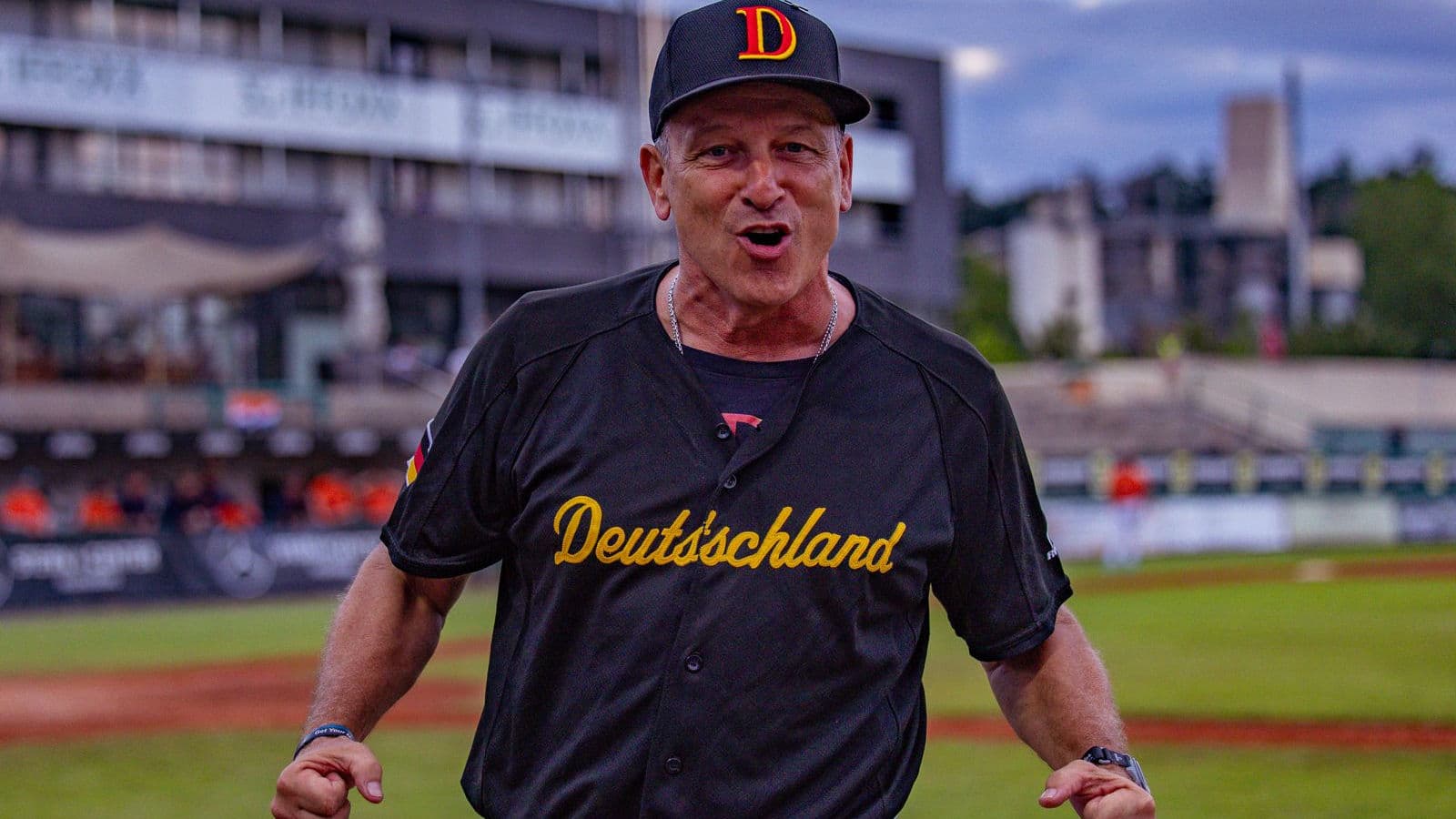
German catcher Yannic Walther knows the rhythm. Signed by the Milwaukee Brewers in 2022, he spent the opening months of the 2026 season with the Single-A Wilson Warbirds in North Carolina. On June 30, Milwaukee promoted him to the High-A Wisconsin Timber Rattlers. In his first plate appearance at the new level, he hit a home run.
The statistics record the swing. They do not record the packing.
This is the world beneath Major League Baseball: part development system, part traveling workplace, part small-town carnival. It is where the sport tests its future, where cities turn local history into caps and mascots, and where teenagers from Cologne, Venezuela, or the Dominican Republic learn that a professional contract is not the end of uncertainty. It is the beginning of a more organized version of it.
Baseball’s Research and Development Department
Major League Baseball is a multibillion-dollar entertainment business built around optimization. Every pitch produces data. Every movement can be isolated, measured, and rebuilt.
The minor leagues are where many of those ideas first become visible.
The pitch timer, larger bases, and the Automated Ball-Strike Challenge System all passed through Minor League Baseball before reaching the majors. In 2026, MLB introduced another set of experiments across the affiliated leagues.
During the second half of the Triple-A International League season, second base is being positioned entirely inside the geometry of the infield diamond. For much of baseball history, the bag has sat partly outside it—an old quirk of the field’s construction. Moving it inward reduces the distance from first to second and from second to third by roughly nine inches, potentially encouraging more stolen-base attempts and more aggressive baserunning.
In the Pacific Coast League, hitters, catchers, and pitchers can challenge checked-swing decisions. Bat-tracking technology determines whether the barrel passed a defined 45-degree angle. One of baseball’s oldest judgment calls is being translated into geometry.
These changes remain experiments, not promises of future major-league rules. But the pattern is familiar: baseball first tests its disruptions in places where the cameras are fewer and institutional resistance is easier to absorb. MLB’s 2026 minor-league rules overview describes the system in the language of pace, action, and athleticism.
That makes the minors a curious space. The sport’s most advanced technologies are often trialed in old ballparks surrounded by wooden fences, two-lane highways, and concessions stands selling popcorn to families who have followed the same local club for generations.
Baseball’s future frequently arrives in the provinces first.
When the Players Leave, the Identity Has to Stay
Minor-league teams cannot build their relationship with a town entirely around star players. The best prospect may be promoted tomorrow. Another may be traded, reassigned, or released. The roster is designed to be temporary.
The club therefore has to offer something that survives constant turnover: a place, a ritual, a shared joke, a piece of local identity.
That is how professional baseball produces names such as the Montgomery Biscuits, Jacksonville Jumbo Shrimp, Akron RubberDucks, Amarillo Sod Poodles, and Rocket City Trash Pandas. The logos are rarely restrained corporate marks. They are cartoons, food references, regional folklore, industrial history, and absurdity rendered in embroidery.
In 2026, the Triple-A Lehigh Valley IronPigs became the Lehigh Valley Rubber Duckies for one night. The uniform combined yellow jerseys, bathtub-blue pants, and a rubber duck wearing sunglasses. After the game, fans threw 2,643 rubber ducks onto the field as part of a fundraiser that raised $4,195 for the Pediatric Cancer Foundation of the Lehigh Valley. The Rubber Duckies announcement reads like a parody until the local purpose becomes clear.
The Augusta GreenJackets took the field as the Augusta Soul, honoring a musical history shaped by James Brown and Sharon Jones. The identity connected the team to the city’s venues, murals, churches, museums, and the James Brown Academy of Musik Pupils. Augusta Soul turned a baseball jersey into a wearable piece of local music history.
This is why minor-league caps travel so easily beyond baseball. An Albuquerque Isotopes logo—derived from the fictional team in The Simpsons—works as both sports merchandise and a cultural reference. It signals knowledge of the game’s less obvious corners.
Minor-league caps are the baseball equivalent of an independent-label shirt: a marker of affinity that feels discovered rather than delivered by mass culture.
The Designers Behind the Strange
Much of the contemporary minor-league aesthetic can be traced to Jason Klein and Casey White, childhood friends from San Diego who founded the design company Brandiose.
Their story begins with a firing.
As young employees on the San Diego Padres’ mascot crew, Klein and White created a piñata resembling pitcher Kevin Brown, who had left the Padres for the rival Dodgers on a record contract. They filled it with fake money and destroyed it during a game. The crowd loved the stunt. The Padres did not.
After losing their jobs, the pair studied art, designed an identity for their former high school, and sent roughly 150 letters to minor-league clubs. One responded. Their business initially operated from Klein’s childhood bedroom.
Brandiose went on to help create or reshape some of the minors’ most recognizable identities, including the El Paso Chihuahuas, Richmond Flying Squirrels, Jacksonville Jumbo Shrimp, Hartford Yard Goats, and Rocket City Trash Pandas. Their work does not stop with a logo. They visit cities, speak to residents, study regional history, and build a wider world around the story a community wants to tell about itself. MLB’s profile of Brandiose shows how uniforms, food, signage, and in-game entertainment can all grow from the same local reference.
For the Lehigh Valley IronPigs, the region’s steel industry became an entire bacon universe. Pitchers warm up in the Pig Pen. Parking becomes “porking.” Characters named Chris P. Bacon and Hambone compete in Pork Races.
The Rocket City Trash Pandas joined Huntsville’s aerospace history to the American suburban raccoon. The team sold $2.3 million in merchandise before playing its first game. When the pandemic canceled its planned 2020 debut, the strength of the identity helped the organization retain its full-time employees.
The silliness is calculated, but it is not necessarily cynical. A minor-league club has to be legible to people who may not care which prospect has the best chase rate. It must become part of the town before it can ask the town to care about the standings.
The baseball is real. So is the raccoon in the rocket.
Copa de la Diversión and the Question of Belonging
Minor League Baseball’s most ambitious identity program is Copa de la Diversión, a season-long initiative designed to connect clubs with their local Hispanic and Latino communities.
The program began with four teams in 2017. In 2026, 87 clubs are participating across almost 350 Copa games. Teams adopt alternate Spanish-language identities and build accompanying ballpark programs around music, food, performance, local businesses, scholarships, and community organizations. MLB’s Copa de la Diversión guide makes clear that the identity is intended to be only one part of the work.
Seven new looks arrived in 2026. The El Paso Chihuahuas became the El Paso Matachines, drawing on a ceremonial dance tradition found across the southwestern United States and northern Mexico. The dancers’ drums, feathered headdresses, and ayoyotes—percussion instruments worn around the wrists or ankles—connect Indigenous, Spanish, Mexican, and regional border histories.
The Charlotte Knights introduced Guacamayas de Charlotte, using the macaw as a symbol of lasting relationships and as a commitment to Charlotte’s growing Latino communities. The identities join established Copa brands such as the Mariachis de Nuevo México, the alternate identity of the Albuquerque Isotopes and a three-time Copa champion.
At its best, Copa shows how a sports organization can translate itself within its own city. It recognizes that “local community” is not a single, fixed audience. American baseball has been shaped for generations by migration from Mexico, Puerto Rico, Cuba, the Dominican Republic, Venezuela, and elsewhere, yet many clubs have not always reflected that reality in the way they present themselves.
A new uniform cannot create trust by itself. Cultural identity becomes meaningful only when the people represented help shape the program and see lasting value beyond merchandise sales. Copa’s strongest iterations use design as an invitation, not as a substitute for a relationship.
The Ballpark as Small-Town Theater
The minor-league ballpark is built around a simple commercial problem: the quality and relevance of the players can change overnight, but the club must sell another ticket tomorrow.
The answer is an experience no television broadcast can fully reproduce.
At the Jacksonville Jumbo Shrimp’s ballpark, fans can sit in three “Shrimp Boats” positioned above center field. The $30 seats connect the team’s Crustacean Nation identity to the seafood history of northeast Florida. Jacksonville’s Shrimp Boats are simultaneously absurd, regionally specific, and entirely functional.
In Frisco, Texas, RoughRiders fans can watch the game while floating in a 68,000-gallon lazy river beyond right field. The first person to enter it when it opened in 2016 was Dirk Nowitzki. The RoughRiders’ lazy river remains the largest water feature in a professional sports venue.
In South Bend, the Cubs’ team store occupies a former synagogue built in 1901 by Jewish immigrants from Eastern Europe. The abandoned building was restored and incorporated into the ballpark complex in 2012. It now sells caps and jerseys while preserving a physical trace of the neighborhood that existed before the stadium expanded around it. The Cubs Den is retail space, architectural salvage, and migration history in the same building.
These details are not distractions from baseball. They explain how the game embeds itself in places. A minor-league club sells a summer evening before it sells player development. The game remains at the center, but the center is surrounded by food, memory, music, weather, children running the bases, and the possibility that something ridiculous will happen between innings.
Three German Players Inside the System
For Tom Apfelbaum, Paul Hoff, and Yannic Walther, this colorful world is also a demanding workplace.
Apfelbaum, a 17-year-old left-hander from Cologne, signed with the Los Angeles Dodgers on the first day of the 2026 international signing period. At 6-foot-4, with a low arm slot and a fastball that has reached the low-to-mid 90s, he has already invited comparisons to Chris Sale—less a prediction than a visual shorthand for his delivery.
His professional career began in the Dominican Summer League, the first stop for most international signees. Through eight starts, Apfelbaum had recorded 21 strikeouts in 22⅓ innings and was selected for the DSL National League All-Star team. Tom Apfelbaum’s MiLB profile shows the modest numbers of a first season: enough progress to encourage, nowhere near enough evidence to declare what comes next.
Hoff grew up in Buchholz in northern Germany and developed with the Dohren Wild Farmers, one of the smallest clubs in Germany’s top division. He signed with Milwaukee in January 2024 after traveling to the Dominican Republic as a teenager to pitch in front of scouts.
In 2026, the 19-year-old right-hander went 4–0 with a 2.43 ERA and 31 strikeouts over 29⅔ innings for the DSL Brewers Gold. His professional record looked increasingly convincing, but the distance between rookie ball and Milwaukee remained enormous. Paul Hoff’s official statistics describe a promising beginning, not a guarantee.
Walther is further along the road. Born in Heidelberg and raised around the game, he entered Germany’s Bundesliga as a teenager and signed with the Brewers after years of conversations, tryouts, and waiting.
“It was a long process,” he says. “The first scouts began speaking to me when I was 13 or 14. Then there were tryouts and occasional conversations. For a long time, there were no offers.”
As a catcher, Walther’s work extends far beyond his own batting line. He speaks fluent Spanish, guides young pitchers through games, and moves between German, English, and Latin American clubhouse cultures. When the Brewers signed Hoff, Walther became a natural mentor: someone who could explain a bullpen routine, a coach’s instructions, or simply what was being served in the cafeteria.
The two have already worked together as a German pitcher-catcher battery more than 4,000 miles from home. An all-German battery in the major leagues remains a distant possibility, but the idea now has two identifiable players attached to it.
Walther’s 2026 season supplied two perfect minor-league moments. In the inaugural game at Wilson Ballpark, he hit the first home run in the stadium’s history. After his promotion to Wisconsin, he homered again in his first High-A plate appearance. His Wilson milestone and his first High-A home run are the kind of small historical entries from which minor-league careers are built.
The routine surrounding those moments is less romantic. Six games a week, usually from Tuesday through Sunday. Training before games. Monday as the single day without competition. Constant evaluation, constant adjustment, and teammates who are also competitors for a finite number of roster spots.
Spring training briefly brings the entire organization together. A young catcher might work beside someone from Double-A or Triple-A, listening for any detail that could shorten his learning curve. The central lesson is always the same: control what is controllable. The next pitch. The next plate appearance. Today’s work.
The organization controls almost everything else.
Better Paid, Still Precarious
For decades, minor-league baseball was synonymous with poverty wages. Players slept in crowded apartments, worked offseason jobs, and sometimes lived in cars because their professional salaries did not cover basic expenses.
The economics have improved substantially.
Minor-league players unionized under the MLB Players Association in 2022 and negotiated their first collective bargaining agreement, covering the 2023 through 2027 seasons. In 2026, standard weekly salaries range from $710 to $1,250 depending on the level. Players are now paid for most of the year rather than only during the regular season, and housing or a housing allowance is included.
Baseball America’s 2026 salary overview describes a system that is dramatically better than it was a few years ago without pretending that lower-level players are becoming wealthy.
Walther shares an apartment with one teammate. Each has a private bedroom and bathroom; they share the kitchen. The arrangement is comfortable enough that he does not need another job during the season.
That matters. A player should not have to confuse unnecessary hardship with character development.
But improved conditions do not eliminate precarity. Minor-league careers remain short, promotions uneven, and releases abrupt. A livable salary is not the same as employment security. International players must also learn new languages, legal systems, foods, and social codes while trying to perform well enough to keep their place in the organization.
Integration is not a branding phrase inside these clubhouses. It is a survival skill.
The Foundation and the Filter
The minor leagues are often described as baseball’s waiting room, as if every player inside were simply passing time before an inevitable major-league arrival.
That is not how the system works.
The minors are both foundation and filter. They develop the players who will reach MLB while quietly ending the careers of many more. They test new rules, turn local history into visual culture, create summer rituals for cities without major-league teams, and ask young athletes to build temporary lives around an uncertain future.
The strange names and amusement-park ballparks are not separate from the grind. They exist because the roster is unstable and the season must continue. Tomorrow’s starting pitcher may be promoted. Today’s top prospect may be released. The mascot, the cap, and the family in Section 104 remain.
For Apfelbaum, Hoff, and Walther, the distance to the majors cannot be calculated simply by counting league levels. It is measured in healthy innings, translated conversations, mechanical changes, roster decisions, and thousands of ordinary repetitions that never appear in a highlight reel.
Then the phone vibrates.
A voice note. A new assignment. A different cap.
Pack the bag. The next life is waiting.