Murakami, Bananas, 1000 Games: Baseball Is Having Its Moment
Munetaka Murakami leads MLB in home runs. The Savannah Bananas are filling major stadiums. In Hamburg, the Stealers are celebrating their thousandth game. Baseball in 2026 is having its moment.

Niko Backspin is 1-5 in the fantasy league. He founded it himself. He is the general manager. He drafted on autodraft. Julian Pollersbeck, who built his roster by hand, sits at the top of the standings. That is no coincidence. It is order. With a bit of self-deprecation, the Innings podcast "Base on Balls" opens its fifth episode. Then it moves from fantasy to reality.
Imagine you have been a fan of a sport for more than thirty years. You know what a World Series is. You know the feeling when a walk-off homer leaves the yard. But the names of today's players? Blank. That is nothing to be ashamed of. It is the most honest portrait of the relationship between baseball and its European audience. People love the sport and still barely know it. Because baseball works differently from every other sport. Because 162 games in a season do not produce the same event 162 times.
And then there is the spark. Almost every baseball fan has one. The moment interest turned into obsession. For one person it was Bryce Harper throwing his helmet toward the pitcher after a beaning. For another, Mike Trout robbing a home run over the center field wall. For the next, a hotel room in Toronto, a wooden bat shipped over from the States, ten days of World Series on the screen. The sport does not hand out sparks. It lets them happen. What is going on right now is the story of three very different answers to the same question: How does baseball find new people?
Heroes in Their Own World
Shohei Ohtani is the first baseball player in a long time who works far beyond the sport. He is the name known by people who otherwise have no connection to baseball. As a pitcher, Ohtani is nearly unhittable right now. At the plate he is in a slump, one by his standards, while for anyone else it would be a career. That is the Ohtani coordinate system: his own bar sits so high that any average looks like a collapse.
Still, it would be wrong to say baseball does not produce stars. The opposite is true. It is just that the stars of this sport are heroes within a community that is growing and has not yet arrived everywhere. Anyone who pays even a little attention to baseball knows who Fernando Tatis Jr. is: athlete, showman, charisma, a player who plays baseball like someone who enjoys it and lets you see that. Anyone who has followed the last two seasons knows Paul Skenes of the Pittsburgh Pirates, electric on the mound, pitching in a division where you can have a winning record and still sit in fourth place because everyone is strong. Anyone young who loves baseball probably owns a Cincinnati Reds jersey with number 44: Elly De La Cruz, switch hitter, shortstop, actually out of place at that position for his size and fascinating precisely because of it. These are not insider tips. They are heroes for a generation that has discovered baseball for itself.
Niko Backspin is sure of it. The visibility problem is more precise than it first appears. It is not a lack of stars. It is a crossover problem. Basketball used Michael Jordan to open the door to Europe. Football works because every game counts and no game can be missed. Baseball has 162 games a season, and that is exactly why the intensity of any single game stays within different limits. The regular season is a long breath, not a sprint. That is not a flaw in the sport. It is its structure. And once you are in, that is exactly how you want it.
MLB's Unlikely Baseball Star
Munetaka Murakami of the Chicago White Sox is the most improbable story of the season so far. He came from Japan. Multiple-time MVP in the NPB. Holder of Nippon Professional Baseball's single-season home run record in 2022. And still, at first no team really wanted him. Too unknown. Too hard to assess. Too far outside the scouts' frame of reference. The White Sox signed him for two years and took on the skepticism you get when you make a decision nobody understands.
Murakami homered in each of his first three MLB games. He was the first White Sox player ever to do it and the fourth player in the entire history of Major League Baseball. Forty games in, he leads the league in home runs. The high strikeout rate everyone expected is there. So is the power. The two go together.
What Murakami says about baseball is bigger than his stats. It is a story about perception and its limits. About the tendency to confuse the unknown with the weak. The White Sox are in better shape than they have been in years. Not only because of Murakami, but Murakami is the reason people are coming back to the ballpark. One player as the spark for an entire franchise.
Adley Rutschman in Baltimore, with Gunnar Henderson behind him, tell a similar story: an organization that lost for a long time to land talent through the draft and is now reaping the harvest.
Black and Gold
At the top of Niko Backspin's travel list: Pittsburgh! A city that knows who it is. All three major franchises, the Pirates, Penguins and Steelers, wear black and gold. One color identity across three sports. You hardly find that anywhere else. New York has a separate world for every team. Los Angeles stacks purple on blue on gold. Pittsburgh is compact. Unambiguous. A working-class city that makes no compromises about belonging.
That has something to do with baseball, even if it does not look like it at first. Baseball is the sport most deeply rooted in the everyday life of American cities. Not in the glamour of the coasts, but in ordinary life in ordinary cities. Pittsburgh, Cleveland, Detroit: cities where baseball is not decoration but ritual. Eat a sandwich, watch nine innings, talk with honest people. That is not nostalgia. That is the original promise of the sport.
A Hundred Thousand People in the Stands
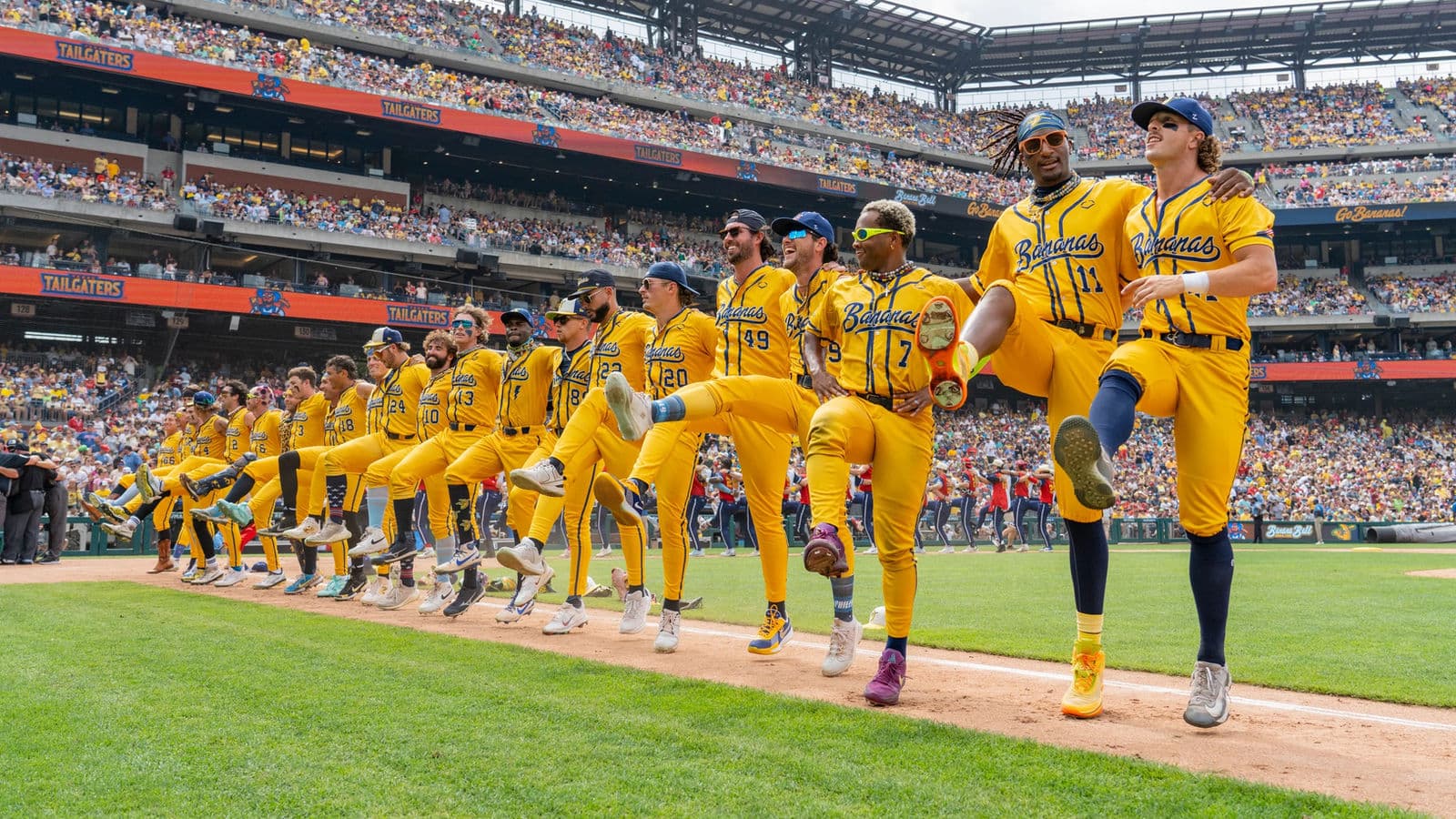
Then there are the Savannah Bananas. They ask the same question differently. Jesse Cole, the team's founder, did not ask how to get new fans excited about baseball. He asked what people find boring about baseball, and started changing exactly that. The result is Banana Ball: games capped at two hours. No traditional walks. Fans can record an out by catching a foul ball and, in theory, decide the game. Cheap tickets. No middlemen for merchandise or concessions.
Most recently, the Bananas played at Kyle Field, home of the Texas A&M Aggies. A hundred thousand spectators. Not for a playoff game. For a troupe of entertainers reinventing baseball. The Harlem Globetrotters, younger and on the diamond.
Is that still baseball? Sort of. Is it an answer to a real problem? Yes. Banana Ball is not the opposite of baseball. It is a different sport that uses baseball as its raw material. On top of that, for players who never make it to MLB, or whose careers there are behind them, the Banana Ball World Tour offers a real alternative. That is no small detail. It is an argument for expanding the ecosystem.
An Archive Called Hamburg
A thousand games. Over their history, the Hamburg Stealers have played a thousand championship games. It is a number that only really unfolds the second time you hear it. The Stealers do not play sixty games a season. There are more than thirty years of baseball history in that number. Losses, promotions, players who came and went. Coaches who eventually stepped away. Parents in the stands who are now parents of players themselves. Kids who stood on that field and now play in the league.
A thousand games is not an anniversary. It is an archive. And archives outlast trends. On the field, the Stealers are 7-3, second in the Northern Division. In the north, three teams are bunched together; in the south, around Heidenheim and Regensburg, it is the same picture. This could be a season that stays tight all the way into the playoffs.
Murakami leads MLB in home runs. The Bananas fill the biggest stadiums. And in Hamburg, someone is counting the thousandth game of a story that runs longer than most trends. These are three different answers to the same question. None of them is wrong. The sport needs all three at once. The spark comes from somewhere. Always. Sometimes it is a home run. Sometimes a button. Or simply an Elly De La Cruz jersey.
Read on
Catchball, Koshien, Wa
In Japan, baseball is not a sport. It is a stance, a culture, a society. Now Japan is sending back into the world what it made of the game.
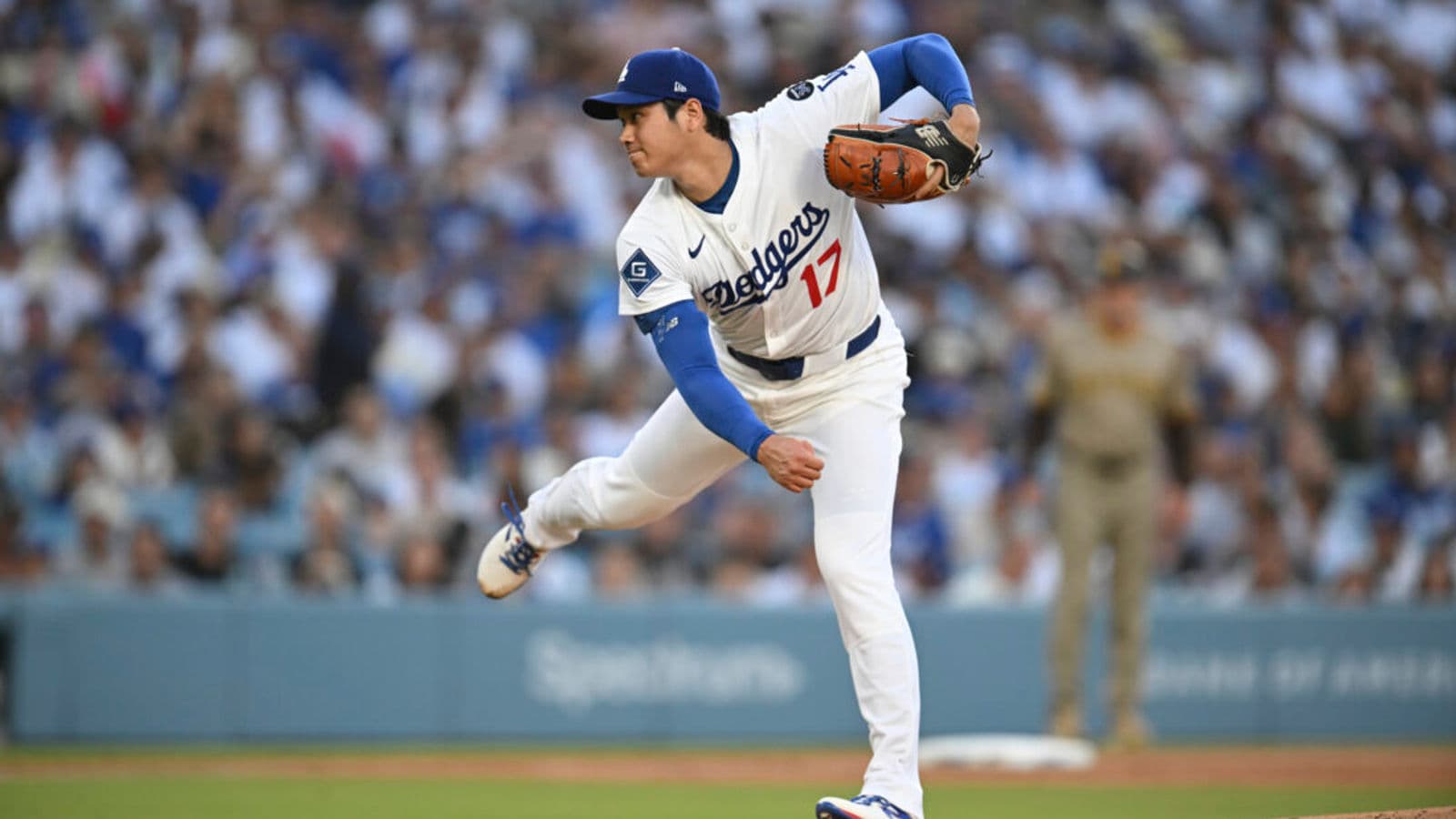
Shohei Ohtani: 10 Facts About the LA Dodgers' MLB Superstar
The Los Angeles Dodgers superstar has moved the limits of what seems possible in modern baseball. Ten facts about arguably the most extraordinary player in MLB history.
Double Play, Curacao-Style - it started with Bam-Bam
A double play takes two players and one moment. Curaçao has built an entire baseball culture on that principle. From Hensley Meulens to Andruw Jones, from Little League to the Major Leagues, from the Caribbean to Europe.