Catchball, Koshien, Wa
In Japan, baseball is not a sport. It is a stance, a culture, a society. Now Japan is sending back into the world what it made of the game.

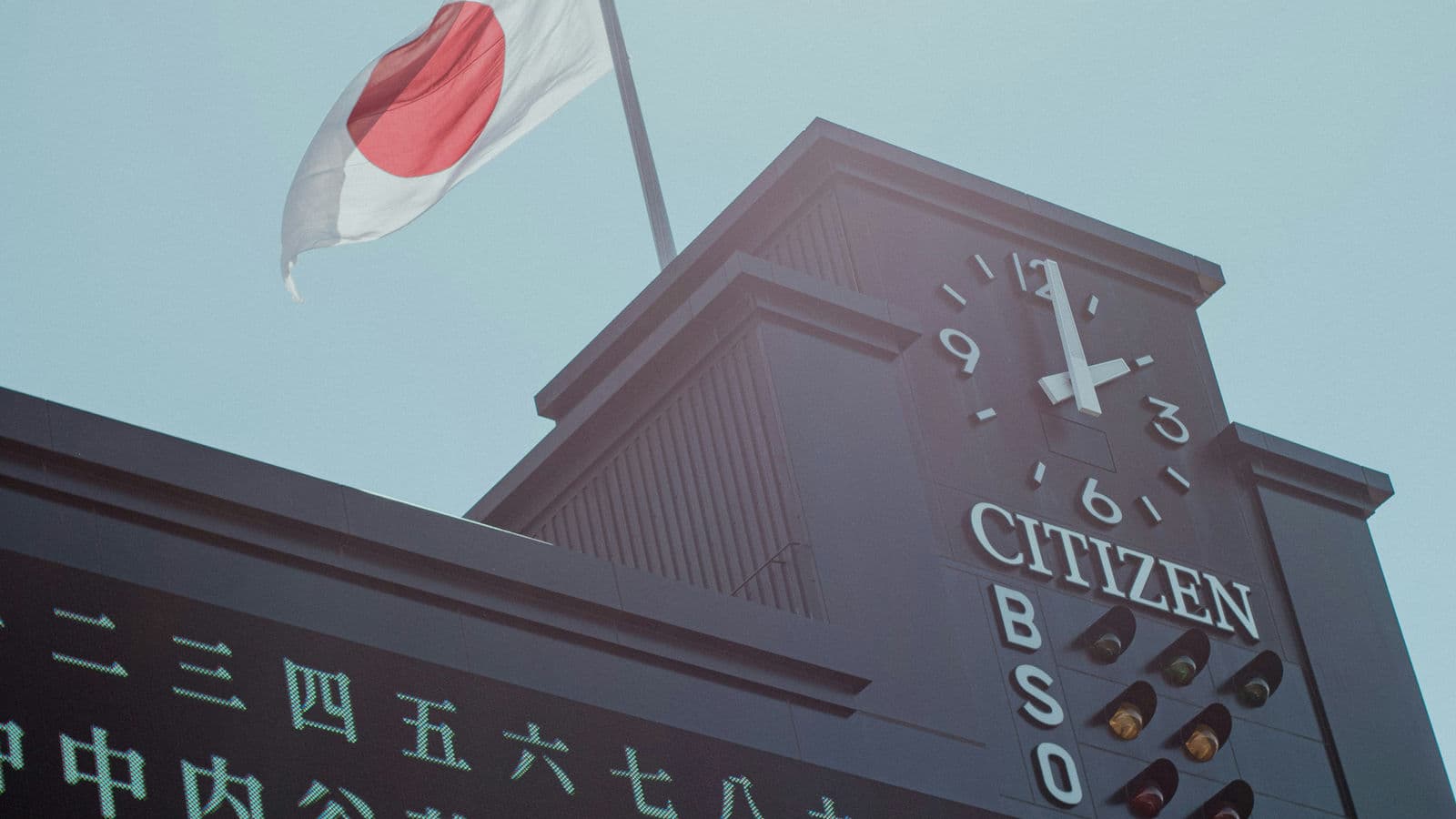
From a silent bow in Bavaria to the roar of Koshien, Japanese baseball is shaped by ritual, repetition, collective memory, and a game that continues to travel in both directions.
Armin-Wolf-Arena, Regensburg. Early on a Friday afternoon in April, the Guggenberger Legionäre and Mainz Athletics are preparing for a German Baseball League game. Batting practice is underway. Someone is making warm-up throws near the bullpen. The movements are familiar, the mood unhurried.
Then, somewhere between the two dugouts, something happens that almost nobody notices.
Kohei Sasagawa of Regensburg walks across the field. Coming the other way is Mainz pitcher Ryuto Konno. Two Japanese players in Germany, two opponents before the first pitch. They approach, stop roughly ten feet apart, and bow.
No words. No handshake or performative display of friendship. Just a brief, deliberate acknowledgment. Then each turns and heads back toward his dugout.
The entire exchange lasts perhaps two seconds. Yet it contains a vocabulary that runs deep through Japanese baseball culture: respect for the opponent, awareness of one’s place, and the understanding that competition begins with recognition.
Dodgers infielder Miguel Rojas encountered the same attentiveness on a much larger stage during the 2025 MLB Tokyo Series. More than 10,500 people came to Tokyo Dome simply to watch the Dodgers and Cubs work out. When Rojas hit the first home run of batting practice, the crowd responded immediately. Days later, fans understood that his ninth-inning walk would bring Shohei Ohtani to the plate once more.
“The attention to detail and kind of being present,” Rojas said afterward. “They were just watching the game.” The moment appears in Jason Sterman’s documentary Homecoming: The Tokyo Series, which explores the people, places, and crafts behind Japan’s relationship with baseball. MLB’s account of the film and Tokyo Series describes a fan culture interested not only in spectacle, but in the smallest internal movements of the game.
In Tokyo, thousands were watching. In Regensburg, almost nobody was. That is precisely why the bow mattered.
The Grammar of Respect
One word frequently used to interpret Japanese social life is wa: harmony, unity, or social balance. In baseball, it offers a useful frame—as long as it does not become a convenient way of reducing an entire country to a single national characteristic.
Japanese baseball is not a system in which individuality disappears. The game would make that impossible. Every plate appearance isolates a hitter. Every pitch leaves one player holding the ball. A team succeeds only when individuals execute their roles under pressure.
What wa describes is the relationship between those individual acts and the group around them. Personal ability matters, but it is expected to serve a collective purpose. Preparation, discipline, and consideration for teammates are not treated as background virtues. They are part of performance itself.
This is visible in the bow toward the field, in the attention paid to equipment, in the carefully defined roles within a clubhouse. It also helps explain why the sacrifice bunt became such an enduring image of Japanese baseball: one hitter voluntarily gives up an out to advance a teammate.
The metaphor is tempting, perhaps too tempting. Japanese baseball cannot be explained by bunting, just as American baseball cannot be explained by the home run. Tactics change. Analytics travel. Players and coaches continually question inherited methods. But the cultural resonance remains: an individual action acquires meaning through what it makes possible for the group.
Nowhere is that relationship between player, team, school, and society more visible than at Koshien.
Koshien and the Weight of Youth Baseball
Hanshin Koshien Stadium in Nishinomiya is the home of the Hanshin Tigers, but twice a year it becomes the center of Japanese high school baseball. The national invitational tournament is held in spring; the national championship follows in summer. Thousands of schools enter regional qualifying, with the surviving teams advancing to a tournament broadcast across the country.
For many young players, reaching Koshien is not simply preparation for a professional career. It is the destination itself.
A future in Nippon Professional Baseball or Major League Baseball remains uncertain and distant. Koshien is immediate. It represents a school, a prefecture, a family, and years of repetition compressed into a few summer innings. Offices and restaurants show the games. Alumni follow schools they left decades earlier. Teenagers become national figures before returning to classrooms.
Players traditionally bow when entering or leaving the field. Eliminated teams collect dirt from the infield as a keepsake, carrying away a physical piece of the place they worked to reach. On August 15, play pauses at noon for a moment of silence marking the anniversary of Japan’s surrender in 1945—a ritual that places teenage baseball inside the country’s complicated public memory of war. The Koshien observance is both familiar and contested, proof that even the most established traditions can contain unresolved history.
Koshien is often associated with doryoku: sustained, relentless effort. That ideal can be inspiring, but it also has a harder edge. Japanese high school baseball has long faced criticism over exhausting practice schedules, strict hierarchies, overuse of young pitchers, and an institutional culture that has not always left much room for dissent.
The close-cropped bōzu haircut once seemed almost inseparable from the image of the Japanese high school player. It signaled discipline and membership in the group, but it could also be compulsory. That convention is changing. A 2023 survey found that only 26.4 percent of high school teams still required players to shave their heads, down from 76.8 percent five years earlier. Nearly 60 percent reported having no specific hairstyle rule. The shift away from mandatory buzz cuts reflects a broader conversation about autonomy, coaching, and the place of individuality within school sports.
That evolution matters. Japanese baseball culture is not a museum piece, and wa does not necessarily mean passive obedience. Harmony can be negotiated. Traditions can survive while the conditions around them change.
Koshien endures partly because it holds so many contradictions at once: innocence and institutional pressure, school identity and national spectacle, private ambition and public responsibility. It is a tournament played by teenagers onto which adults project memory, discipline, regional pride, and competing ideas about what young people should become.
Catchball, the Quiet Center of the Game
If Koshien is Japanese baseball at its most public, catchball is the game at its most intimate.
Catchball is the Japanese term for what Americans usually call playing catch. The action could hardly be simpler: throw the ball, receive it, return it. No umpire, standings, or crowd. Just distance, rhythm, and another person.
In parks across Japan, catchball passes between parents and children, grandparents and grandchildren, friends, teammates, and strangers learning how firmly they can trust one another’s hands. It transfers technique, certainly: grip, footwork, the movement of the shoulder, the quiet absorption of the ball into the glove. But it also transfers habits of attention.
The word itself sounds almost tender. Catchball turns throwing into a conversation in which the question and answer have the same shape. One person must offer a catchable ball. The other must be ready. Every return begins with receiving what someone else has sent.
Baseball’s slow accumulation of repetitions makes this exchange foundational. The professional game may be surrounded by data, contracts, television, and commercial spectacle, but it still depends on the gesture learned in a park: I throw; you catch; you give it back.
Inside NPB ballparks, that quiet exchange becomes organized noise. Supporter sections use brass instruments, drums, flags, and player-specific songs. The chants are coordinated, often changing with the hitter and the situation. Home and visiting support occupy distinct spaces and rhythms, creating an atmosphere that is intensely emotional without being accidental.
This is not restraint replacing passion. It is passion given structure.
That same combination could be felt during the Tokyo Series workout. More than 10,000 people were willing to watch batting practice because batting practice was not treated as disposable pregame content. It was baseball: another chance to study timing, movement, routine, and craft.
The Game Travels Both Ways
Kohei Sasagawa shares a small but remarkable piece of history with Shohei Ohtani. In 2012, both were selected for Japan’s team at the U-18 Baseball World Championship in South Korea. Today, one plays in Regensburg; the other has changed the possibilities of the modern major leagues. Regensburg’s announcement of Sasagawa’s arrival noted their place on that same teenage roster.
Their careers are not comparable, nor do they need to be. Their connection reveals the scale of Japan’s baseball system: high school teams, universities, industrial-league clubs, NPB organizations, national programs, and increasingly international careers that lead far beyond the most familiar route to MLB.
Ohtani has made parts of Japanese baseball visible to audiences who previously saw only fragments. His two-way ability is the obvious attraction, but the quieter details travel with him: his routines, the care shown toward equipment, the acknowledgment of opponents, the constant recalibration between individual achievement and team result.
Sterman’s Homecoming follows that curiosity away from the superstar himself. It visits youth coaches and craftspeople who make gloves and bats with an almost instrument-maker’s attention to longevity. Ohtani becomes not the explanation for Japanese baseball culture, but an entrance into a much larger world.
That world was never created in isolation. Baseball in Japan has always been an exchange.
Masanori Murakami became the first Japanese player in Major League Baseball when he debuted for the San Francisco Giants on September 1, 1964. He was 20 years old. Originally sent from the Nankai Hawks as part of a developmental arrangement, Murakami proved he belonged in the majors, pitching again for San Francisco in 1965. A dispute over his contractual rights followed, and he returned to Japan for the 1966 season.
Another Japanese player would not appear in MLB until Hideo Nomo joined the Dodgers in 1995. Nomo was followed by Ichiro Suzuki, Hideki Matsui, Daisuke Matsuzaka, Yu Darvish, Ohtani, and a growing list of players whose careers have made the Pacific feel less like a boundary than a heavily traveled baseball route. The National Baseball Hall of Fame’s history of Murakami places his debut at the beginning of that modern lineage.
But the traffic has never moved in only one direction. American players including Randy Bass, Warren Cromartie, and Bobby Valentine built influential careers in Japan. Japanese teams toured the United States; American teams toured Japan. Ideas about coaching, equipment, entertainment, tactics, and fandom moved with them. The Hall of Fame’s exhibition Yakyu | Baseball describes the relationship as a 150-year transpacific exchange, not a simple story of an American game exported and copied elsewhere.
Yuriko Gamo Romer’s documentary Diamond Diplomacy takes the same long view. Structured around Murakami and Cromartie, the film follows baseball through war, racism, player exchanges, international relations, and reconciliation. It treats the sport as a form of people-to-people diplomacy: an imperfect but persistent way for two societies to encounter one another.
Japan did not merely receive baseball. It interpreted the game, argued with it, ritualized it, commercialized it, and sent changed versions of it back into the world.
Two Murakamis, Two Eras
Six decades after Masanori Murakami’s debut, another Murakami arrived in the major leagues.
Masanori and Munetaka Murakami are not related. They share a common surname and a place in the history of Japanese baseball abroad.
Munetaka Murakami entered MLB after becoming one of NPB’s defining hitters. In 2022, his 56 home runs set the single-season record for a Japanese-born player, surpassing Sadaharu Oh’s mark of 55. He signed a two-year, $34 million contract with the Chicago White Sox before the 2026 season.
Then he homered in each of his first three major-league games—something only three players before him had done. His first hit in MLB was an Opening Day home run. By August 16, after missing six weeks with a hamstring injury, he had reached 28 homers in his rookie season and helped push the White Sox into first place in the American League Central. Reuters reported his 28th as the decisive swing in a comeback win over Detroit.
The two Murakamis represent different moments in the same continuing exchange. Masanori crossed an uncertain boundary before a reliable path existed. Munetaka arrived in a league already transformed by generations of Japanese players.
The connection is not blood. It is infrastructure, memory, and possibility.
Before the First Pitch
Back in Regensburg, Sasagawa and Konno carry this history into a league far removed from Tokyo Dome, Koshien, or Dodger Stadium. That distance is part of the story.
The global life of Japanese baseball cannot be measured only through superstars and posting agreements. It is also present in industrial-league veterans moving to Germany, young players emerging from NPB organizations, coaches working in unfamiliar languages, and teammates learning one another’s routines.
A Japanese player abroad does not carry a fixed national essence in his equipment bag. Each has his own temperament, ambitions, and relationship to the culture that formed him. But habits travel. So do gestures.
Playing catch before practice. Caring for the field. Recognizing an opponent. Understanding that respect does not weaken competition but makes competition possible.
Sasagawa and Ohtani once stood in the same national-team uniform. Their careers moved in radically different directions: one toward the most visible stage in the sport, the other through university and Japan’s industrial leagues to a ballpark in Bavaria. Both routes belong to baseball’s international landscape.
The game is often described through arrival: who introduced it, who exported it, who reached the majors first. Its deeper history is circular. Baseball moves, settles, acquires new meanings, and moves again. No country retains sole ownership of what the game becomes.
On that Friday afternoon in Regensburg, Sasagawa and Konno stop ten feet apart. They bow. Then they return to their dugouts.
The first pitch has not yet been thrown. The culture of the game is already in motion.
Read on
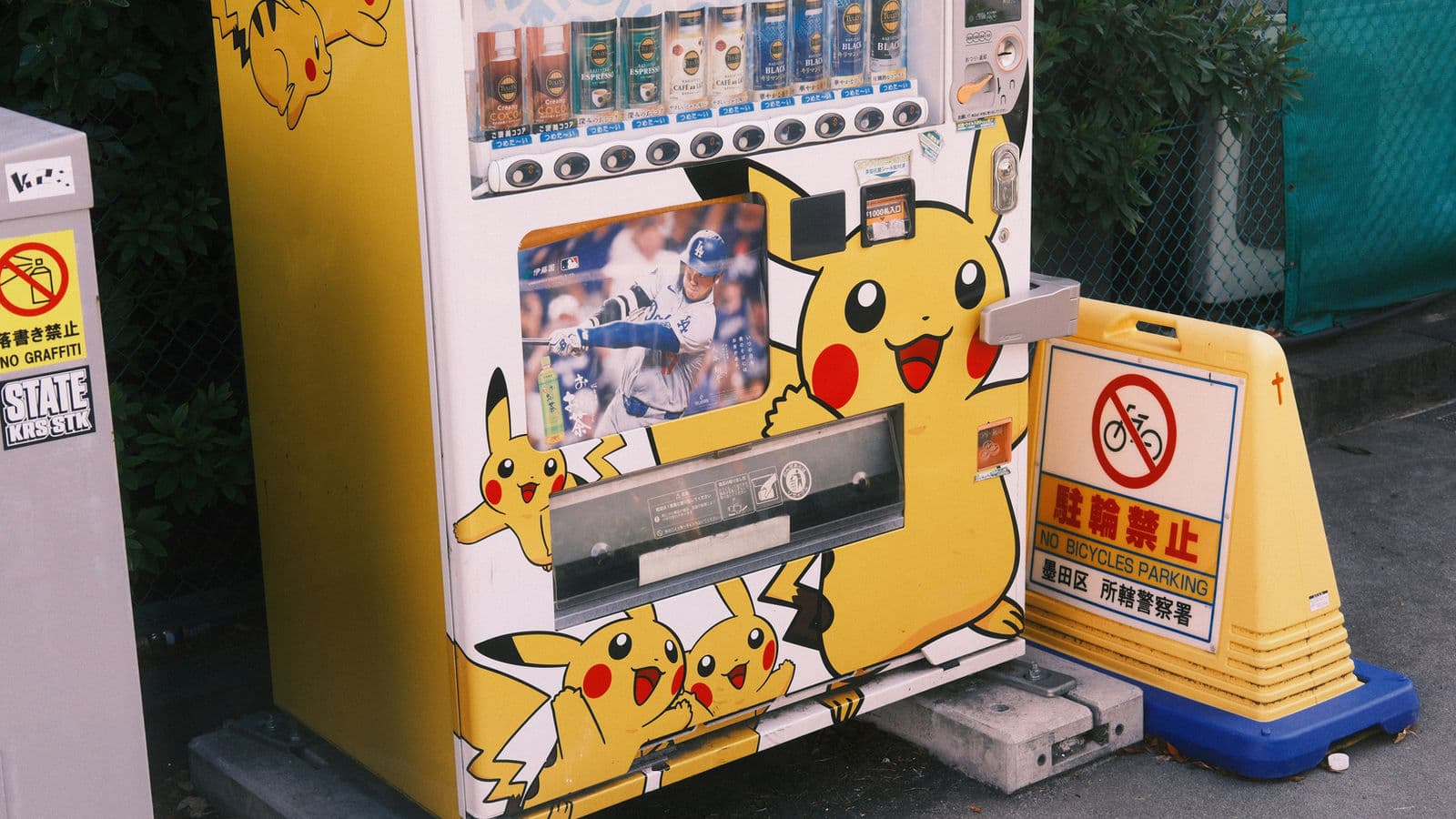
Why Baseball Works Differently in Japan Than in the USA
How an American invention was transformed in the Far East into something entirely its own, almost sacred. Or: why does baseball work so fundamentally differently in Japan than in its country of origin?
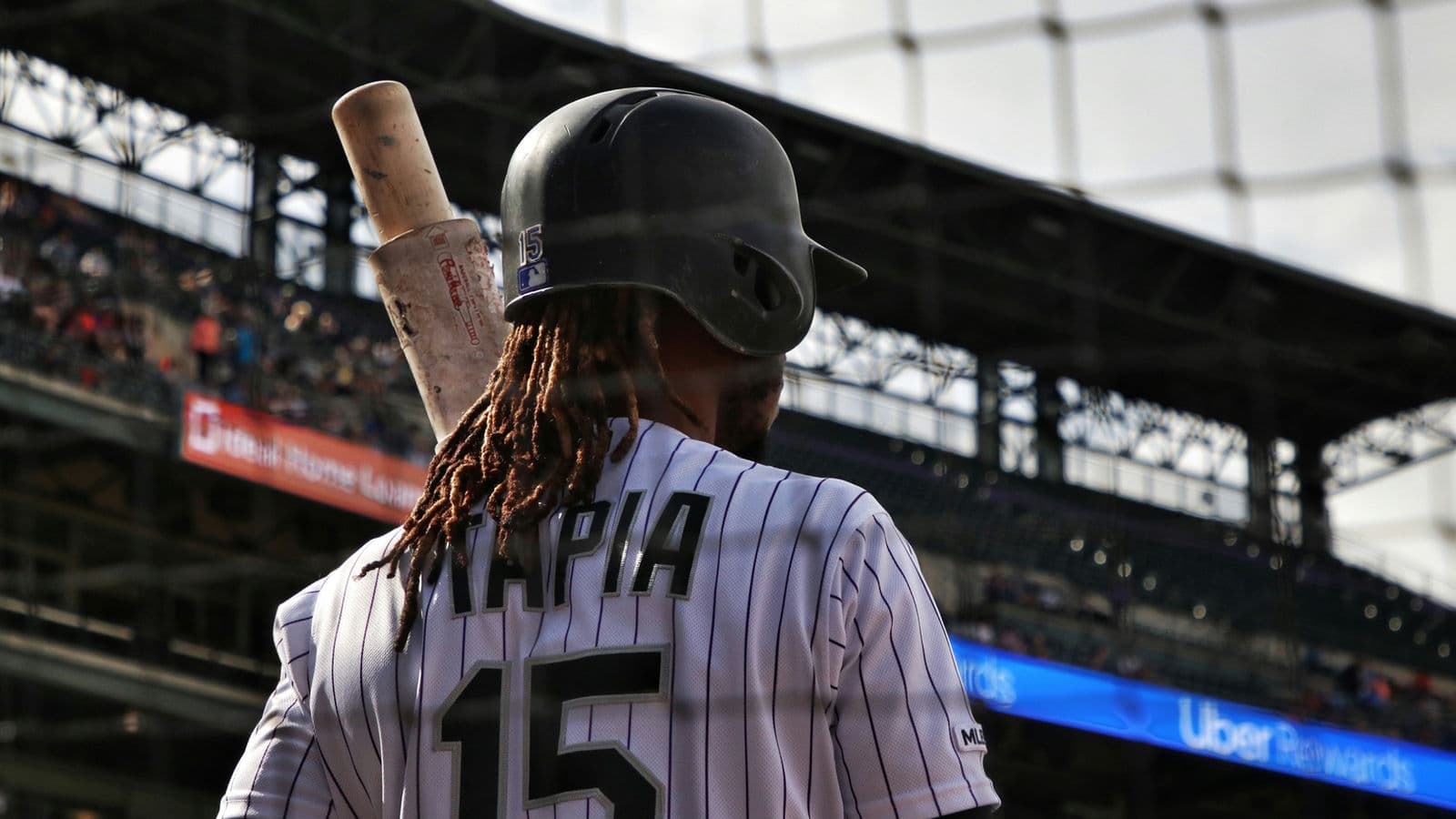
When Baseball Dances
From the drumbeat in a WBC dugout to national holidays to a small town in Indiana where Latin baseball built the sport a new home: how baseball became the shared language of an entire hemisphere.