When Baseball Dances
From the drumbeat in a WBC dugout to national holidays to a small town in Indiana where Latin baseball built the sport a new home: how baseball became the shared language of an entire hemisphere.

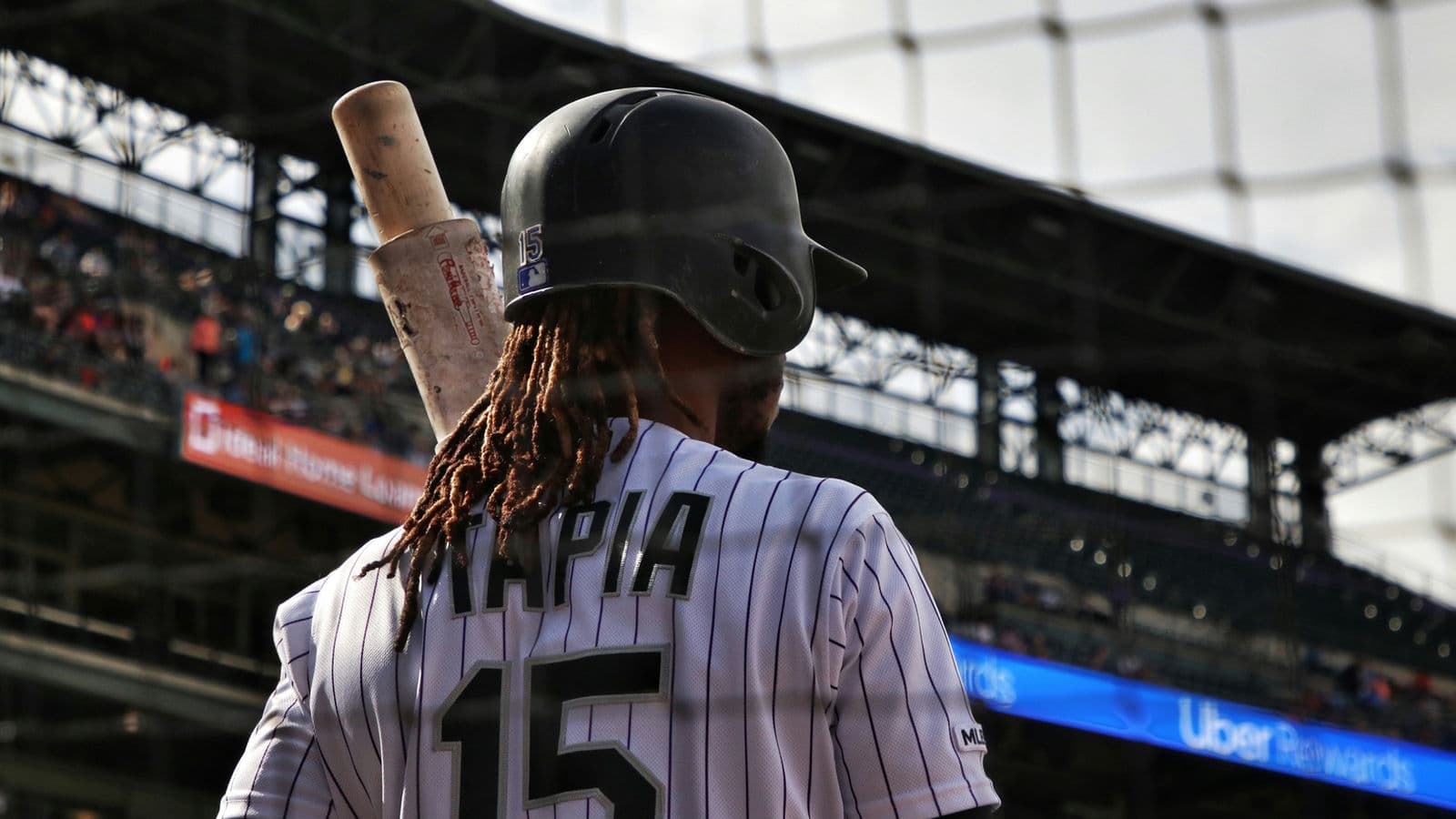
At the 2026 World Baseball Classic, Venezuela’s tambores turned a dugout ritual into the sound of a championship. But the beat belongs to a much longer story—one of migration, resistance, community, and a sport repeatedly remade by the people who adopted it.
Miami, March 17, 2026
Before each game of the 2026 World Baseball Classic, the Venezuelan pitcher had gathered his teammates around el tambor. Ronald Acuña Jr., Luis Arráez, Wilyer Abreu, Gleyber Torres, and the rest of the roster took turns entering the circle while Bazardo supplied the rhythm. He had learned to drum at seven, following his older brother Gabriel, a tambor singer. The instrument, he said, was not a prop. “It’s part of us.”
Now Daniel Palencia stood on the mound. Venezuela led the United States 3–2. Roman Anthony was the final batter. Palencia delivered a 99.7 mph fastball, Anthony swung through it, and Venezuela became a World Baseball Classic champion for the first time.
The final had already tilted twice. Bryce Harper’s two-run home run had tied the game in the eighth. Eugenio Suárez answered with a go-ahead double in the ninth. Palencia finished it, retiring the side in order before Venezuela’s players poured onto the field.
Most of the 36,190 people inside loanDepot park appeared to be pulling for Venezuela. Many remained for half an hour after the final out, joining the players in singing “Gloria al Bravo Pueblo,” the national anthem. Acuña wiped tears from his face. “My country needs that championship,” he said. “I just want to make my people proud.”
In Caracas, horns sounded into the night. The following day, Venezuela declared a national holiday. The score was 3–2, but the meaning of the night could not be contained by a box score.
It was there in the rhythm.
How an Import Became an Identity
Baseball’s journey through Latin America is too complicated for a clean origin myth.
The game arrived in Cuba during the 1860s through several routes: Cuban students returning from the United States, sailors entering Havana’s ports, trade, travel, and the expanding cultural reach of a neighboring power. It was imported—but quickly detached from the people who had brought it.
During Cuba’s Ten Years’ War against Spain, baseball came to represent modernity and national self-determination. Spanish colonial authorities moved against the game while promoting bullfighting, a spectacle associated with the empire. The result was a familiar cultural paradox: an attempt to suppress baseball only gave it greater political meaning.
A borrowed game became a Cuban one.
From Cuba, baseball traveled through students, workers, merchants, exiles, and sailors to Puerto Rico, Mexico, Venezuela, the Dominican Republic, Panama, and beyond. It did not develop identically in each place. The rhythms, language, institutions, and social meanings changed from country to country. What connected these baseball cultures was not a single “Latin style,” but the ability to absorb the game and make it local.
Esteban Bellán, born in Havana in 1849, became the first Latin American to play at the highest level of professional baseball in the United States. He appeared for the Troy Haymakers in the National Association in 1871 and later returned to Cuba, where he helped establish the island’s organized game. His career opened a route that remained shaped by race.
Light-skinned Latin American players could sometimes pass through the color line of white organized baseball. Darker-skinned players were excluded and pushed toward the Negro Leagues. Cuban winter baseball, by contrast, offered opportunities for Black, white, Latino, and African American players to compete together long before Major League Baseball integrated.
That does not mean Cuban society was free from racism. It means its ballfields occasionally created forms of competition that segregated U.S. baseball refused to permit. Black American players including Oscar Charleston and Willie Wells became stars in the Caribbean, while Cuban players such as Martín Dihigo and José Méndez built careers across national and racial boundaries.
Baseball was already global. Its official institutions simply had not caught up.
Roberto Clemente later carried that history into a new era. The Puerto Rican outfielder refused to separate athletic excellence from personal dignity. He spoke openly about racism, challenged the treatment of Latin American players, insisted that journalists respect his Spanish-language identity, and turned his public stature toward humanitarian work.
When Clemente died on December 31, 1972, in a plane crash while attempting to deliver aid to earthquake victims in Nicaragua, the grief extended far beyond Pittsburgh. He became the first Latin American player elected to the Baseball Hall of Fame and remains one of the game’s clearest symbols of responsibility beyond the field.
His reach extends even to Germany. The Mannheim Tornados, the country’s record champions, play their home games at Roberto Clemente Field.
The Music Before the First Pitch
In Venezuela’s coastal communities, tambores belong to weddings, family celebrations, beaches, and neighborhood parties. They are rooted in Afro-Venezuelan musical traditions and often emerge around midnight, during the hora loca—the crazy hour, when a gathering breaks open and everybody is invited into the circle.
At the WBC, the hour arrived early.
Bazardo played. Acuña, Arráez, Abreu, and Torres danced. Teammates clapped around them. Whenever a Venezuelan batter reached base, he turned toward the dugout and mimed striking the drum. The gesture moved between the field and the stands until players and supporters appeared to be keeping the same time.
“What you see right there, that’s us,” manager Omar López said. “That’s our country. That’s winter ball. That’s how we enjoy our baseball.”
The distinction matters. This was not a celebration invented for television or a piece of branded content designed to make the team appear culturally distinctive. The television cameras arrived after the ritual already existed.
Modern baseball has become extremely good at measurement. Front offices can calculate the probability of a hit, model defensive positioning, quantify pitch movement, and project the value of nearly every decision. None of that diminishes the game. But it cannot fully explain why a group of players begins every night by dancing around a drum—or why thousands of people recognize themselves in the gesture.
Sabermetrics could describe how Venezuela won. The tambor explained who was winning.
The Dominican Republic: Infrastructure, Hope, and Weight
No country outside the United States supplies more players to Major League Baseball than the Dominican Republic. On 2025 Opening Day, MLB rosters and inactive lists included exactly 100 Dominican-born players.
That number is not the product of some mystical national talent. It is the result of culture and infrastructure.
MLB organizations operate academy complexes across the Dominican Republic, with ballfields, dormitories, classrooms, dining facilities, medical staff, and strength programs. Scouts begin following players in their early teens. The most promising prospects can sign professional contracts at 16.
Baseball is everywhere: in streets, on improvised fields, on television, in family conversations, and in the public imagination. It is played for pleasure, but also with an awareness of what success might change.
“For us, baseball is like a religion,” said Nelson Cruz, a veteran of four WBC tournaments and general manager of the Dominican team in 2026. Vladimir Guerrero Jr. offered his own three-part definition: “Our homeland, baseball, and the Bible.”
The language can sound romantic from a distance. Up close, it describes both possibility and pressure.
A professional contract can transform the circumstances of a player’s family. It can also place adult expectations on a teenager. For every Dominican superstar whose name travels around the world, many more players move through academies and minor league towns without reaching the majors. Some arrive in the United States speaking little English, separated from their families and learning an unfamiliar country alongside the demands of professional baseball.
The academy system carries hope, but hope is not weightless.
This is where veteran Latin American players often perform a role that never appears in their statistics. They translate language and clubhouse behavior. They explain money, travel, loneliness, and failure. They show younger players how to survive the disorientation that comes with being treated as an asset before they have learned how the industry works.
Pedro Martínez has described this kind of mentorship as one of the most important responsibilities an established Latin American player can assume. It is the social structure behind the depth chart.
Pimienta and the Unwritten Rules
For generations, Major League Baseball enforced a narrow etiquette around emotion. Hit a home run, lower your head. Toss the bat gently. Circle the bases without appearing too pleased. Act like you’ve been there before.
Celebration could be interpreted as disrespect, particularly when it came from Latin American players. Bat flips, gestures toward the dugout, or visible joy were often treated as violations of baseball’s “unwritten rules.” The punishment might arrive as criticism, a lecture, or a fastball aimed at the ribs during the next plate appearance.
The code presented restraint as universal when it was, in fact, cultural.
In many Caribbean baseball traditions, emotion is not added to the game after the result. It is part of how the game is played. Pimienta—heat, spice, edge—is not simply showmanship. It can communicate attachment: to a family, a neighborhood, a winter league club, or a country.
To sprint around the bases after the biggest home run of your life as though nothing happened may satisfy an old American convention. It may also be emotionally dishonest.
The 2026 WBC made the contrast visible, but it did not demand that every team celebrate in the same way. Italy brought an espresso machine into its dugout. Home run hitters received coffee, kisses on both cheeks, and an Armani sport coat. Manager Francisco Cervelli explained the ritual in everyday terms: coffee in Italy is not fuel so much as social life—stop at a café, talk, drink, continue walking.
The espresso machine became one of the tournament’s defining objects. It was funny, specific, and unmistakably connected to the identity the team wanted to express. Italy reached the WBC semifinals for the first time, turning each home run into a small ceremony of inherited culture.
Team USA looked different. Its celebrations were quieter and its emotional register more controlled. When critics suggested that the Americans were not having enough fun, Pete Crow-Armstrong rejected the idea that they should imitate Juan Soto’s shuffle or Guerrero’s gestures.
“That’s them,” he said. Copying it would not feel authentic.
It was one of the tournament’s more perceptive observations. The point of the WBC is not that every country must dance. It is that every team is allowed to reveal something about why and how it plays.
Japan has its own disciplined rituals. Puerto Rico brings plena. The Dominican Republic moves through merengue, bachata, dembow, and the charged noise of winter ball. Italy serves espresso. Venezuela enters through the tambor. The United States searches for an expression that feels like its own.
One sport; many emotional languages.
The challenge for Major League Baseball is to remember those languages once the WBC ends. ESPN’s Jeff Passan argued that MLB could do far more to embrace Latin American baseball culture throughout the 162-game season. The idea should extend beyond occasional theme nights. A community should not always be invited to the ballpark as a guest. Sometimes it should be allowed to act as the host.
The people who carry the game should have a role in defining how it feels.
Saturday Morning in Frankfort, Indiana
The coolers are already lined up beside the field. Somebody has connected a phone to a Bluetooth speaker. The announcements are in Spanish. Parents unfold their chairs while children run through the outfield between innings.
This is Frankfort, Indiana, a small Midwestern city with a large Mexican and Mexican American community. Here, Latin American migrants and their families built the Third Street League.
There are no major sponsors or television crews. Nobody has installed a pitch-tracking system. The games take place in front of families rather than scouts.
That does not make this a purer version of baseball. It makes it a version serving a different purpose.
The academy game is built around development and economic possibility. The Third Street League is built around continuity. Baseball becomes a way of carrying memory into a new place: familiar words, familiar food, familiar music, familiar arguments over close plays. Children inherit a culture while becoming part of another one.
The league shows how sports travel with people. Migration does not move only labor from one country to another. It moves rituals, aesthetics, rivalries, gestures, and ways of spending a Saturday.
Latin American baseball culture does not end at the Caribbean shoreline or the southern border of the United States. It reappears wherever communities rebuild the conditions that allow it to live.
Sometimes that means a packed stadium in Miami. Sometimes it means a field in an Indiana town of 16,000 people.
The Game Beneath the Game
The 2026 final carried a political weight that neither team could escape.
In January, U.S. forces captured Venezuelan President Nicolás Maduro and his wife, Cilia Flores, during a military operation in Caracas. Delcy Rodríguez assumed power as acting president, leaving the country in a state of political uncertainty.
Venezuelan players were careful with their public statements. Some feared that political comments made in the United States could affect relatives and friends at home. Manager Omar López eventually asked reporters to stop questioning him about the situation. Baseball could not remove the politics, but it offered a language through which the team could speak about Venezuela without speaking for its government.
“Nobody believed in Venezuela,” Suárez said after driving in the winning run. “Now we won the championship.”
His words belonged to the people rather than a political party.
That distinction shaped the celebration. The players were not endorsing a regime when they wrapped themselves in the flag. The diaspora inside loanDepot park was not expressing a single political position. The anthem could contain grief, anger, homesickness, relief, and pride at the same time.
After the final out, Harper crossed the field to congratulate the Venezuelan players. “They had a great tournament,” he said. “They’re the best team in the world.”
It was a simple sporting gesture. In that moment, it was also exactly enough.
The Tambores Remain
The tournament ended. The players returned to their MLB clubhouses, where the season resumed its longer, quieter rhythm.
The drum did not follow every Venezuelan player. It did not need to.
People now knew Maikel García, the tournament MVP. They knew why players turned toward the dugout and mimed striking a drum after reaching base. They understood that the dance was not a spontaneous piece of entertainment but a fragment of cultural memory carried onto one of baseball’s largest stages.
The history of Latin American baseball is not a story about one region receiving an American game. It is a story about exchange, resistance, adaptation, and ownership. The sport arrived through unequal histories and was remade by the communities that claimed it.
Cuba transformed baseball into an expression of national identity. Black and Latin American players expanded its geography while U.S. organized baseball excluded them. The Dominican Republic built a development system around it. Migrants carried it to cities such as Frankfort. Venezuela brought the tambor into the dugout and left Miami with a championship.
Latin America did not simply inherit baseball.
It taught the game new ways to move.
Read on
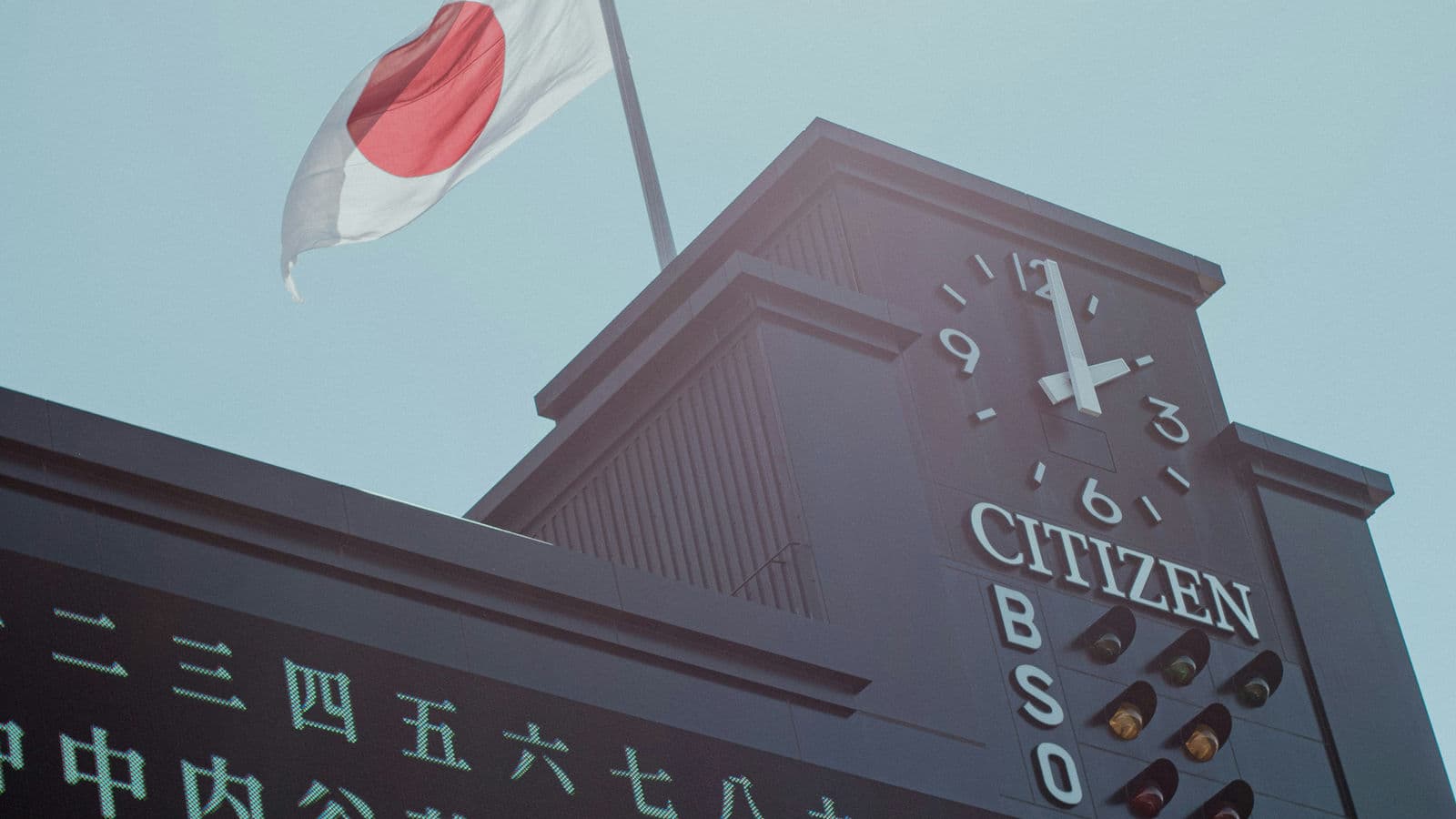
Catchball, Koshien, Wa
In Japan, baseball is not a sport. It is a stance, a culture, a society. Now Japan is sending back into the world what it made of the game.
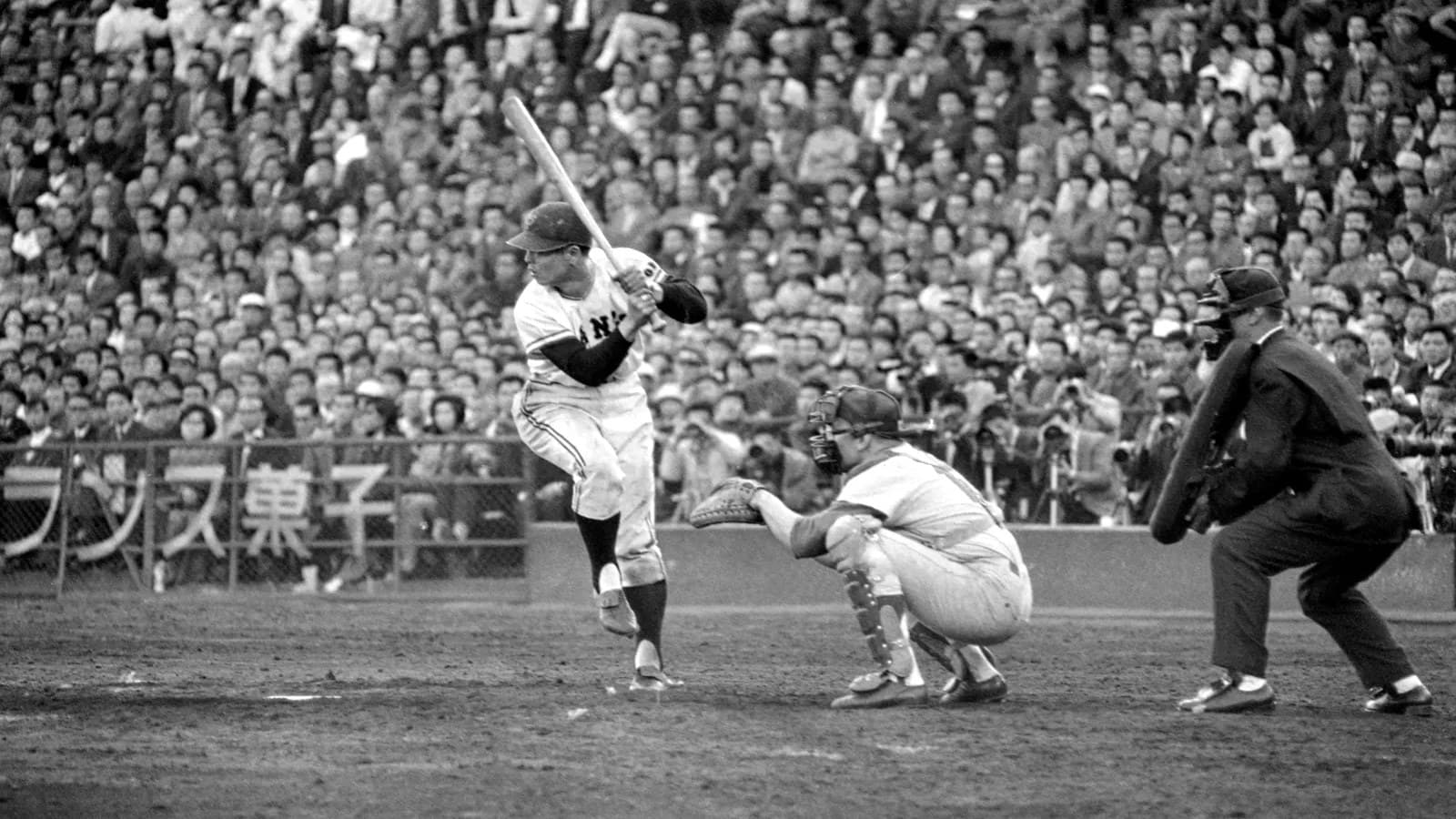
The People Who Made Baseball a World Culture
From Babe Ruth to Shohei Ohtani: the figures who shaped baseball far beyond the sport itself – on the field, in the media, in politics and in pop culture.