El Alemán
From Mannheim's U.S. military communities to the ballfields of the Dominican Republic, Bull built a coaching philosophy around energy, intelligence, and the stubborn work of developing German players for a global game.

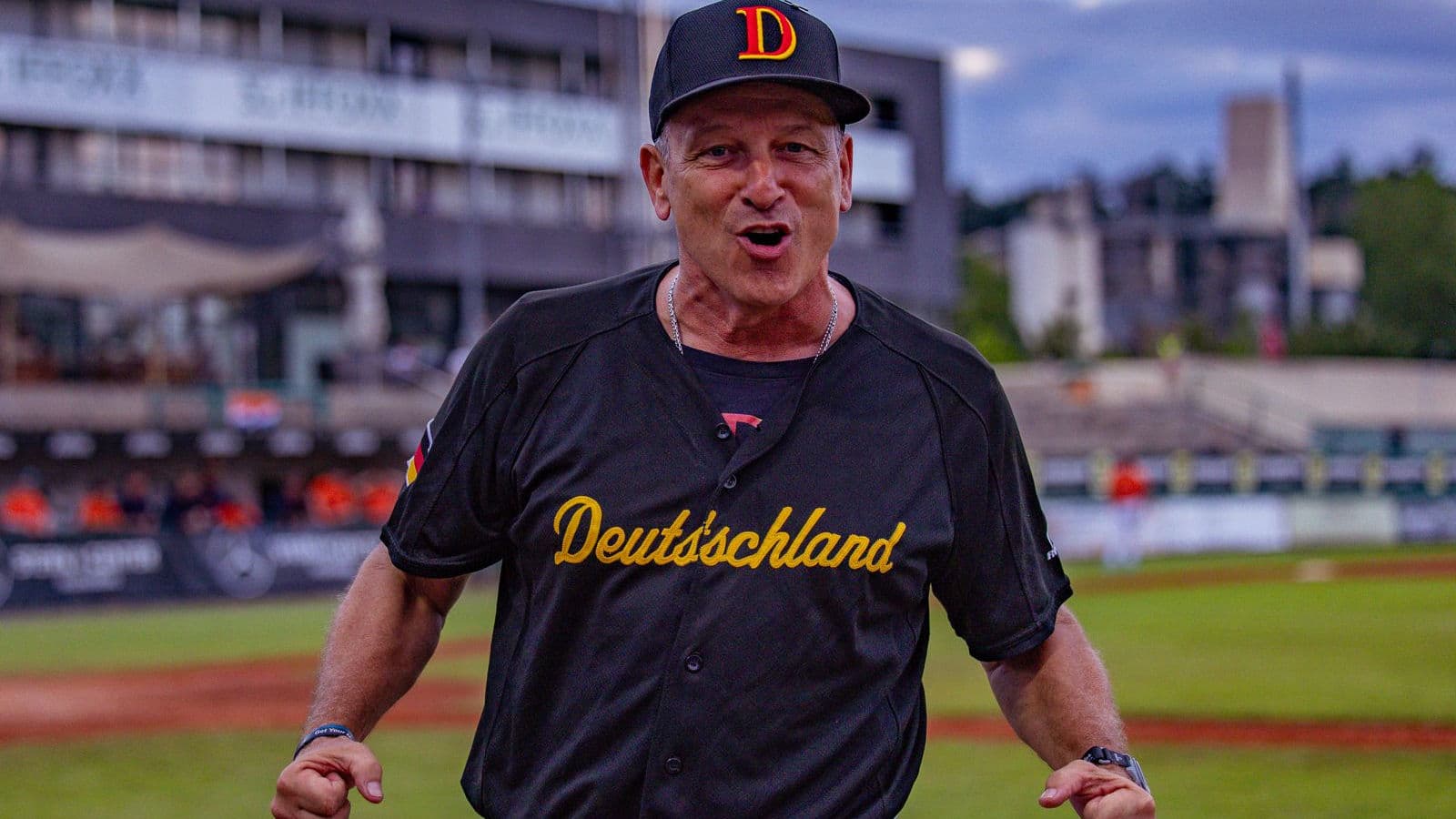
From Mannheim’s U.S. military communities to the ballfields of the Dominican Republic, Bull built a coaching philosophy around energy, intelligence, and the stubborn work of developing German players for a global game.
The Wi-Fi in Cabarete comes and goes. Georg Bull sits in a pub on the Dominican Republic’s north coast, an ice-cold Presidente beside him, his voice breaking through the connection like a distant radio signal.
It is an appropriate setting. Bull has spent much of his life moving between baseball worlds: Germany and the Caribbean, disciplined instruction and emotional expression, the orderly structures of European club sports and the improvisational intensity of the Dominican game.
At 62, his résumé is unusually broad. He has won five German championships as a player, captained the national team, coached Germany’s youth teams, helped shape the German Baseball Academy and entered the German Baseball Hall of Fame. Yet the titles tell only part of the story. Bull’s deeper influence lies in the ideas he carried home—and in his conviction that German baseball could develop its own identity by looking beyond its borders.
A Baseball Childhood in Mannheim
Bull first encountered baseball in Mannheim in 1971. He was seven years old when he watched a group of Puerto Rican boys playing the game.
At the time, the city was home to a large U.S. military community. Places such as Benjamin Franklin Village created an American presence within postwar Germany, bringing basketball courts, ballfields, music, food, and different social rhythms into everyday life. Bull began playing Little League there, in a country where baseball remained a marginal pursuit.
“I grew up with that Latino flair,” he says.
In Mannheim, baseball filled the summers and hockey the winters. Bull played goalie on the ice, but baseball soon became the lasting obsession. He developed into a catcher and third baseman, dependable at the plate and sufficiently commanding to captain the German national team.
His five German championships came with three clubs: the Mannheim Amigos in 1983 and 1992, the Trier Cardinals in 1996, and the Untouchables Paderborn in 2001 and 2002. In 2015, he became the 14th person inducted into the German Baseball Hall of Fame.
But even during his playing career, Bull was searching for something that German baseball could not yet give him.
Falling for the Dominican Game
In the 1980s and ’90s, Bull traveled to the Dominican Republic and found his way into an independent professional league. According to the German Baseball Academy, he became the first German known to have played in both the Dominican Republic and South Africa.
“I more or less stumbled into an independent professional league in the Dominican Republic,” he later recalled on the Base on Balls podcast. “And I fell in love—with the country, but especially with the complete emotionality of the game.”
That emotionality was not theatrical decoration. It shaped how players competed, communicated, recovered from failure, and understood their place within a team.
Bull watched games at Estadio Quisqueya in Santo Domingo and traveled to San Pedro de Macorís, one of the country’s essential baseball cities. He built relationships with Dominican players and coaches, including his longtime associate Napoleon Calzado. Later, he began bringing German players with him.
Even softball offered an education. In the Dominican Republic, Bull says, former players do not necessarily leave the game when their professional careers end. Many move into softball, where the competition remains serious and the community around it deeply rooted.
“That’s where it really begins,” he says.
Bull sometimes describes Dominican baseball as el sueño de los pobres—the dream of the poor. In his reading, the game can represent economic possibility not only for an individual player but for an entire family or neighborhood.
It would be too easy to reduce Dominican baseball to an escape story. Its culture is richer than that, built from local pride, pleasure, memory, rivalry, and generations of accumulated knowledge. But the financial stakes Bull encountered were real. Young players entered academy systems early, carrying ambitions that extended far beyond personal achievement.
For Bull, the contrast with Germany was impossible to miss. German players could generally return to school, vocational training, or university. Baseball was a choice. In the Dominican Republic, he saw players for whom the game could feel like the most visible route toward a different life.
That urgency changed the way he thought about development.
Beyond “Bureaucrat Baseball”
Bull eventually gave his diagnosis of the German game a name: Beamten-Baseball—bureaucrat baseball.
It was technically organized and tactically obedient, but often too cautious. Players waited for instructions. They avoided mistakes instead of forcing the game forward. The approach could succeed within Germany, Bull believed, but it was insufficient against stronger international competition.
His alternative became “the Latin Way.”
“We wanted to combine the techniques and create our own style,” he says. “That includes intensity and energy—the mental tool, the sixth tool. We wanted to take players to their physical limits and develop their game intelligence.”
Bull became one of the principal architects of the German Baseball Academy, established in the early 2000s to create a more ambitious development pathway for young players. The academy’s own history credits him as its central conceptual and coaching force, working alongside founder Martin Nixdorf to put the program into practice. The DBA remains closely connected to Germany’s youth national-team system.
Its camps in Boca Chica, east of Santo Domingo, placed German prospects inside one of baseball’s most concentrated development landscapes. The region is home to a dense network of MLB academies, local training programs, and players accustomed to competing for professional attention.
The Germans trained hard, played local opposition, and worked on areas that conventional baseball programs often ignored: breathing, visualization, concentration, even eye exercises. Bull wanted athletes capable of regulating themselves under pressure rather than simply executing instructions.
His language could be uncompromising.
“The strength of the wolf is the pack, and the strength of the pack is the wolf,” he says. “We believed that with energy and mental superiority, we could beat any team in Europe.”
Turning a Philosophy Into Results
The results did not arrive overnight.
Bull became Germany’s U15 head coach in 2005. His teams collected European silver and bronze medals before finishing ninth at the 2014 U15 Baseball World Cup—the best performance by a European team at the tournament.
Then came 2015. Germany defeated the Czech Republic 6–5 in Brno to win the first European Championship in the history of the German Baseball and Softball Federation. The U15 team repeated as champion in 2017.
A decade after that breakthrough, Bull’s Germany team returned to the top. At the 2025 European Championship in Trieste, it beat the Czech Republic 12–2 in the final to secure another U15 European title.
That victory qualified Germany for the 2026 U15 Baseball World Cup in Mérida, Mexico. The group draw placed the Germans alongside Japan, Mexico, Cuba, the Dominican Republic, and South Africa—a striking collection of baseball traditions, and a fitting map of Bull’s own international life. Japan entered the tournament as the defending champion.
Bull has now coached seven German championship teams, led national squads at multiple World Cups, and received a lifetime achievement award from the European Baseball Coaches Association. A remarkable share of the German players who have signed professional contracts in the United States passed through his programs.
He does not speak modestly about the academy’s role.
“Most of the professionals we have now were once our students,” he says. “We played our part in the success German baseball has had.”
Max Kepler and the Brutality of the Pyramid
The most famous name associated with Bull’s development system is Max Kepler.
Bull first worked with Kepler when the future major leaguer was still a teenager in Berlin. At times, their training sessions took place in Bull’s home, using a child’s bedroom as an improvised classroom. Bull drew on knowledge shared by scouts and coaches, refining Kepler’s swing and preparing him for a level of attention no European prospect had previously received.
In 2009, the Minnesota Twins signed Kepler at 16 for a reported $800,000 bonus, then a record for a European position player. Bull remembers interest from 16 organizations, including the New York Yankees, Boston Red Sox, and Chicago Cubs.
Kepler eventually spent ten seasons with Minnesota before joining the Philadelphia Phillies for 2025. After receiving an 80-game suspension for a performance-enhancing-drug violation in January 2026, he signed with the Arizona Diamondbacks and returned to the majors in late June.
His career remains exceptional because the pyramid is so unforgiving. German players have signed professional contracts before and since, but most never reached Major League Baseball. Some built careers elsewhere—in Europe, Australia, or South Africa—often for little money and with limited security.
That gap between talent and outcome is central to Bull’s understanding of development. He knows that good coaching cannot remove the injuries, competition, institutional decisions, and ordinary bad luck that shape a professional career.
A younger German prospect, catcher Yannic Walther, is now trying to climb the same system. Bull has known him since he was nine. In April 2026, Walther hit the first home run in Wilson Ballpark history during the Wilson Warbirds’ inaugural home game. He has since advanced to the Milwaukee Brewers’ High-A affiliate, the Wisconsin Timber Rattlers.
“He made history,” Bull says.
For a coach, these details matter. A promotion, a first home run, a player surviving another season: each is evidence that the route exists, even if it remains narrow.
The Game of Defeat
Bull has collected his experiences in a book titled MY LIFE... NOT JUST A HOBBY. It is part memoir, part travelogue, and part coaching manifesto, moving between Caribbean baseball, German clubhouses, international tournaments, and his years as a nightlife entrepreneur in post-reunification Berlin.
At its center is his belief that baseball reveals character precisely because failure is unavoidable.
“Baseball is the game of defeat,” he says. “You need the intelligence to understand how difficult it is to lose. You need the heart to love the game because it is difficult. And you need the courage to know that you have to fight, because everyone wants your job.”
That philosophy explains the intensity of Bull’s coaching, but also its emotional core. The point is not to eliminate failure. Baseball makes that impossible. The point is to produce players who can absorb it without becoming passive.
Patience, in Bull’s version of the game, does not mean waiting. It means remaining alert through repetition, frustration, and uncertainty—and still being prepared when the next pitch comes.
German Baseball Needs Stories
When Bull looks back at the German game, he sees a contradiction. He expected baseball’s popularity to grow rapidly during the private television boom of the early 1990s. Instead, public attention declined even as the standard of play improved.
Now, he believes, interest is beginning to return. Clubs in Regensburg, Paderborn, Stuttgart, and elsewhere have built stronger structures. Regensburg has a genuine professional ballpark. The national youth teams no longer travel merely to gain experience; they travel expecting to compete.
Yet development programs and facilities are not enough.
“We have to tell stories,” Bull says.
German baseball possesses them: players leaving small clubs for American farm systems, families spending their summers beside local diamonds, national teams arriving in the Caribbean, and coaches carrying knowledge back across the Atlantic. The culture does not need to present itself as a smaller copy of the American game. Its identity has been shaped by military communities, migration, German club traditions, European competition, and decades of international exchange.
Bull sometimes describes baseball players as warriors. The word can sound theatrical until one considers the life he means: the repetition, the uncertain careers, the bus rides, the failed tryouts, and the demand to begin again after every defeat.
The connection in Cabarete flickers once more. Bull remains where he has spent most of his baseball life—between worlds, arguing that German baseball becomes stronger whenever it refuses to stay inside its own borders.
Read on
A Voice Note Into the Next Life: Inside Minor League Baseball
Inside Minor League Baseball, where strange team identities, small-town rituals and abrupt promotions reveal the labor beneath the MLB dream.
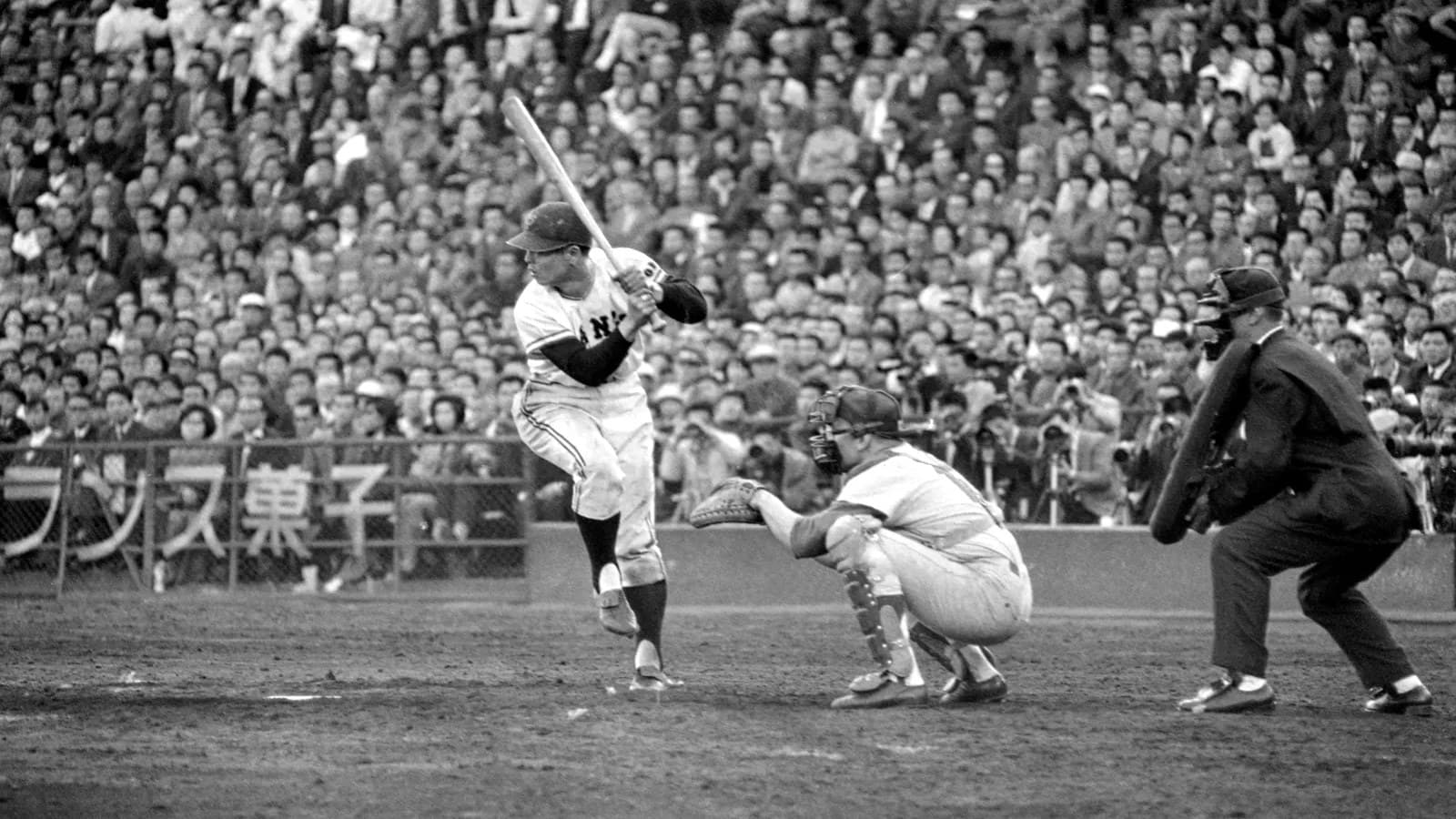
The People Who Made Baseball a World Culture
From Babe Ruth to Shohei Ohtani: the figures who shaped baseball far beyond the sport itself – on the field, in the media, in politics and in pop culture.