The People Who Made Baseball a World Culture
From Babe Ruth to Shohei Ohtani: the figures who shaped baseball far beyond the sport itself – on the field, in the media, in politics and in pop culture.

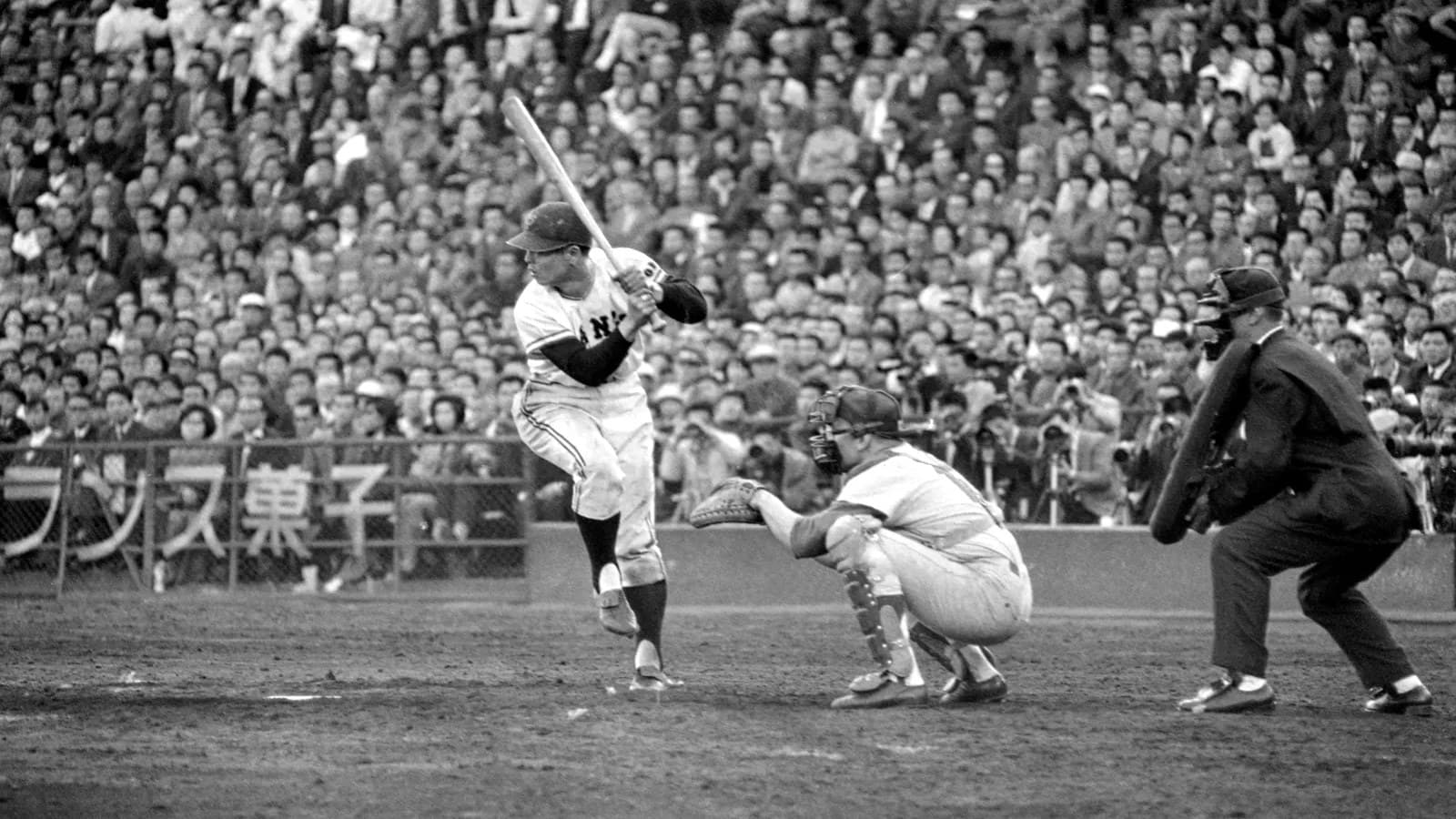
From Babe Ruth and Jackie Robinson to Spike Lee and Shohei Ohtani, these are the players, organizers, storytellers, and style-makers who taught the game to speak beyond the ballpark.
In 1923, Babe Ruth hit the first home run at the newly opened Yankee Stadium. In 1947, Jackie Robinson took the field in Brooklyn, becoming the first Black player in the modern major leagues. In 2024, Shohei Ohtani created the 50–50 club, reaching 50 home runs and 50 stolen bases in the same season.
Three men, three eras, one shared effect: each altered the cultural meaning of baseball.
There are at least two ways to compile a list of the game’s most important figures. One begins with the record book—home runs, batting averages, strikeouts, championships. The other asks how much of the world shifted around a person.
This is the second kind of list.
To understand baseball as a cultural engine—as a language spoken through hip-hop, fashion, cinema, labor, race, migration, and international exchange—is to ask who wrote that language. Some stood on the diamond. Others worked in the front office, behind a microphone, inside a union, at a typewriter, or in front of a camera.
What connects them is not simply achievement. It is the ability to translate a game into something larger than its rules.
The Mythmakers
Babe Ruth: The first modern sports celebrity
Babe Ruth did not single-handedly end the dead-ball era, but he became its most visible rupture. When he joined the New York Yankees in 1920, baseball was still shaped by contact hitting, sacrifice bunts, and incremental offense. Ruth reorganized the game around the home run—and reorganized American celebrity around himself.
His image traveled far beyond the sports pages. It appeared in advertising, on product packaging, and across a growing market for memorabilia. He became headline, mascot, tabloid character, and popular myth at once.
The famous “called shot” in the 1932 World Series remains unresolved. Ruth made a gesture before homering against the Chicago Cubs, but whether he was pointing toward center field, the Cubs’ dugout, or simply marking the count is still debated. That uncertainty is precisely why the story endures: with Ruth, the boundary between recorded event and folklore became almost impossible to locate. MLB still describes it as one of baseball’s most debated moments.
Ruth supplied an early template for the modern athlete as a self-contained media property. Long before Michael Jordan, there was already an understanding that one player’s mythology could outgrow his team. The Yankees’ pinstripes became part of that machinery, accumulating a cultural charge that would eventually travel far beyond the Bronx.
The Political Axis
Jackie Robinson and Branch Rickey: The door that opened in April
On April 15, 1947, Jackie Robinson debuted for the Brooklyn Dodgers, becoming the first Black player in the modern major leagues. Dodgers executive Branch Rickey had signed him in 1945 and sent him to the Montreal Royals, Brooklyn’s top minor league affiliate, for the 1946 season.
Rickey’s decision was athletic, commercial, moral, and political at once. He knew Robinson would face racist abuse from fans, opponents, and teammates. He therefore sought a player who possessed, in Rickey’s notorious formulation, “guts enough not to fight back.” Robinson’s restraint was part of a deliberate strategy to break baseball’s color barrier.
It should never be mistaken for passivity. Robinson accepted an impossible assignment without accepting the system that made it necessary. He endured the first years, then used his public position to speak with increasing force about civil rights, citizenship, and the limits of symbolic progress.
In 1997, MLB retired Robinson’s No. 42 across the major leagues. Since 2009, every player, manager, and coach has worn the number on Jackie Robinson Day, turning a uniform number into a league-wide ritual of remembrance. The tradition grew from Ken Griffey Jr.’s request to wear 42 in Robinson’s honor.
Rickey opened the institutional door. Robinson walked through it while carrying the burden of everyone who had been kept outside.
Hank Aaron: Breaking the record under threat
On April 8, 1974, Hank Aaron hit his 715th career home run, passing Babe Ruth.
The image is familiar: Aaron’s compact swing, the ball clearing the left-center-field wall in Atlanta, two young spectators running alongside him between second and third. Less visible in the footage is the racist campaign that preceded it.
As Aaron approached Ruth’s record, he received thousands of hostile letters, including death threats. The pursuit of 715 became an ordeal conducted under extraordinary psychological pressure. Aaron reached the record anyway. The Hall of Fame places the moment within the wider history of baseball and civil rights.
Robinson had broken the barrier. Aaron revealed what Black excellence could still be forced to endure decades later. His home run was a sporting achievement, but the conditions surrounding it made it an act of public self-possession.
The Global Bridges
Roberto Clemente: A Latin American icon on his own terms
Roberto Clemente spent 18 seasons with the Pittsburgh Pirates. He won two World Series, reached 3,000 career hits, and became one of the most admired players of his generation.
Yet his cultural importance cannot be contained by those achievements. Born in Carolina, Puerto Rico, Clemente embodied a Latin American presence in Major League Baseball that was proud, visible, and unwilling to be treated as peripheral.
On December 31, 1972, Clemente died in a plane crash while accompanying humanitarian supplies intended for victims of an earthquake in Nicaragua. MLB renamed its humanitarian award for him the following year. The Roberto Clemente Award continues to recognize community involvement and service alongside achievement on the field.
Clemente did not begin Latin America’s relationship with professional baseball, nor was he the first Latin star. His significance lies elsewhere: he expanded what Latin American stardom could look like inside MLB. He carried Puerto Rico with him without reducing it to background detail.
His name now belongs as much to schools, ballparks, community programs, and public memory as it does to the box score.
Sadaharu Oh: Japan’s home run king
Between 1959 and 1980, Sadaharu Oh hit 868 home runs for the Yomiuri Giants. No player in MLB history has matched that total, though Oh’s record belongs to Nippon Professional Baseball rather than the major-league record book.
That distinction matters. Oh’s greatness does not require validation through MLB statistics. His career demonstrates that baseball outside the United States can produce its own standards, myths, rivalries, and historical scale.
With his high leg kick and unmistakable swing, Oh became the foundational slugger of modern Japanese professional baseball. He won nine Central League MVP awards and later managed Japan to victory in the inaugural World Baseball Classic in 2006. The National Baseball Hall of Fame describes him as Japan’s greatest professional hitter and baseball’s all-time home run king.
Oh did not represent a Japanese version of an American original. He belonged to a baseball culture with its own center of gravity.
Ichiro Suzuki: The bridge without translation loss
If Oh demonstrated the independence of Japanese baseball, Ichiro Suzuki demonstrated how its excellence could cross the Pacific without being treated as a minor dialect.
Ichiro joined the Seattle Mariners in 2001 as the first Japanese position player to move from NPB to MLB. In his debut season, he won both the American League Rookie of the Year and MVP awards—becoming the second player to accomplish the double after Fred Lynn in 1975.
Across 28 seasons in Japan and the United States, Ichiro collected 4,367 hits: 1,278 with the Orix BlueWave and 3,089 in MLB. The combined total is not an MLB record, but it captures the unusual scope of his career. He was inducted into the National Baseball Hall of Fame in 2025.
His influence was also carried by individual images. In Oakland during his rookie season, Ichiro fielded a ball near the right-field line and threw Terrence Long out at third with a flat, astonishing trajectory. The play became known simply as “the laser beam.” It required no translation.
Ichiro made Japanese baseball legible to American audiences without surrendering its identity.
The Architects of the System
Curt Flood: The player who challenged the reserve clause
In 1969, the St. Louis Cardinals traded Curt Flood to the Philadelphia Phillies. Flood refused to go.
He wrote to Commissioner Bowie Kuhn: “I do not feel that I am a piece of property to be bought and sold irrespective of my wishes.” Then he sued Major League Baseball, challenging the reserve clause that allowed teams to control players indefinitely.
Flood lost before the Supreme Court in 1972. His career absorbed much of the cost. But the challenge exposed baseball’s labor system to sustained legal and public scrutiny. In 1975, arbitrator Peter Seitz ruled that pitchers Andy Messersmith and Dave McNally were free agents, finally breaking the structure Flood had confronted. The MLB Players Association recognizes Flood as the man who laid the groundwork for modern free agency.
Flood did not personally receive the freedom he fought for. Later generations received it in his place.
Marvin Miller: The union leader who rewrote baseball’s economy
Marvin Miller became executive director of the Major League Baseball Players Association in 1966. At the time, the union had never employed a full-time representative.
Under Miller, the players negotiated MLB’s first collective bargaining agreement, secured independent grievance arbitration, dismantled the reserve system, and established free agency as a durable economic force.
The numbers illustrate the transformation. When Miller took over, the average MLB salary was approximately $19,000. By his retirement in 1982, it had risen to more than $240,000. His Hall of Fame biography traces how labor organizing changed the balance of power between players and owners.
Miller’s deepest contribution was conceptual. He taught players to see themselves not as temporary beneficiaries of an owner’s generosity, but as workers whose labor created the value of the industry.
That change in consciousness traveled well beyond baseball.
Bill James: The writer who gave baseball a new vocabulary
In the 1970s, Bill James worked nights as a security guard at a Kansas food-processing plant. In 1977, he began self-publishing an annual book called the Baseball Abstract.
James approached baseball through questions the sport’s conventional statistics could not adequately answer. How much did a sacrifice bunt actually help? How should a catcher’s defensive value be measured? Which numbers described a player’s contribution, and which merely repeated inherited assumptions?
He called the discipline “sabermetrics,” a term derived from the Society for American Baseball Research. James did not invent every statistic later associated with the analytics movement, but he changed the habits of baseball thought. His work encouraged readers and front offices to challenge batting average, pitcher wins, and scouting orthodoxy with evidence. SABR credits him with popularizing the field and developing measures such as Runs Created and Win Shares.
Those ideas eventually passed through the Oakland Athletics, Billy Beane, Michael Lewis’s Moneyball, and the 2011 film adaptation. Baseball became the first sport in which data analysis was not merely a back-office practice but a form of popular culture.
The Storytellers
Vin Scully: A voice that became a place
Vin Scully called Dodgers games from 1950 through 2016, beginning in Brooklyn and continuing after the franchise moved to Los Angeles. Sixty-seven seasons with one team made his voice a form of continuity in cities otherwise defined by change.
Scully did not simply describe what happened. He gave a game context, rhythm, and silence. After Kirk Gibson’s walk-off home run in Game 1 of the 1988 World Series, Scully stopped speaking and allowed the crowd to carry the broadcast. Only then did he add: “In a year that has been so improbable, the impossible has happened.”
The pause mattered as much as the sentence.
Scully understood that baseball on the radio creates a peculiar intimacy. The listener must build the ballpark mentally: the geometry of the field, the weather, the count, the distance between a pitch and a swing. Over 67 consecutive seasons with the Dodgers, he turned that act of imagination into an acoustic home.
Ken Burns: The national chronicler
When Ken Burns’s nine-part documentary Baseball premiered on PBS in 1994, it reached more than 43 million viewers. Across roughly 18 and a half hours, the series used archival photographs, newsreel footage, music, and narration to frame the game as a way of telling American history. It became the most-watched series in PBS history.
Burns did not invent baseball nostalgia. He gave it an official visual grammar: the slow movement across old photographs, the textured voices, the sense that the game’s past remained present in every empty grandstand and handwritten scorecard.
His version of baseball was not neutral. It was a national self-portrait, built around race, labor, immigration, war, memory, and contradiction. For millions of viewers, the idea that baseball represented something distinctly American arrived through Burns—or through later storytellers who had absorbed his methods.
The Translators
Spike Lee: The red Yankees cap
In 1996, Spike Lee asked New Era to make him a red 59FIFTY with the New York Yankees logo. He wore it during the World Series.
The intervention was small: one familiar logo, one unexpected color. But it altered the cap’s meaning. The Yankees cap no longer had to function only as evidence of team allegiance. It could communicate taste, geography, attitude, authorship, or refusal.
New Era itself identifies Lee’s request as a turning point, describing it as the company’s first major encounter with custom fashion headwear. The red Yankees cap opened a new chapter in the 59FIFTY’s cultural history.
Lee was not the first Black Yankees fan. His importance lies in using the cap as a language rather than a membership card.
Hip-hop: Baseball’s collective translation machine
What Spike Lee demonstrated through color, hip-hop expanded into a global system of signs.
The Yankees cap became inseparable from Jay-Z and New York self-mythology. Dodgers caps circulated through West Coast rap. White Sox, Pirates, Tigers, and other team marks acquired meanings that could be regional, musical, aesthetic, or personal before they were sporting.
In “Empire State of Mind,” Jay-Z claimed he had “made the Yankee hat more famous than a Yankee can.” The boast works because it contains a cultural truth. Hip-hop did not merely borrow baseball’s symbols. It redistributed them.
A Yankees cap worn in Berlin may signify New York, rap history, graphic design, streetwear, or silhouette before it signifies the standings in the American League East. Hip-hop is one of baseball culture’s great uncredited co-authors.
The Frequency of the Present
Shohei Ohtani: Baseball in the age of global pop
Shohei Ohtani revived a role Major League Baseball had not seen at this scale since Babe Ruth: a player capable of functioning as an elite pitcher and an elite hitter.
In 2024, while unable to pitch following elbow surgery, he became the first player to record 50 home runs and 50 stolen bases in one season. He finished with 54 homers and 59 steals. The numbers are extraordinary, but they explain only part of his reach.
Ohtani operates within a fan economy closer to global pop than to the old model of baseball celebrity. His presence generates dedicated broadcasts, advertising campaigns, merchandise ecosystems, and transnational attention. When the Dodgers opened the 2025 MLB season against the Chicago Cubs in Tokyo, the event was not simply an American league visiting a foreign market. It was a homecoming built around Japanese stars playing at the center of a global competition. The Tokyo Series placed Ohtani and the Dodgers inside Japan’s own baseball landscape.
In Ohtani, several lines converge: Ruth’s mythology, Oh’s independent Japanese standard, Ichiro’s transpacific bridge, the commercial fluency of modern celebrity, and the analytical precision of contemporary baseball.
He does not represent the end of this cultural chain. He is the figure currently extending it.
Baseball history is a history of translation. In every era, someone has carried the game into another language: political, economic, cinematic, musical, statistical, sartorial, or global.
Sometimes the translation happened through a swing. Sometimes through a lawsuit, a broadcast, a documentary, or a red cap.
To know these names is not merely to understand how baseball developed. It is to understand why the game can matter to someone who has never entered a ballpark.
Read on
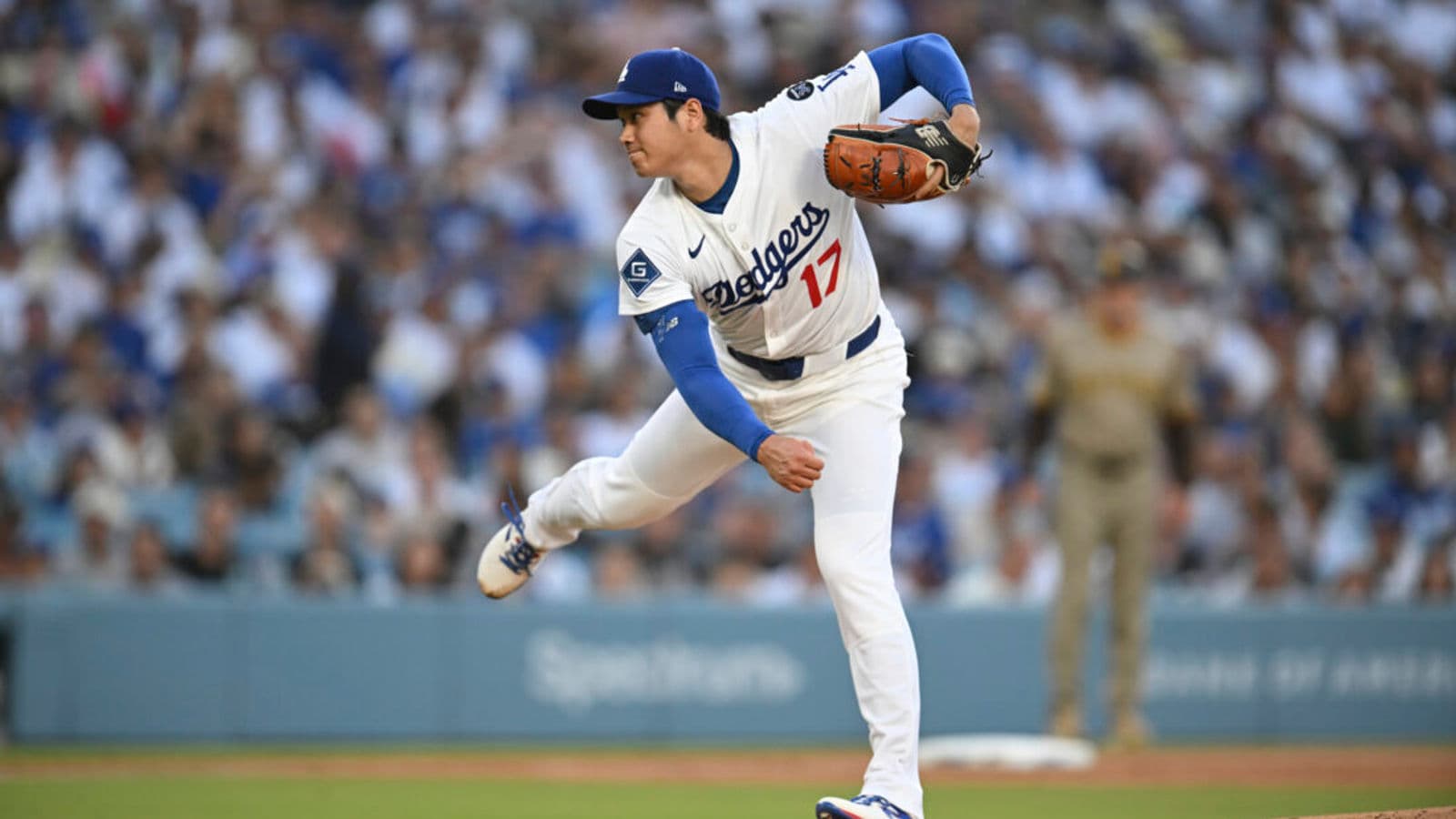
Shohei Ohtani: 10 Facts About the Los Angeles Dodgers' MLB Superstar
The Los Angeles Dodgers superstar has moved the limits of what seems possible in modern baseball. Ten facts about arguably the most extraordinary player in MLB history.
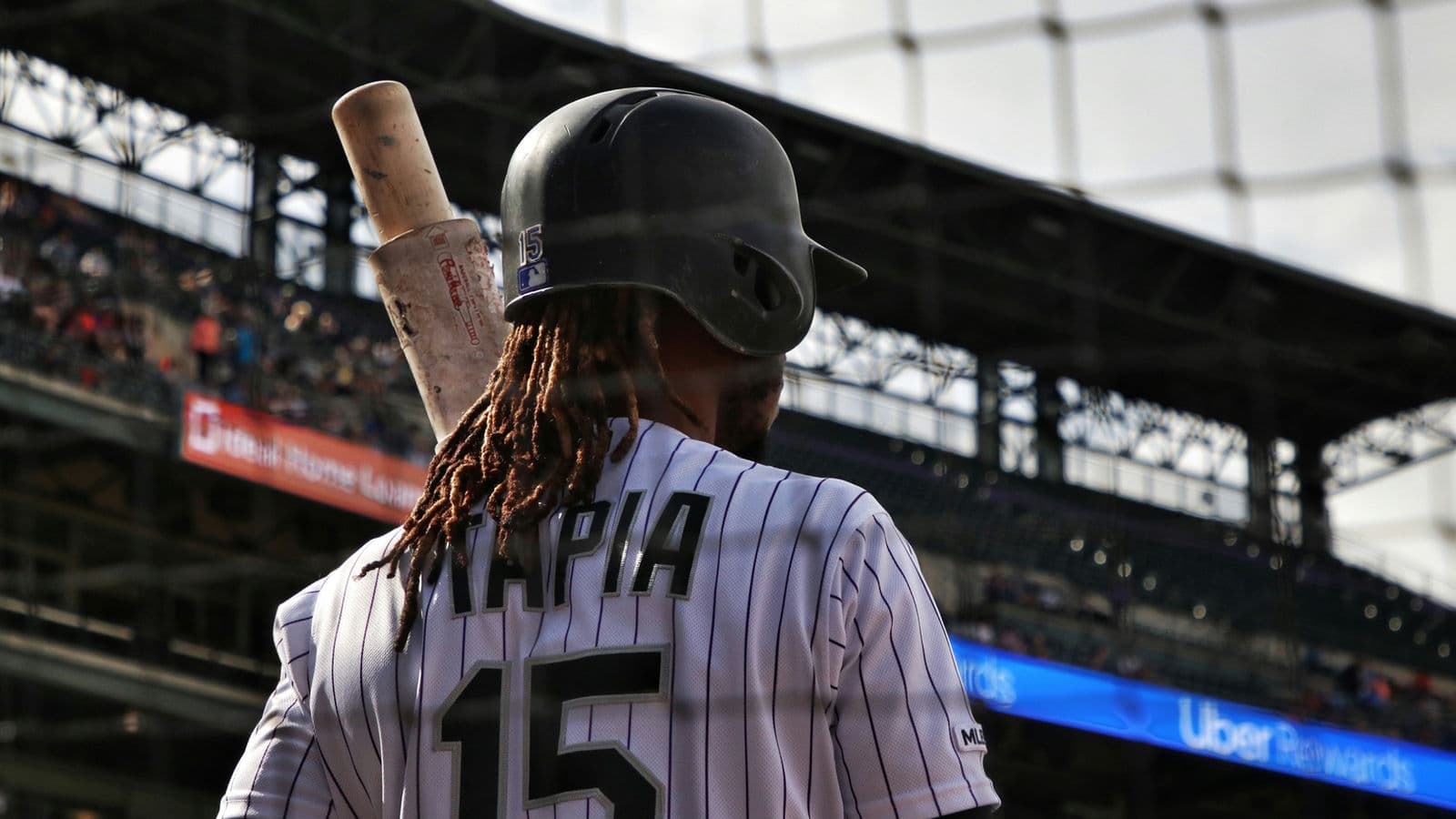
When Baseball Dances
From the drumbeat in a WBC dugout to national holidays to a small town in Indiana where Latin baseball built the sport a new home: how baseball became the shared language of an entire hemisphere.
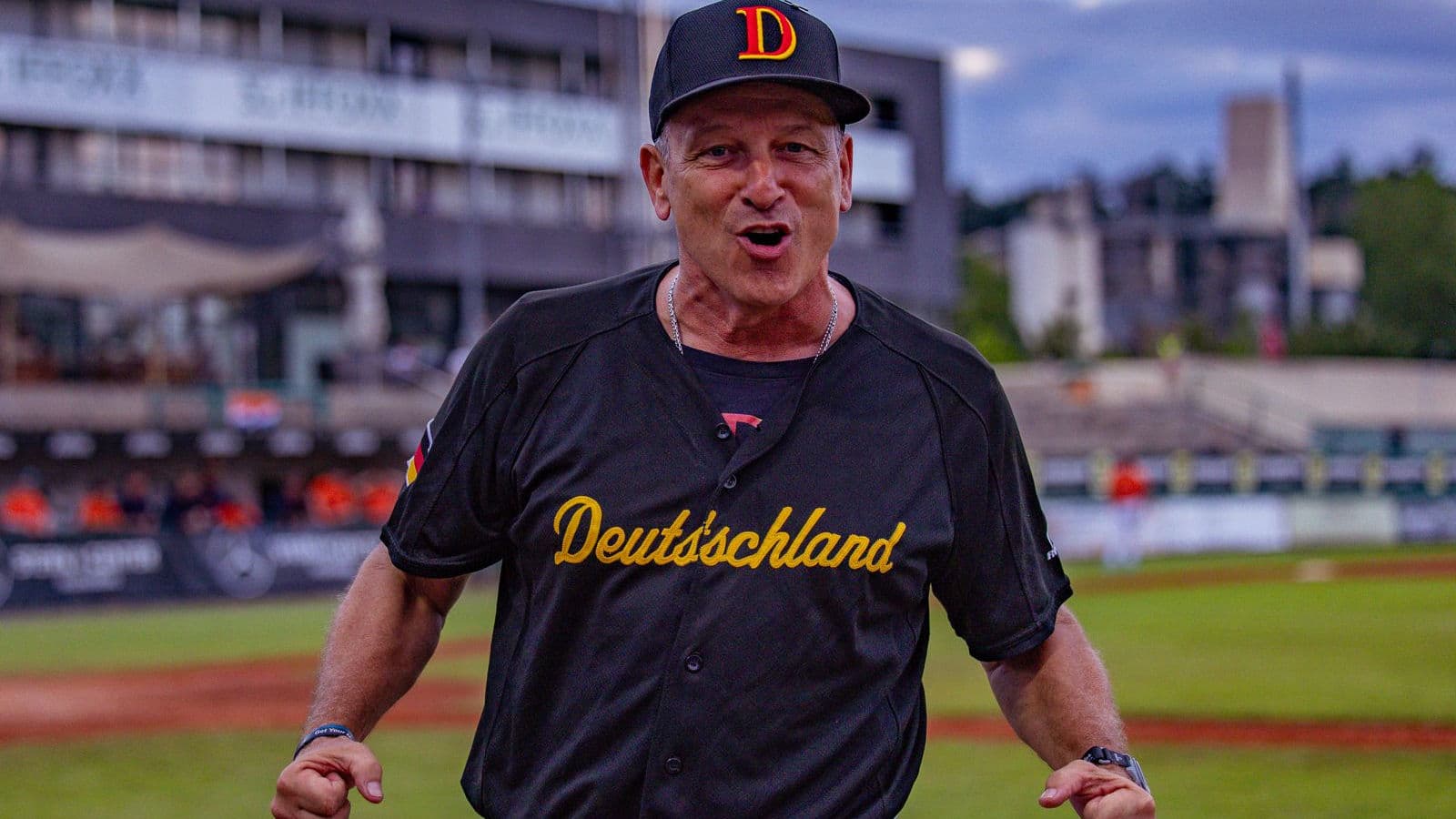
El Alemán
From Mannheim's U.S. military communities to the ballfields of the Dominican Republic, Bull built a coaching philosophy around energy, intelligence, and the stubborn work of developing German players for a global game.