Small ball, big win and a special show
The Milwaukee Brewers win their first World Series. With a brand of baseball that does without the big home run show. Two commentators from Germany called the title run live, from McDonald's all the way onto a television program in Wisconsin.

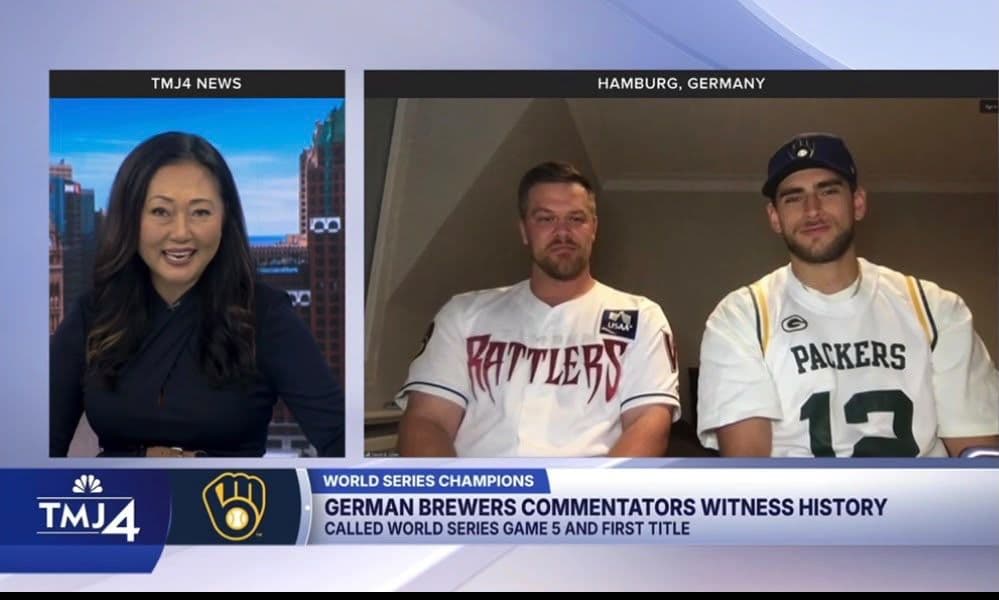
A TV studio in Germany, shortly after midnight
At 5 p.m., Julian Pollersbeck goes to bed. Not out of fatigue, but by design. He sleeps until 9 or 10, then meets David, his co-commentator. Together they drive to McDonald's, have a coffee and go through the lineups. Then the shift in the studio begins. They head home somewhere between four and six in the morning, depending on when the final out falls in North America.
That is what October 2026 looks like for Pollersbeck. The MLB playoffs air live on Sport Digital TV, he is on the mic, and he moves his individual training as a professional footballer to 2 or 3 p.m. so that he gets any sleep at all after those nights. "It felt like a sleepover that lasted a whole month," he says in the new episode of the Innings podcast "Base on Balls". After Game 2 of the World Series it gets so late that they end up at a market at dawn. A colleague of David's has organized fish rolls before the official opening. "That was lifesaving," says Pollersbeck.
At the end of that month stands a title Milwaukee had waited 57 seasons of franchise history for. In the early hours of Thursday, October 29, European time, the Brewers beat the Tampa Bay Rays 4-1 in Game 5 at Tropicana Field in St. Petersburg and take the World Series four games to one. For the first time in club history.
That is the material for the new episode of "Base on Balls". Niko Backspin followed the series through highlights, Pollersbeck called three of the five games. They talk about the part of the show they call "The Count": the facts. And about what happens between the facts.
Two Germans in the Brewers bubble
During the playoffs, Pollersbeck and David first slipped into the Dodgers bubble. The highlights Sport Digital TV posted collected tens of thousands of views, carried by loud Americans in the comments. Then the Brewers and Dodgers met in the NLCS, and suddenly the support came from Wisconsin.
Brewers fans celebrated the two Germans. Pollersbeck explains this partly through the background of many fans, with German roots and German culture. Above all, though, he says, they called the games the way the two of them would watch baseball on the couch. "We wanted to be a kind of extension of the couch and not get lost in statistics." David needed a little warming up at first, he says. By the time the playoffs came, they were off the leash.
Then came the Zoom link. One of the biggest TV programs in Wisconsin had reached out, without warning. Pollersbeck and David didn't know whether it would be an interview, whether it was being recorded or whether they were live. A voice in the background asked if they were ready and whether their names were being pronounced correctly. Five minutes to air. "We sat there like hens on a perch," says Pollersbeck. Then: five, four, three, two, one. Four, five minutes live with the host.
In 2021, Pollersbeck had launched his first baseball podcast, with two friends, with no thought of making money from it. Just the dream of maybe one day being allowed to call games. Now he has covered three of five games in the World Series. "That was unthinkable," he says. Niko Backspin knows the feeling: becoming a commentator was his childhood dream too.
Five games, one rhythm
Game 1 in Milwaukee ends 3-2 for the Brewers. For Pollersbeck, it set the direction: two teams with similar approaches, good pitching, good defense, both able at any moment to score runs and to prevent them. "A little hint that they could really pull this off."
Game 2 is the turning point. The Rays lead 4-0 after the first inning, Liam Hicks hits a two-run homer. Milwaukee answers right away. Sal Frelick ties it with a homer in the sixth, rookie Cooper Pratt puts the Brewers ahead with a single in the seventh. 5-4. "You didn't notice at all that they were down 4-0," says Pollersbeck. After that game, he and David asked themselves how Tampa was ever going to win one.
Game 3 in St. Petersburg delivers the knockout blow. In the fifth inning, eight Brewers in a row reach base safely, all with two outs, and when it's over, eight runs are on the board, a record for a World Series inning. Not a single homer among them. 10-1. "That was really the nail in the coffin," says Pollersbeck. Thousands of Brewers fans had traveled to Florida. Inside the ballpark, it felt like 50-50 at the very least.
Game 4 brings the near-championship. Pratt, 22, who only debuted in June, homers in the 12th inning for a 3-2 lead. Milwaukee is three outs away from the first World Series sweep since 2012. Then third baseman Joey Ortiz throws a ball away, Hicks and Jonny DeLuca hit singles, Chandler Simpson loads the bases, and pinch hitter Ben Williamson bounces a chopper into shallow right field. 4-3 Rays, after 4 hours and 20 minutes. Pollersbeck stays matter-of-fact: pitching-wise, Tampa was already dead. "Like a chicken with its head cut off. The body keeps running for a bit, but deep down it knows the thing is dead."
Game 5 is clear-cut. Jacob Misiorowski throws 5⅔ scoreless innings until cramps in his calf stop him. A pitcher who throws until his body gives out sends a signal to the entire team, says David, and for him that was the moment he believed: they're going to get this done. Pratt has two hits and two RBIs, William Contreras drives Christian Yelich home with a double in the sixth, Trevor Megill closes it out with a six-out save. 4-1.
The opposite of a home run show
Anyone who wants to understand the 2026 Brewers starts with a number no team in the league wants to have. At the end of August, Milwaukee stood at 120 home runs, the lowest total in MLB. At the same time, the team led the league in on-base percentage (.337) and ranked third in stolen bases. Niko Backspin saw that stat and still marvels: wherever it was about producing runs, the Brewers were near the top. Only in home runs were they dead last.
Pollersbeck has a theory he anchors in the series. Up to the World Series, the team with more home runs usually won in the playoffs. In the final series, that became a by-product. For the Brewers, he says, it isn't about selling the MLB product, it's about winning titles. That takes baserunning, speed, defense and the ability to shorten the swing when the situation calls for it. Put the ball in play, hit the gaps, move the runner over.
"Home runs aren't hit, they're pitched." Daniel Vogelbach, Brewers hitting coach, as quoted by Julian Pollersbeck
Vogelbach, once a designated hitter in Milwaukee himself, is one of three hitting coaches on manager Pat Murphy's staff. What he means, Pollersbeck explains, is that a homer usually comes from a pitcher's mistake: a hanging slider, a fastball right into the hot zone. In the playoffs, every club pitches its best, and the deeper it goes, the fewer of those mistakes a hitter gets.
The comparison comes from football. A team that keeps shooting on goal, crossing the ball and creating danger plays differently from one that keeps blasting away from 30 meters. "Can happen, great goal. But you might just as well get thrashed 4-0." As soon as a Brewers runner was on base, you could feel the pressure rising. The pitcher keeps an eye on the runner, the defense is on edge.
The rest of the league now has to find answers. Pollersbeck expects the Dodgers, who missed out on a third straight title, to change their approach significantly next year. With the Yankees, he expects the opposite. He finds the Phillies interesting, with more home run hitters than contact hitters, and the Braves. And he points to names hardly anyone knew before the season: Frelick, David Hamilton, or Pratt, who has played in MLB for only four months and delivered.
The guy at the center
Perhaps the strongest moment of the series comes after the game. William Contreras, 28, receives the World Series MVP trophy and immediately points to the whole team. His numbers tell the rest: a .381 batting average, four RBIs, four of nine base stealers thrown out, 10 of 13 successful challenges under the new ABS challenge system. Cooper Pratt would have deserved the award as well, says Pollersbeck, but overall Contreras was the deciding factor.
It is the Venezuelan's year. In March, he and his country won the World Baseball Classic for the first time. In October, he is a World Series champion. "This is history for my country," says Contreras. "I love Venezuela." Pollersbeck recalls interviews in which Contreras said he was the only one on the team who was different and a bit edgy, and that he was grateful to be accepted the way he is.
During the regular season, Pollersbeck says, Contreras also rubbed people the wrong way: opponents, the media, once even manager Murphy, because he didn't always hustle and took his time on his home run trots. During the World Series, Murphy calls him his pit bull, the kind you don't just reach out and pet.
"Sport has always needed guys like that," says Julian Pollersbeck. He thinks of Beckenbauer, Maradona, Effenberg, Kahn or Ribéry: players who ruffle feathers and still deliver. Behind Contreras lies a special family story. His older brother Willson won the World Series with the Chicago Cubs in 2016. Ten years later, he sits in Tropicana Field wearing his brother's Brewers jersey and hugs him on the field after the MVP presentation.
The romance of the small
After the final out, videos circulated that Niko Backspin can't shake: grandfathers, 80 years old, crying in front of the TV because their team has won the World Series for the first time. Captain Christian Yelich dedicated the title to Bob Uecker, the voice of the Brewers for 54 years. "That's the romance of sport," says Backspin.
Pollersbeck sees a sports family in Wisconsin. With the Packers and the Bucks, everyone has each other's back, "almost like a village." Then there is what separates MLB from the Bundesliga. "Whether Union Berlin will become German champion in the next 50 years, I dare to doubt," he says. "But in MLB, it feels like any year you can go on a run and pull it off." 26 of the 30 franchises have now won a World Series. Still missing: the Rays, the Padres, the Rockies and the Mariners.
Small-market teams have no big TV deals and no national fan base like the Yankees or Dodgers. They have to squeeze out more. The irony of this title: the Brewers, in the smallest media market in the league, win at a time when the owners are pushing for a salary cap in collective bargaining, because small markets supposedly can't succeed on a regular basis. A lockout of the players is considered likely from December 2 and could put the 2027 season at risk. Whether and when MLB will play again remains open.
Back in the studio
The recording of the new episode opens with a question. Niko Backspin wants to know whether it's a coincidence that both of them are wearing a Brewers cap. Pollersbeck's old one is in storage. He picked up the new one just in time for the World Series. Backspin's cap is also a purchase from this fall.
It was no coincidence. Anyone who watched baseball this fall wanted to be there when the smallest one wins.
Read on
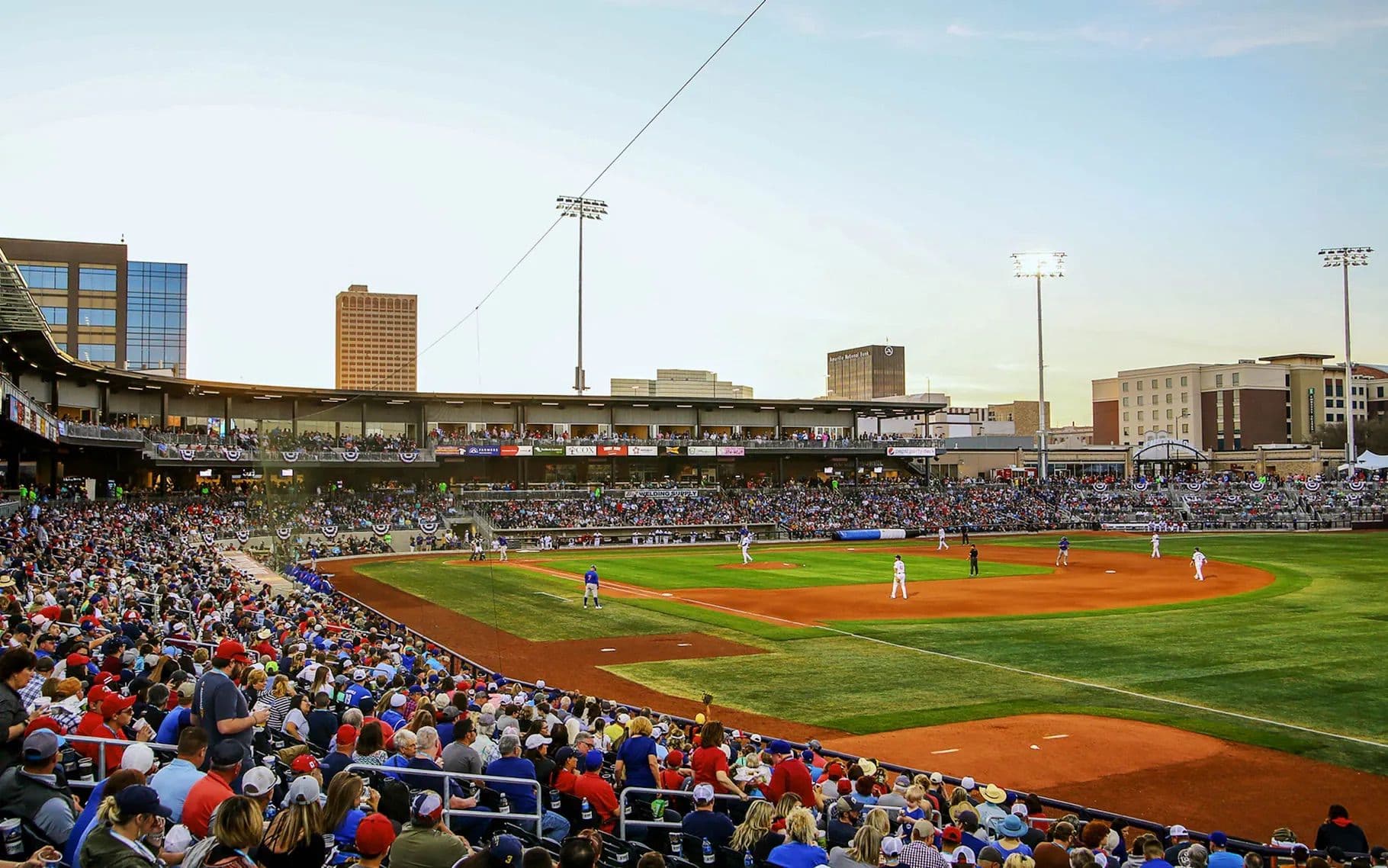
A Voice Note Into the Next Life: Inside Minor League Baseball
Inside Minor League Baseball, where strange team identities, small-town rituals and abrupt promotions reveal the labor beneath the MLB dream.
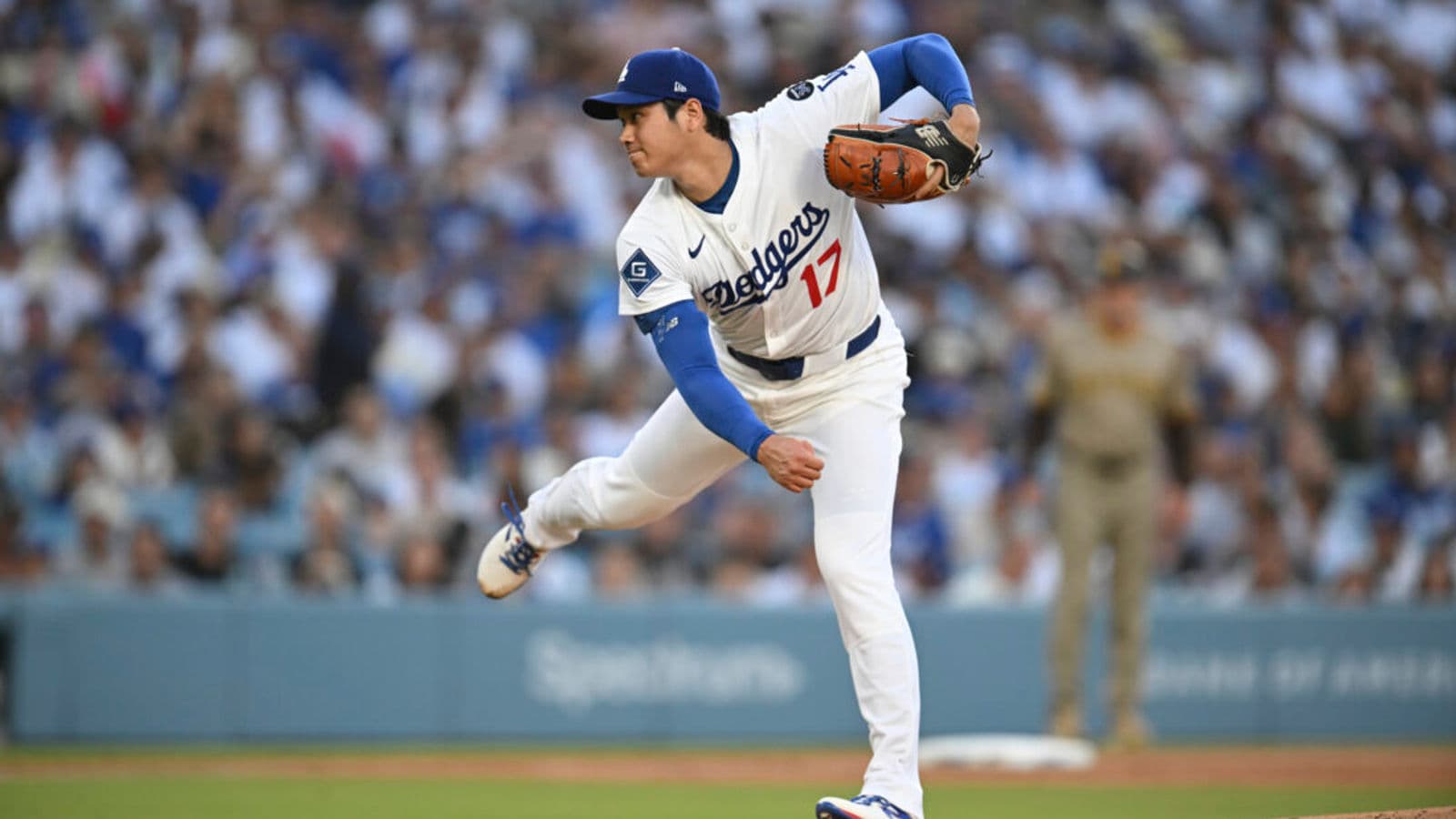
Shohei Ohtani: 10 Facts About the LA Dodgers' MLB Superstar
The Los Angeles Dodgers superstar has moved the limits of what seems possible in modern baseball. Ten facts about arguably the most extraordinary player in MLB history.