Markus Solbach: Backdoor Pitches
Markus Solbach got closer to the Major Leagues than any other German pitcher. He was released more than once, was denied a visa, won MVP honors in Australia. Today he is a father of two, a German champion once again, and working on German baseball with his Mentals.

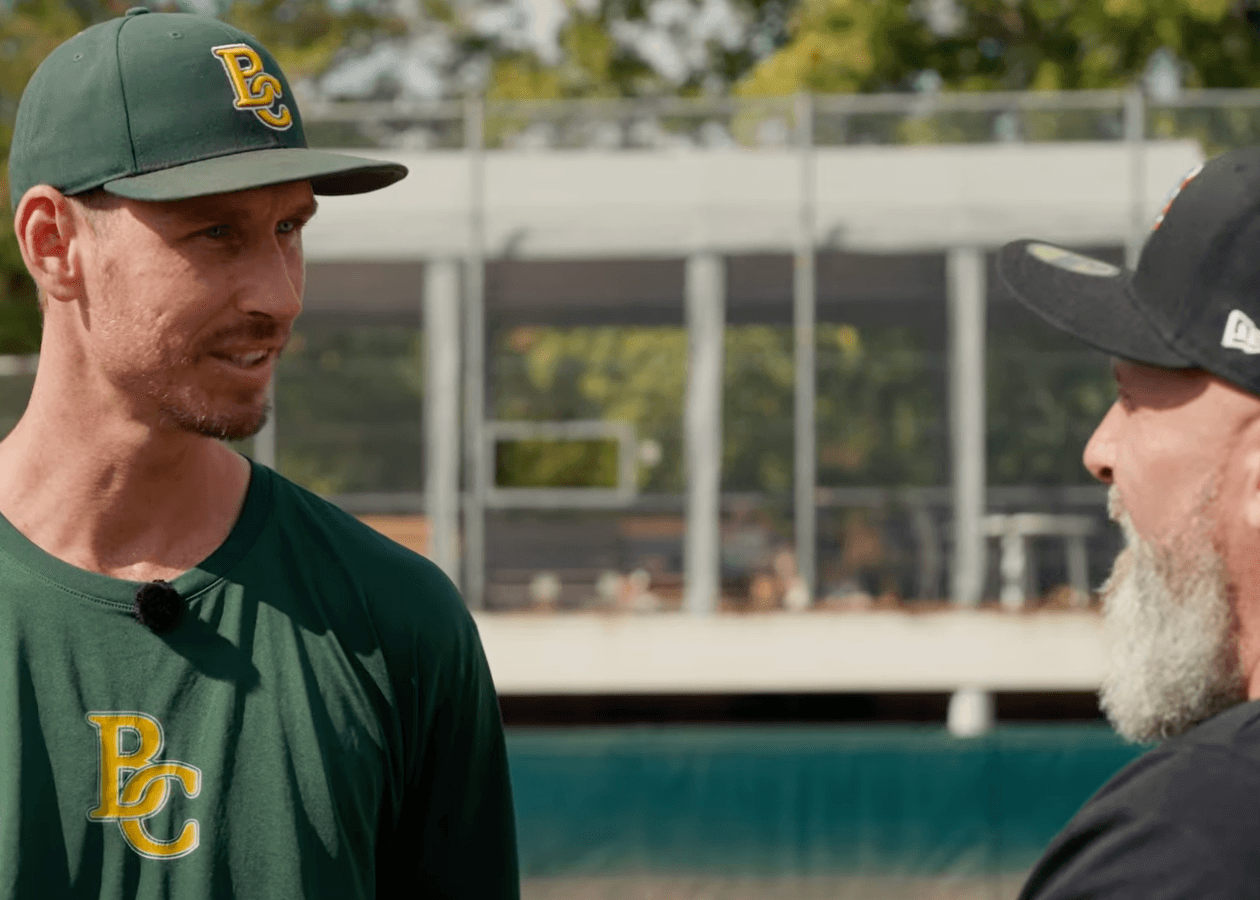
Bonn, Saturday, September 26. Game four of the championship series. The Capitals lead the series 2-1. Regensburg took game three 9-5 and wants to force a fifth. Markus Solbach gets the start. He is probably a little tired. For the best reason in the world: between games one and two of the series, his daughter was born.
After five innings it is 6-1 Bonn all the same. Solbach sets the tone. In the seventh, Kohei Sasagawa hits an RBI double for the Legionäre, 7-3. After that, nothing that counts. Noah Lindt comes on to close it out and gets the three outs that remain.
Someone else throws the final pitch. Once again, Solbach carried the game far enough for there to be a final pitch.
It is the Capitals' fourth championship, his third. 2018, 2024, 2026. In between lie Australia, Los Angeles, Detroit and surgery on his elbow.
Detroit, 1996
Detroit is also where it all begins. Solbach's parents live there at the time, his father works for Ford. In 1996, young Markus sees his first baseball game at old Tiger Stadium. His mother later tells him he grinned and from then on wanted nothing but baseball.
Back in Germany, there is a girl named Romina in his class who plays baseball. The longtime national team player remembers: "Two days later I was at my first practice, and I never stopped."
The Back Door
Baseball has a pitch called the backdoor. It starts outside the strike zone and bends back over the outside corner at the last moment. The hitter sees a ball. The umpire sees a strike.
Solbach's career follows that flight path. With the Pulheim Gophers, his coach Matt Kemp, now coaching in Paderborn, tells him he has what it takes to play in America. Three weeks later Solbach is on a plane, to Australia first. Two months in, the first offer from a professional organization is on the table. Then he signs with the Minnesota Twins.
The release follows. Then independent ball in Chicago, outside the MLB system. The Arizona Diamondbacks buy out his contract on June 2, 2014. Two years later he is out on the street again, plays independent ball again, this time in New York, and in the same year lands another contract in Arizona. Anyone who wants to survive that needs a plan.
From one of the releases, an image has stayed with him. "My things were packed into a garbage bag." His mother picks him up at the airport. She is crying. "And all the people who thought you'd never make it anyway, I would have proved them right. That was not an option for me."
Rejection Becomes a Title
In 2017 Solbach spends the whole year in New York. In 2018 he doesn't get a visa. Independent ball, he says, is viewed "a little differently."
He has to play in Germany. He goes to Bonn, leads the league with a 0.38 ERA and wins the first championship in club history with the Capitals. The rejection from America becomes a title.
A Winter in Adelaide
In the winter he goes back to Australia. The Adelaide Bite win only 19 of 40 games in the 2018/19 season, finish sixth and miss the finals. Solbach is the best player in the league anyway. He leads the ABL with 65⅓ innings, is named Pitching Champion and shares the Helms Award as most valuable player with Tim Kennelly of the Perth Heat. No pitcher before him had won it in the modern ABL era.
In January 2019 he signs with the Los Angeles Dodgers. He makes it all the way up to Triple-A. Then comes Covid. "At that age, more than anything it wrecked my path. But that's no excuse."
Then the circle closes. The Detroit Tigers sign him. It is the city where he saw baseball for the first time as a little boy. The romantic story ends in pain. In the summer of 2022 his elbow gives out. A pitcher's fate, Tommy John surgery included.
The Last Little Bit
Once again the call-up is so close you can almost hear it. "It always came down to that last little bit, and it was never quite enough." The goal was always clear: the first true German pitcher in the Major Leagues. "That's the only thing I didn't achieve, and probably never will."
Does it hurt? "Yes, it does hurt. There are a few days a year that do something to you, and I don't think that will ever stop."
The Capitals get in touch while he is injured. In December 2022 they sign him as base coach for the 2023 season. They offer him a way to keep baseball as his profession. Together with his wife he decides on a child and a house. Today he has a son and a daughter.
"Baseball didn't just let me see the whole world. It also let me build something at home."
In September 2023 he is back on the mound at the European Championship in the Czech Republic, against Israel. In 2024 he wins nine games, and his 1.48 ERA is the best in the league. He is named MVP of the North division and, in the finals against Paderborn, MVP of the championship series. Then 2026.
The Mentals
Talk baseball with Solbach and you rarely hear the word talent. He talks about the mind. "How do I slow the game down around me so that I can be faster myself?" That, not mechanics, is what he mostly discusses with the younger players in Bonn. How do you retire the second hitter in the first inning so you can beat him again in the seventh?
The Mentals grew out of that mindset. Two things carry the name.
The first is the Game Logs. In them, pitchers and hitters record what went on in their heads during the game. Focus, preparation, decisions, execution, pitch by pitch, at-bat by at-bat. Those who keep them recognize patterns, reset faster after a bad moment and build confidence through deliberate reflection instead of simply reacting to the result. Yogi Berra is credited with saying that baseball is ninety percent mental and the other half is physical. The logs take him at his word.
The second is a team. Together with Jae Yang, Solbach founded Team Mentals, a youth project for players roughly 11 to 13 years old. They are meant to get more games and more development than club boundaries and league play allow. Through it, Solbach passes on to the next generation what he learned in twelve years of professional baseball.
"German baseball talent keeps getting better." At some point, he says, it will even out. That will be the point where he stops. The better the young players get, the less he is needed on the mound. With The Mentals, he is helping to bring that moment about.
That is the other side of the backdoor. It only works when the hitter expects something else. Whoever throws it has read in advance what the other man sees.
The Lion in the Zoo
His own image for the mound is a different one. "I feel a bit like a lion in the zoo. I'm in the middle, everyone is looking at me, I'm the focal point. And in the end I'm at least 27 meters away from everyone else." Once he pitches in Osaka, in the dome, in front of 40,000 fans. He resolves to step off the mound and take in the crowd. "Suddenly the game was over and I had forgotten. There is only one goal: making sure the guy with the bat doesn't hit the ball."
He would like to go back once more to where it is loudest. "I want to stand on the mound against Lindor or against Ohtani." And somehow you even believe he could. Let's not forget: the backdoor looks like a ball. Until it isn't.
Read on
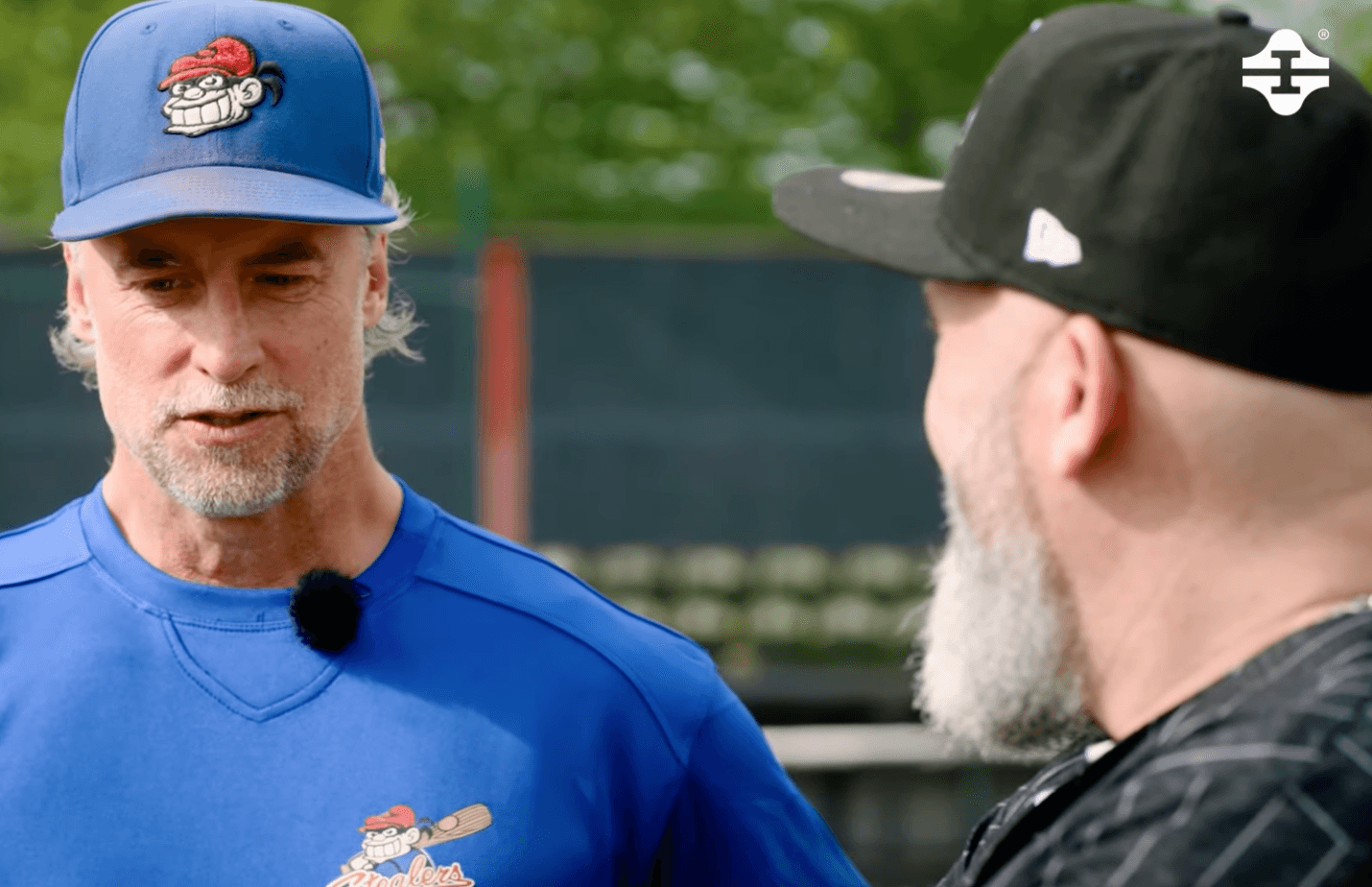
Brehan Murphy: Dugout, Runway, Second Nature
Twenty years ago they gave him a bicycle and a mattress on the floor. He stayed anyway. A conversation with Brehan Murphy, model and Hamburg Stealers legend. A conversation about baseball as a circle you join once and never leave.
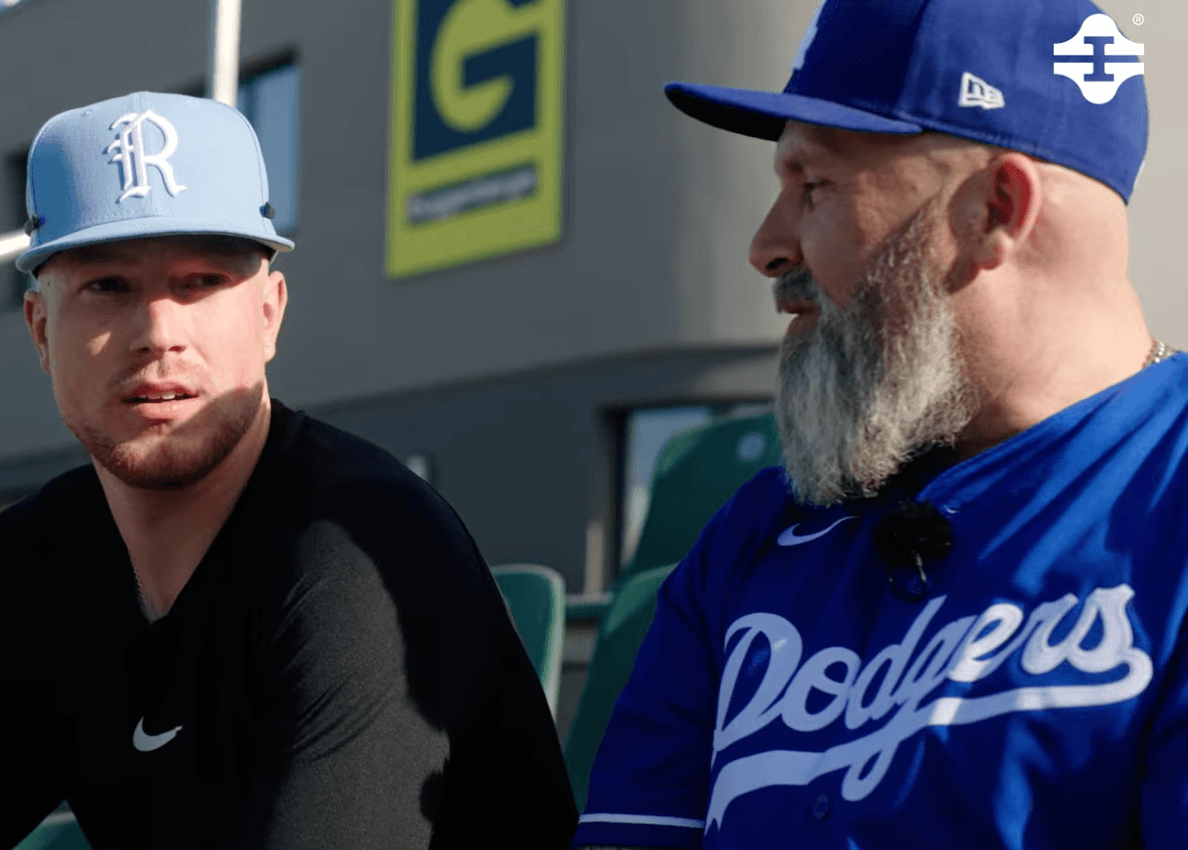
Tim Fischer: Far from done with MLB
He was with the physio when they called him in. Minutes later he knew he'd be on a plane that same day. A conversation with Tim Fischer, a pitcher from Regensburg, about games in the Caribbean and a machine that has no feelings. And about why someone whose dream was taken away keeps going anyway.
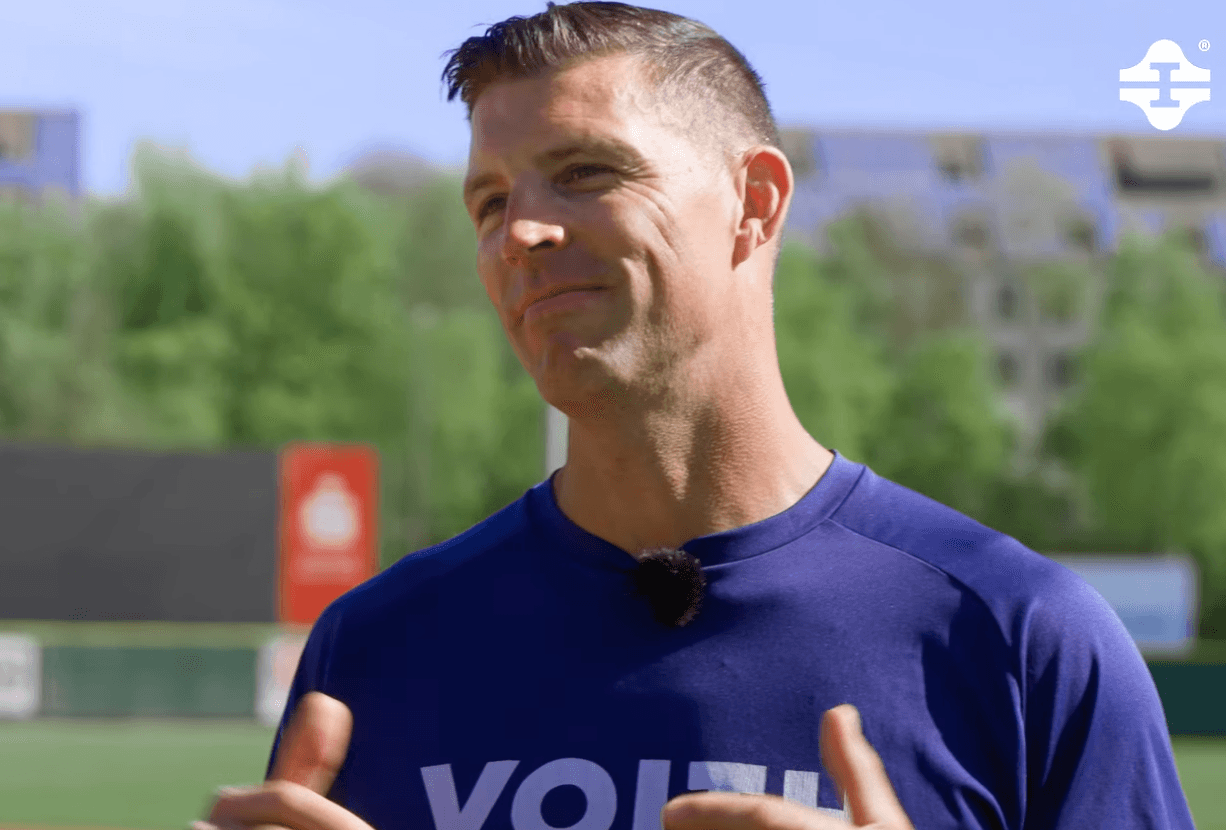
Simon Gühring: Baseball as Culture, Existence, Life Itself
Eight German championships. More than twenty years on the national team. A son who now stands beside him on the same field. A conversation with Simon Gühring, held in the den of his oldest rival.