Mr. Baseball and Racing Sausages
Milwaukee lost its team in 1965 and rescued a bankrupt one in 1970. In October 2026, Major League Baseball's smallest media market won the World Series for the first time. A story about beer, bratwurst and a city that had to fight for its baseball.
Milwaukee, Thursday, October 15, 2026
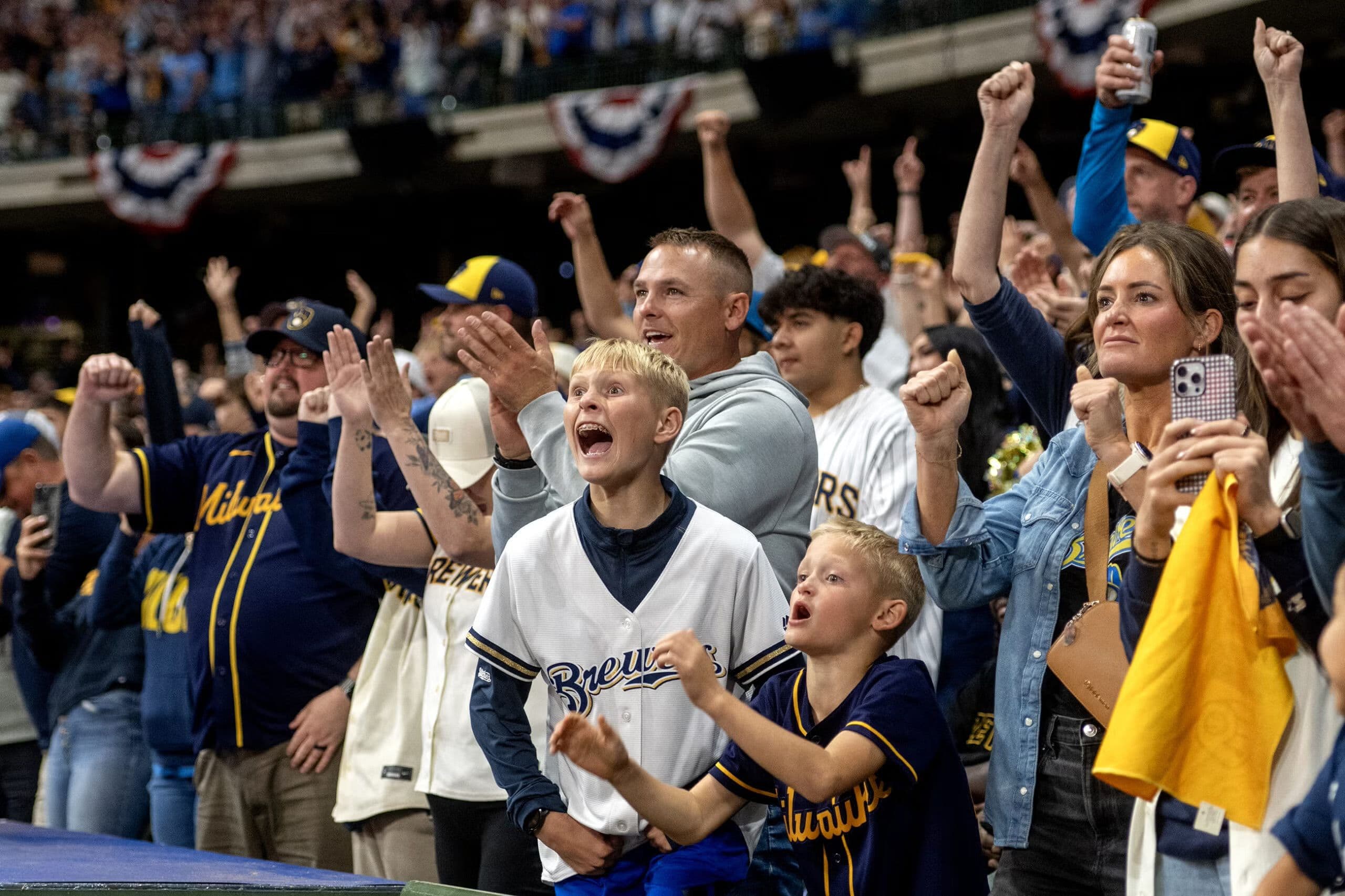
Zero to four. Second inning, Dodger Stadium, and Shohei Ohtani has just driven in three runs. In bars like Kelly's Bleachers the room goes quiet. There are pitchers of beer on the tables, and one group has brought a Bernie Brewer doll along. Rayna Schuh, who lives in Milwaukee, says later that at that point she had stopped believing.
Then the game turns. Doubles by William Contreras and Jake Bauers in the fourth. In the fifth, David Hamilton drives in a run, and a bases-loaded walk to Bauers ties it. In the sixth, Garrett Mitchell hits the go-ahead home run. Final score: 6-4. Jackson Chourio catches the last ball just short of the warning track and simply keeps running. He is smiling. The Brewers have swept the Dodgers out of the NLCS in four games.
Trin Warner from East Troy remembers the year before. In 2025 the Brewers had been swept by the very same Dodgers, and the team was "basically humiliated, made fun of and poked at." Now Warner says it makes up for all of it.
Emma Metzer talks about something else. Her grandmother, who used to take her to the ballpark, died a few years ago. She would have been absolutely thrilled with this team, Metzer says. "We know she's cheering right now with Ueck."
Ueck. Bob Uecker, the radio voice who died in January 2025 at the age of 90. A grandmother and a man behind a microphone, and both of them belong to the team. That is how baseball works in this city.
The Brewers are in the World Series. For the second time in their history, for the first time since 1982, and for the first time as a member of the National League. Their opponent is the Tampa Bay Rays, who have never won it either. Thirteen days after that night in the bars, Milwaukee will celebrate its first title since 1957.
To understand what that means in Wisconsin, you have to start with the team that left.
The Team That Left
In April 1953, after 52 years, the major leagues are back in Milwaukee. The Boston Braves had announced the move only a month earlier. County Stadium had been built without a team to play in it. A very particular kind of Field of Dreams: if you build it, somebody will come. Almost 35,000 fans watch Billy Bruton hit a walk-off homer in the tenth inning against the St. Louis Cardinals, 3-2. Milwaukee Magazine later writes that after half a century in the minor leagues, the city responded with a joy not seen since the victory over Japan. Historian Bob Buege calls Fred Miller, president of Miller Brewing, the city's last true civic hero. Miller had helped push the move through. He died in a plane crash on December 17, 1954.
1.83 million fans come out in the first season, a National League record. In 1957 the figure is 2,215,404, and the Braves beat the Yankees in the World Series. To this day it is the only title a Wisconsin team has won in this sport. Hank Aaron is 23 at the time and is named National League MVP.
But the success does not last, and neither does the enthusiasm. Aaron later says that after 1957 everything went downhill. The numbers bear him out: 1.4 million in 1960, 1.1 million in 1961, barely 767,000 in 1962. In the spring of 1961 the County Board bans fans from carrying beer into County Stadium. In Milwaukee, that is an affront. The fans stay away, even after the ban is lifted the following year. Owner Lou Perini had also kept home games off radio and television. In 1962, William Bartholomay, a 34-year-old insurance broker, buys the team for 6.2 million dollars. Atlanta offers a bigger market and 2.5 million dollars in broadcast rights.
In April 1965 the ending can be read in numbers. Opening Day: 33,874 fans. The next day, in the cold: 3,362. A fan group called Teams, Inc. had bought up the entire stadium for the opener to prove the city could support baseball. Manager Bobby Bragan is booed for the first time in the fifth inning of the second game. Someone in the stands holds up a sign: "Atlanta, you can have the rest, leave us Eddie Mattress, our hero." Eddie Mathews, the only player from the 1953 Opening Day roster still with the club, tips his cap and looks down at his shoes. A year later the Braves are playing in Atlanta.
A Call at 10:15 p.m.
The man who fights hardest against all this during those years is a car dealer. Allan "Bud" Selig, born in Milwaukee in 1934, taken by his mother Marie to see the minor league Brewers at Borchert Field as a boy, works at his father's Ford dealership. In 1963 he is the largest public shareholder in the Braves, but he cannot keep them. Afterwards he founds Teams, Inc. For five years he works toward a new team.
On March 31, 1970, at a quarter past ten in the evening, the phone rings at his home in Fox Point. It is Lloyd Larson, sports editor of the Milwaukee Sentinel. The sale has been approved. Larson hangs up right away; he has a deadline. A telegram the next day confirms it: Selig has one week to put a major league team on the field.
The team is the Seattle Pilots, who are in bankruptcy. Bankruptcy judge Sidney Volinn has approved the sale to Selig's group, which is offering 10.8 million dollars. Selig is 35 and, at first, the only employee. County workers shovel snow off the seats at County Stadium. A temp named Betty Grant sits down at the switchboard and starts selling tickets. She will work for the club for 33 years. "Everything happened so fast," she says later.
The Pilots' uniforms have an S on them. Traveling secretary Tommy Ferguson asks what he should do about it. Selig tells him to turn the S into an M; there is no time for anything more. The equipment truck is still sitting in Salt Lake City, waiting for a route. On the evening of April 5, the team lands at General Mitchell Field, after 10 p.m. Up to 8,000 fans are waiting in the terminal. Rookie Danny Walton says he had expected a welcome, but nothing like this.
The name Brewers is a bow to the brewing city. The start is hardly promising. On April 7, in front of 36,107 fans, the team loses 12-0 to the California Angels. Steve Hovley gets the first hit in franchise history in the second inning. There is no lease for County Stadium yet. The first two home games are played on a handshake.
"It was five and a half years of disappointment after disappointment," Selig admits. Robin Yount, later a Hall of Famer, says of him that he had been seeing things like this through his whole life.
The Man in the Trailer
In June 1970, a 69-year-old retired aeronautical engineer named Milt Mason climbs onto the County Stadium scoreboard. He knows Brewers general manager Marvin Milkes, and he has made a vow. Mason will live in a trailer above the field until the team sells out a game. When that turns out to be unrealistic, he lowers the target to 40,000 fans.
The trailer has a color TV, a gas stove, a bathtub, two telephones, one for fans and one for reporters, and a balcony. From there he watches the games in lederhosen. On August 16, 1970, after 40 days, the mark falls. Mason slides down a rope and burns his hands doing it. It was a great experience, he says, but he would not do it again.
He dies of cancer in 1973. His story gives rise to Bernie Brewer, the mascot with the mustache. From 1973 on, Bernie watches from a chalet at County Stadium and slides into a giant beer mug after every Brewers home run. The first slide is for a homer by Pedro Garcia.
German Influences
In the 19th century, Milwaukee becomes known as the "German Athens" for its strong German American culture and its lively intellectual life. After the failed revolutions of 1848, many educated German immigrants settled in Milwaukee and shaped the city for good. They founded cultural, sporting and educational institutions, and German was widely spoken. Alongside that intellectual flowering, the big breweries also made Milwaukee the famous "Beer City." The home of the Brewers.
German immigrants found newspapers, publishing houses and breweries here. Pabst, Schlitz, Miller and Blatz turn the city's name into a product. Between 1840 and 1880 at least eleven beer gardens open, often named after their German owners. In 1879 Schlitz buys a park at Eighth and Walnut Street and calls it Schlitz Park. Pabst Park on the North Side closes in 1920, the last of the city's great beer gardens. You can read Brewers tailgating as a continuation of that beer garden culture, even if nobody planned it that way.
How tailgating started in Milwaukee is not precisely documented. What is certain is that it was established in the County Stadium lots by the early 1980s. Center fielder Gorman Thomas and manager George Bamberger are said to have eaten and chatted with fans on their way into the ballpark. Before that, in the Braves era, it was different, as Bob Buege tells it: you parked for 25 cents, as close as possible, went into the stadium, watched the game and drove home. Men wore suits and hats, women wore dresses. People ate what was sold inside: hot dogs and coffee.
Today the bratwurst goes on the grill, first simmered in a bath of beer and water, then grilled. Cornhole, ladder golf, a game of catch with a baseball or a football. Since 2007 there has been the "Arctic Tailgate" when ticket sales open in winter. Some fans camp out overnight for it. Officially, alcohol was banned in the parking lots from 1980 to 2005. The ban was never seriously enforced. In 2005 the city allowed tailgate parties.
When the Brewers chose a site for their new ballpark in the late 1990s, they picked the Menomonee Valley over a downtown concept, partly because they feared losing room for tailgating.
Racing Sausages
Unusual rituals have a certain tradition in Milwaukee. In June 1993, in the sixth inning of a game against the Toronto Blue Jays, three sausages race across the County Stadium grass for the first time. A Bratwurst, a Polish, an Italian. There are 45,580 fans in the stands. Milwaukee graphic designer Michael Dillon had suggested to the marketing department in the fall of 1992 that a race which had been running on the scoreboard for a few seasons be staged live. He built the three foam costumes himself and won the first race. The Hot Dog joins in the mid-1990s, the Chorizo in 2007. Absolutely nobody knew it was going to happen, Dillon told NPR in 2019, except maybe a few members of the grounds crew.
On July 9, 2003, Randall Simon of the Pittsburgh Pirates swings his bat at the Italian Sausage and hits the young woman inside. He is arrested and charged with battery; the charge is dropped. He pays a fine for disorderly conduct, and MLB suspends him for three games. Mandy Wagner, who was in the costume, told MLB.com in 2021 that she thought the whole thing had been blown out of proportion.
Craig Counsell, a former Brewers player and manager, says of the race that it is unique to Wisconsin and would not work anywhere else.
A Glove Made of m and b
After eight losing seasons, the Brewers want at least a new logo in 1977. They hold a contest, and 1,932 entries come in. The winner is Tom Meindel, a 30-year-old art student and Air Force veteran at the University of Wisconsin-Eau Claire. He receives 2,000 dollars.
His design: a lowercase m and a lowercase b, interlocked so that they form a baseball glove. Whoever looks at the glove finds the letters. For many fans, spotting them becomes a rite of initiation. In 1978 the Brewers win more games than they lose for the first time, 93-69.
The logo disappears in 1994, comes back on batting practice and alternate jerseys in the 2000s, and in 2020, the franchise's 50th anniversary in Milwaukee, becomes the primary logo again. In the new version, the top of the b and the start of the m are connected. The ball is divided into three parts: for the fans, the city and the state.
Hank Comes Home
On November 2, 1974, the Brewers send Dave May and another player to Atlanta. In return, Hank Aaron comes back to Milwaukee. The designated hitter rule, in place since 1973, makes the deal make sense. Aaron gets to finish where he started.
On April 11, 1975, "Welcome Home, Henry Day" draws 48,160 fans. Aaron hits an RBI single, his first hit in a Brewers uniform, in a 6-2 win over Cleveland. On July 20, 1976, he hits home run number 755 off Dick Drago of the California Angels. The ball lands in Section 28. Nobody knows at the time that it will be his last. Today a plaque in the parking lot outside the ballpark marks the spot.
He was no longer the same Hank Aaron, and they all knew it, Bob Uecker said of those years.
Mr. Baseball
Uecker has been the voice of the Brewers since 1971, the second season after the move from Seattle. He stays in the booth for 54 years. As a player he had signed with the Milwaukee Braves in 1956 and reached the majors in 1962: six seasons as a backup catcher, a .200 batting average, 14 home runs. He summed up his own career like this: he drew an intentional walk from Sandy Koufax and got out of a rundown against the Mets.
Off the field, Bob Uecker became an institution. Talk show legend Johnny Carson simply called him "Mr. Baseball." In the Miller Lite commercials of the 1970s and 1980s, Uecker played the fan who insists he must be sitting in the front row and gets sent to the cheap seats. The Brewers cast that line in bronze: in the upper deck, Section 422, behind the last row, stands an Uecker statue made by Brian Maughan. At its unveiling in 2014, Robin Yount joked about the fifty thousand empty seats Uecker would have to choose from.
Bob Uecker died on January 16, 2025. Fans left flowers, Brewers caps and cans of Miller Lite at the statue outside the ballpark. Owner Mark Attanasio said he was a Wisconsin guy who stayed loyal to Wisconsin. At the end of June 2026, a mural by Mauricio Ramirez was unveiled on the north wall of the Wintrust Financial Center in downtown Milwaukee, 80 feet wide and 100 feet tall, showing Uecker in a plaid sport coat. Rick Schlesinger, president of business operations, said loyalty was his brand.
Big Blue
The road to today's ballpark was marked by tragedy. On July 14, 1999, at 5:12 p.m., the crawler crane "Big Blue" collapses at the construction site of the new stadium. It was lifting a load of more than 450 tons. The crane came down on a personnel basket carrying members of Iron Workers Local 8. Three workers died and five others were injured. The opening slipped from 2000 to 2001. The Brewers called off the next day's game and wore an Iron Workers memorial patch for the rest of the season.
Miller Park opened on April 6, 2001. Since then the bronze sculpture "Teamwork" has stood beside the ballpark in memory of the three workers. Public money helped pay for the stadium, including a 0.1 percent sales tax in the five surrounding counties that expired in 2020. Since 2021 the ballpark has been called American Family Field. In 2023 Wisconsin argued over public money for maintenance. Estimates ranged from 428 million dollars, in a study commissioned by the Brewers, to 604 million dollars, in one commissioned by the state.
The Smallest Market
Mark Attanasio, owner of the Brewers for more than 20 years, runs what MLB.com calls baseball's smallest media market, with modest payrolls. His philosophy: stay competitive year after year instead of swinging between all-in and rebuild. You can get too analytical and lose sight of the forest for the trees, he says.
The 2026 numbers do not look like going without. 103 wins, a franchise record, a fourth straight NL Central title, the top seed in the playoffs. Against the Phillies, Jacob Misiorowski throws a complete game shutout with 15 strikeouts and no walks and fires a 104.5 mph pitch to Kyle Schwarber, the fastest by a starter since tracking began in 2008. In October the Brewers beat the San Diego Padres 3-1 in the Division Series, then the Dodgers 4-0. Six of their seven playoff wins were comebacks. After the sweep of the Dodgers, manager Pat Murphy says the Dodgers may have a few Hall of Famers, but the Brewers have a few gamers.
The Brewers also have a special connection, historical and current, to German talent. No player developed in Germany has yet made a Major League roster, but the Brewers are considered one of the most active MLB organizations when it comes to scouting and developing players in Germany. Mitch Franke was in the system, and Simon Gühring belonged to the organization in 2002 and 2003.
Right now, two of Germany's biggest prospects are under contract in Milwaukee. Pitcher Paul Hoff and catcher Yannic Walther could one day form the first German battery in MLB history in Brewers uniforms. That will take time, but when it comes to patience, the Brewers have had plenty of practice.
44 Years of Waiting
Milwaukee had to wait a very long time for another shot at the World Series. In October 1982, in the American League and still at County Stadium, 56,560 fans turn out for Game 4 against the St. Louis Cardinals, a stadium record. On October 14, 25,000 fans celebrate in the parking lot at a pep rally and tailgate. Office workers in the First Wisconsin Center light up a 15-story "Go" on the building's facade. A farmer plows "Go Brewers" into a field. At Mayfair Mall the ice rink is decorated with the Brewers logo. A baby orangutan at the County Zoo wears a Brewers shirt and cap.
The Brewers lead the series 3-2. Then they lose Game 6, 13-1, and Game 7, 6-3. The next day there is a parade down Wisconsin Avenue anyway, followed by speeches at County Stadium. Robin Yount rides a motorcycle around the warning track. "I really love playing baseball for the people of Milwaukee," he says.
Forty-four years have passed since then. Emma Metzer's grandmother is gone. Uecker is gone. County Stadium has been torn down.
On Friday, October 23, 2026, the first tailgaters park at the edge of the American Family Field grounds around nine in the morning. Six hours before the official lots open, ten hours before the first pitch. Honestly, he is surprised it took this long, says captain Christian Yelich. On the secondary market, some fans pay thousands of dollars for a seat.
Misiorowski's first pitch comes in at 103.5 mph, a World Series record. Yelich hits an RBI triple in the first inning. In the ninth, a double play seems to end the game, the fireworks are already going off, then the play runs again on the video board and the ballpark falls silent. Trevor Megill has to keep pitching and strikes out Jonny DeLuca with runners on second and third. 3-2, the Brewers' first World Series win since Game 5 in October 1982.
The Brewers win Game 2, 5-4, with Sal Frelick hitting the tying homer. In St. Petersburg comes a 10-1 win with eight runs in the fifth inning. In Game 4, rookie Cooper Pratt hits a go-ahead solo homer in the twelfth inning, and the Brewers are three outs from a sweep. Then a throw from Joey Ortiz takes a bad hop, the Rays string singles together, and pinch hitter Ben Williamson ends the game at 12:28 a.m. 3-4.
On Wednesday, October 28, Misiorowski throws almost six scoreless innings and allows two hits before a cramp in his right calf forces him off the mound. The Brewers fans, who took over the section behind their team's dugout for all three games in Florida, rise to their feet. Pratt drives in the first run in the second inning, David Hamilton the second in the fifth, William Contreras the third with a double in the sixth, Pratt the fourth with a sacrifice fly. Megill pitches the last two innings. Richie Palacios hits a grounder to Brice Turang, and the throw goes to Jake Bauers. 4-1. Bauers tucks the ball into his back pocket and later gives it to Pat Murphy. He earned it, Bauers says.
"Get up, get outta here, gone," that is how Uecker called home runs. This time what disappears is the waiting. The Brewers win the World Series in the 58th year of a franchise whose first uniforms had to turn an S into an M.
Contreras is named MVP. He hits .381 and throws out four runners. Pratt, 22 years old and called up to the majors only in June, sets a World Series rookie record with six consecutive hits. It took only four months, he says. Jackson Chourio collects eleven hits, a record for a five-game series. The Brewers hit three home runs in the entire series, all from the bottom three spots in the batting order. Eleven wins, two losses in October. It is the first World Series since 1991 between two teams from the bottom half of the payroll rankings.
On the field, Robin Yount hugs the captain. All of their fans are here, Yelich says, and he knows the city has waited a long, long time for this. Almost two hours after the last pitch, they are still chanting "Let's go Brewers!" under the dome in St. Petersburg. Murphy says: Cooperstown will remember the 2026 Brewers.
The Parade
On October 30, Milwaukee's public schools stay closed. At ten o'clock the parade starts down Wisconsin Avenue, just like in 1982. The route loops around the Wintrust Financial Center, several buses stop, and the players pose in front of the 100-foot Uecker on the wall.
Misiorowski catches a can of Miller Lite one-handed when a fan tosses it to him and drinks it on the double-decker bus. Sal Frelick announces he will drink a beer for every person on the street. Yelich says later there were too many parade beers, he took the trophy to the face and now has a black eye.
More than 750,000 people are reported to have been downtown. At Henry Maier Festival Park, the Summerfest grounds on Lake Michigan, the lines at the beverage stands form before ten in the morning. Then Robin Yount rides onto the stage on Uecker's old motorcycle. Ryan Braun ends his speech by getting the crowd to chant "Ueck." The men of 1982 are there, Rollie Fingers, Paul Molitor, Ted Simmons. These players made all of them feel like champions, Simmons says. Murphy says they never could have done it without the fans.
Uecker did not live to see it. Neither did Emma Metzer's grandmother. Milwaukee lost one team in 1965, rescued another five years later, and 56 years after that won the World Series with it.
More on baseball culture, cities and stories beyond the field at innings-magazin.com
Read on
Baseball between ruins and dreams
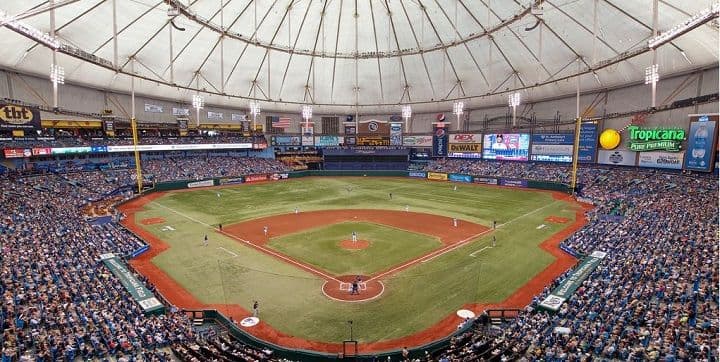
Baseball came to Tampa Bay in 1887, long before anyone talked about the major leagues. In 2026 the Rays reach the World Series for the third time and lose it for the third time. The question of where they belong is still open.
A Voice Note Into the Next Life: Inside Minor League Baseball
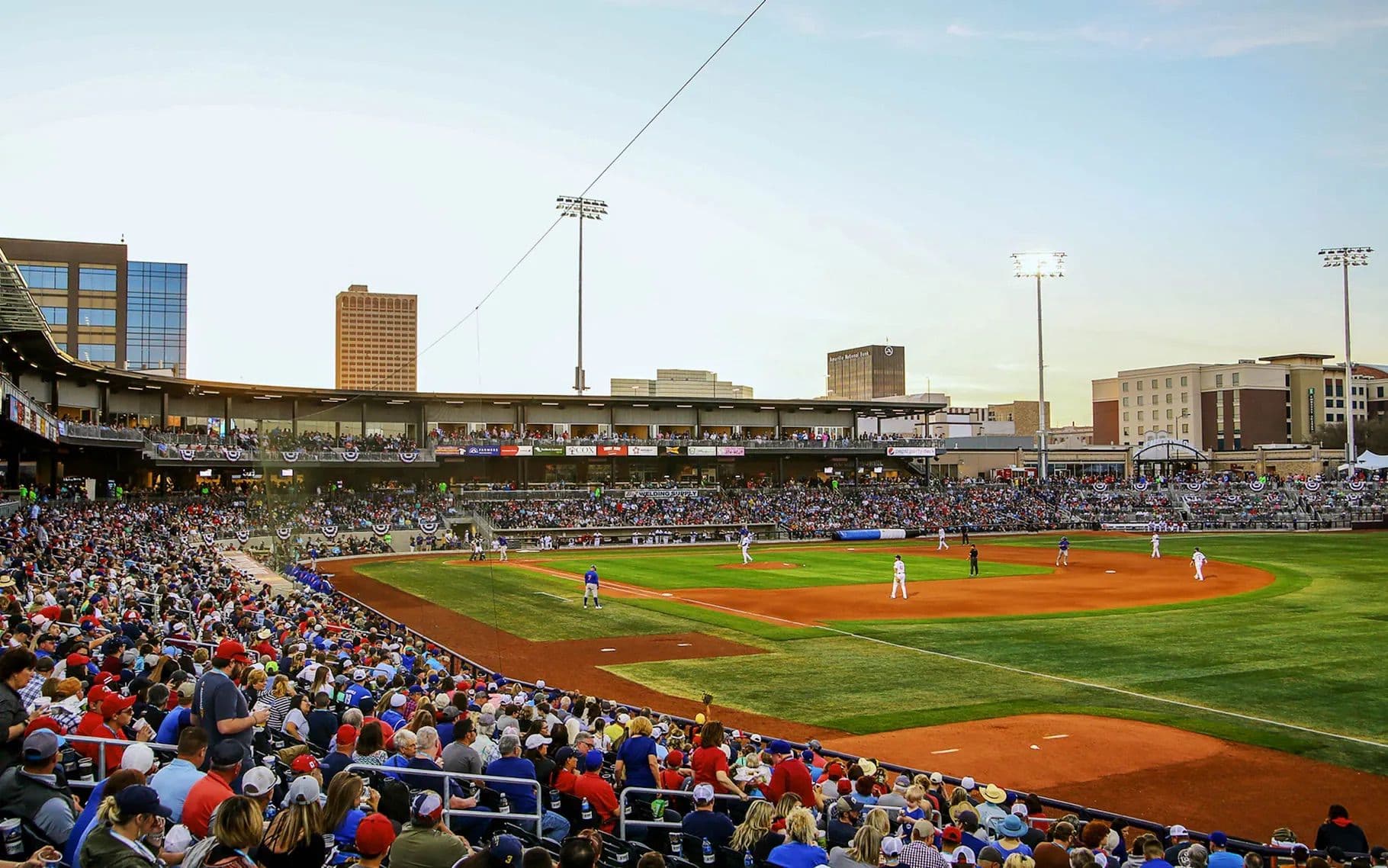
Inside Minor League Baseball, where strange team identities, small-town rituals and abrupt promotions reveal the labor beneath the MLB dream.